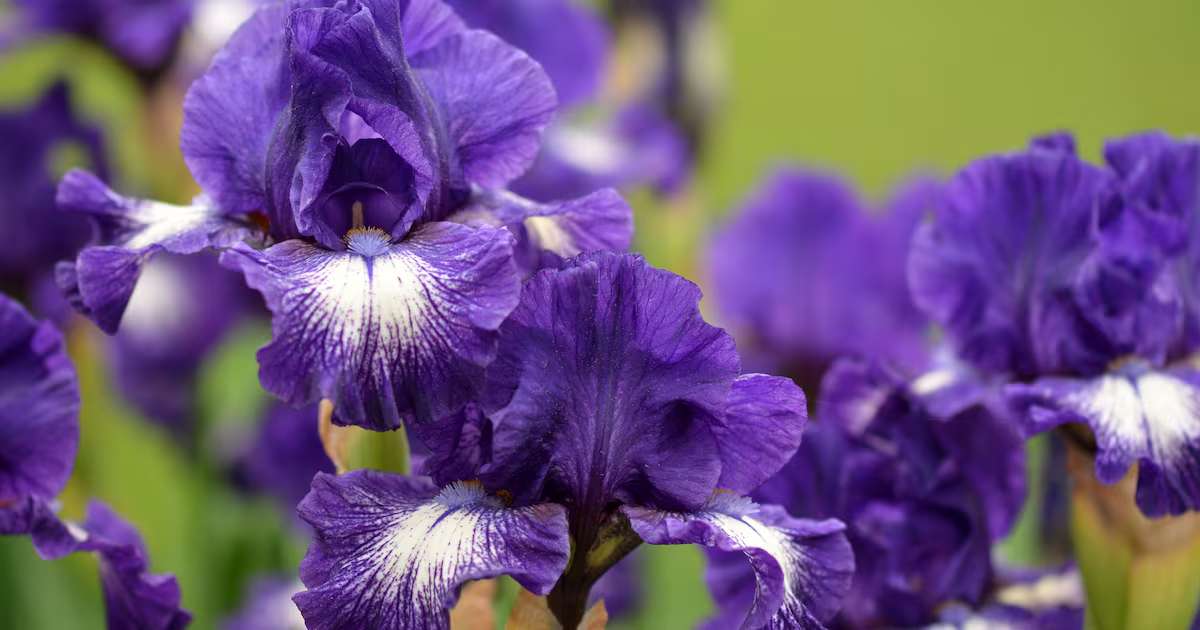
Inspired by the English artist Cedric Morris, I’d like to take a stab at growing my own bearded irises from seed. How difficult is it? Mark F, DublinFamous for his exquisite range of Benton irises, whose painterly colour combinations he masterminded using a mix of meticulous hand pollination and careful selection of promising seedlings, the mid-20th century British artist and gardener Cedric Morris has long been an intriguing character. Just earlier this summer, his garden, Benton End in Suffolk in the UK, opened to the public following substantial investment and renovation by its trustees. Of the 90 or so varieties of bearded iris that Morris introduced, only roughly a third of them have been rediscovered in cultivation by British plantswoman Sarah Cook, although the hunt continues for the remainder.Growing bearded irises from seed is one thing, while breeding them as Morris did is quite another. The first requires ripe, viable seed, ideally freshly collected from the faded flowerheads in late summer, which then needs exposure to a sustained period of cold temperatures to successfully germinate. To achieve this, either place it in damp kitchen paper in a sealed plastic bag in the bottom of your fridge for four to six weeks before sowing in October, or place the freshly sown pots of pre-soaked seed outside in autumn to overwinter, using a good-quality seed compost lightened with a little horticultural grit or fine vermiculite, sowing to a depth of roughly 1cm. All going well, the seedlings will appear in spring and can then be potted on until large enough to plant out in the garden.Hybridising bearded irises is both a scientific and artistic process. It requires pollen from a suitable “father” plant chosen for its desirable characteristics, collected using tweezers to pluck the pollen-bearing anther from a suitable, freshly opened flower, making sure to choose a dry, still day. This freshly plucked anther should then be carefully rubbed on to the stigmas of a freshly opened flower belonging to the “mother” plant. For best results, ideally do this several times, using multiple anthers from the same plant. Again, just like the “father plant”, the “mother plant” should be carefully selected for its various desirable traits, including the size and colour of its flowers. To keep track of different hand-pollinated flowers, it’s important to tag them as well as jot down notes on the parentage.Done correctly, the ovary of the hand-pollinated flower will swell, producing viable seed in late summer which can be harvested and sown as described above. You’ll need to wait a couple of years before discovering how pretty or not the resulting offspring are, but it’s a magical way to play with plants. For more details, see schreinersgarden.com and @benton.end on Instagram.[ How can I grow cowslips in my garden?Opens in new window ]This week in the gardenNet currant bushes against bird damage, taking care to make the netting taut to help prevent garden birds from accidentally getting trapped in it.Keep pinching out side shoots on cordon/indeterminate-type tomato plants to prevent them becoming unwieldy and to encourage production of fruit. Some form of support is also important to prevent their lengthening stems from toppling or breaking.
How can I grow my own irises?
Hybridising bearded irises is both a scientific and artistic process
527 words~2 min read