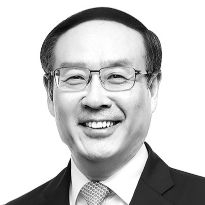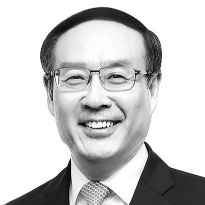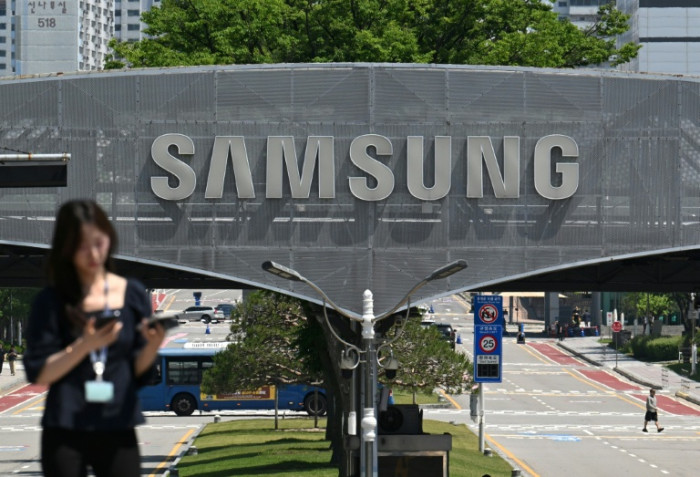
Kim Hyung-ro, a Samsung Electronics vice president acting as head of its negotiating committee; Hwang Gi-don of the National Labor Relations Commission; and Choi Seung-ho, the president of Samsung Electronics’ labor union, each depart from the National Labor Relations Commission after a second round of talks mediated by the government on May 12, 2026. (Yonhap)
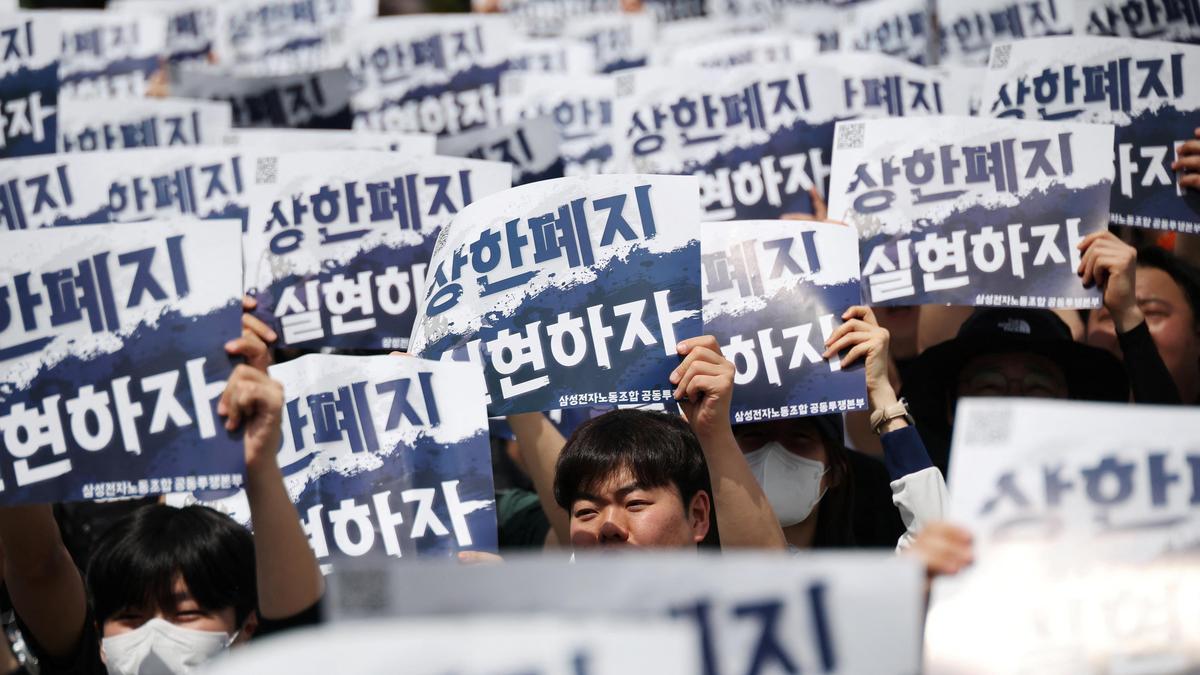
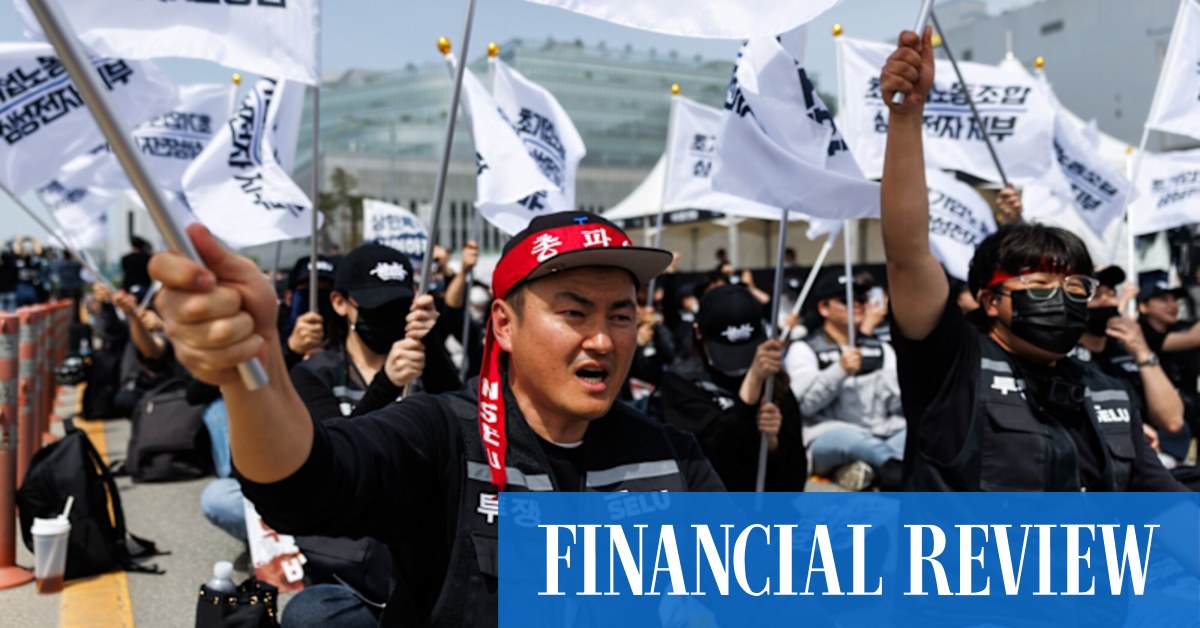
By Park Hyun, editorial writerSamsung Electronics and SK Hynix, two giant corporations, have sent the entirety of South Korean society into a frenzy.It has become quite common to hear through the grapevine that someone or other has made hundreds of millions of won from these two companies’ stocks, and many others, gripped by the fear of missing out, are wondering if it isn’t too late to jump on the bandwagon. News that employees in these companies’ semiconductor divisions are receiving performance bonuses on a scale unimaginable to the average office worker is only adding to the shockwaves these conglomerates are sending throughout society. Naturally, hard work should be rewarded. Rewards drive motivation toward better performance. However, the crux of the recent controversy lies in the extent of those rewards and how they were distributed. This is an issue of how companies should distribute profits that far exceed the norm, and whether such distribution can truly be justified from a societal perspective. The fact that Samsung Electronics’ managers and union leaders agreed to a plan to allocate 15% of operating profit, approximately 300 trillion won this year, as a performance bonus and to relax the per-person payment cap for bonuses further amplifies the importance of addressing these issues. The controversy has been intensified by compensation talks focused mainly on the companies’ semiconductor units and permanent staff.The debate surrounding “fair compensation” is far more complex than one might think. Successful people tend to believe that their achievements were possible due to the hard work they put in and their individual capabilities. However, such assessments can change drastically if a significant amount of luck is also involved. In his book “The Tyranny of Merit,” Harvard University professor Michael Sandel points out that successful people are prone to regard their achievements as entirely the product of their own abilities, which leads them to have little sense of owing a debt to society. However, factors that are beyond one’s control, such as family background, educational opportunities, and the rule of “winners” over “losers,” play a major role in one’s success. Sandel argues that it is unjust to distribute compensation based on factors beyond a person’s control. Businesses are not exempt from this rule. Corporate performance is also heavily influenced by external factors such as market conditions, the policy environment, and shifts in technological paradigms. Samsung Electronics and SK Hynix are prime examples: both companies are reaping the direct benefits of the artificial investment boom led by American tech giants. The exorbitant profits of Samsung and SK Hynix were not achieved entirely through efforts of their own; they are the result of the cumulative contributions of various stakeholders, including the suppliers who provided parts and their workers, the national and local governments that supplied electricity, water, and land, the residents who bore environmental burdens, and the investors who provided capital.As Peter Drucker emphasized in his influential classic, “The Practice of Management,” a company’s sustainability can only be secured by striking a balance between profit generation and social responsibility. The distribution of excess profits also needs to be re-examined from this perspective.We must also not overlook the fact that the spread of AI is having a major impact on employment. This is not limited to US companies; South Korea is also experiencing significant repercussions in the market for new hires. An analysis by the Bank of Korea indicates that the loss of approximately 260,000 jobs for young workers since late 2022, which is when ChatGPT was launched, can be attributed to the spread of AI.Given that it is easier to automate tasks that are routine and repetitive, this employment trend is structural. Companies reaping massive profits from AI must not shirk their responsibility for the employment shocks resulting from this process.The government’s response is still in a very nascent stage. Its “AI Action Plan 2026-2028,” announced in February focuses solely on strengthening industrial competitiveness and fails to adequately address the issue of wealth redistribution resulting from the disruptions to traditional employment. President Lee Jae Myung’s remarks about the possible introduction of a robot tax in March, along with his call for companies to shoulder social responsibilities, can be understood in this context. The sheer speed at which AI is spreading means that these discussions not to be delayed any longer.Countries overseas are already one step ahead of South Korea when it comes to this topic. The US is going beyond “robot tax” as the concept of “compute tax” gains traction. This tax would target semiconductor, data center, and AI companies, taxing the computational resources required for training and operating large AI language models.The aim is to use the funds raised to mitigate the side effects of AI’s proliferation, such as a sharp decline in jobs, the harms of monopolies, and a surge in energy and resource consumption.Implementing new policies takes time. Then how should we fill the gaps between design and execution? One practical option is to proactively explore ways of giving back a portion of the excess profits reaped from the AI boom to society. It’s high time that Samsung and SK Hynix think beyond their own companies and consider the sort of social responsibilities they bear. More and more, the key question is becoming not only how much to share, but with whom and in what way as well. Please direct questions or comments to [english@hani.co.kr]