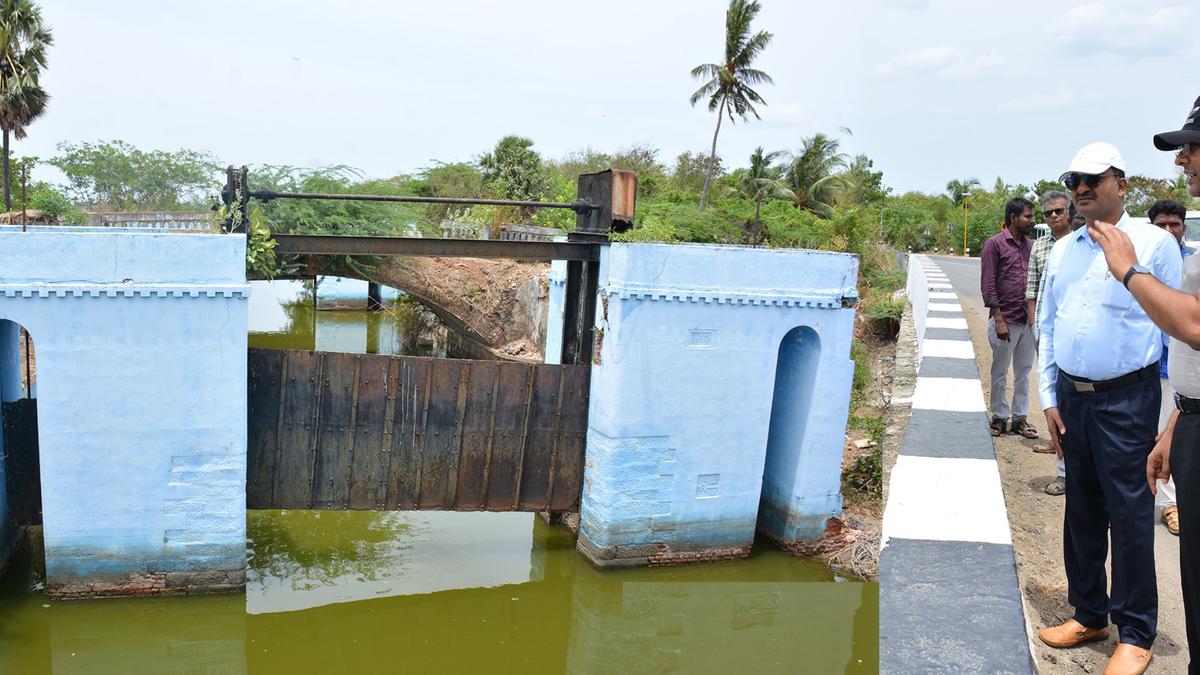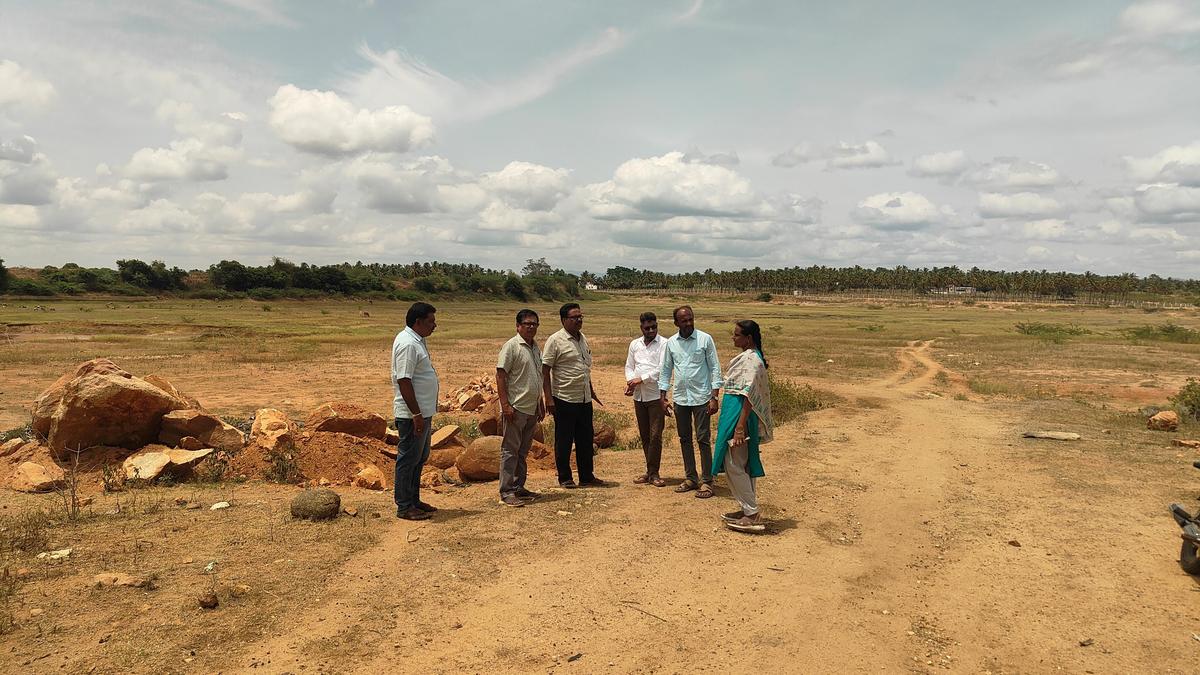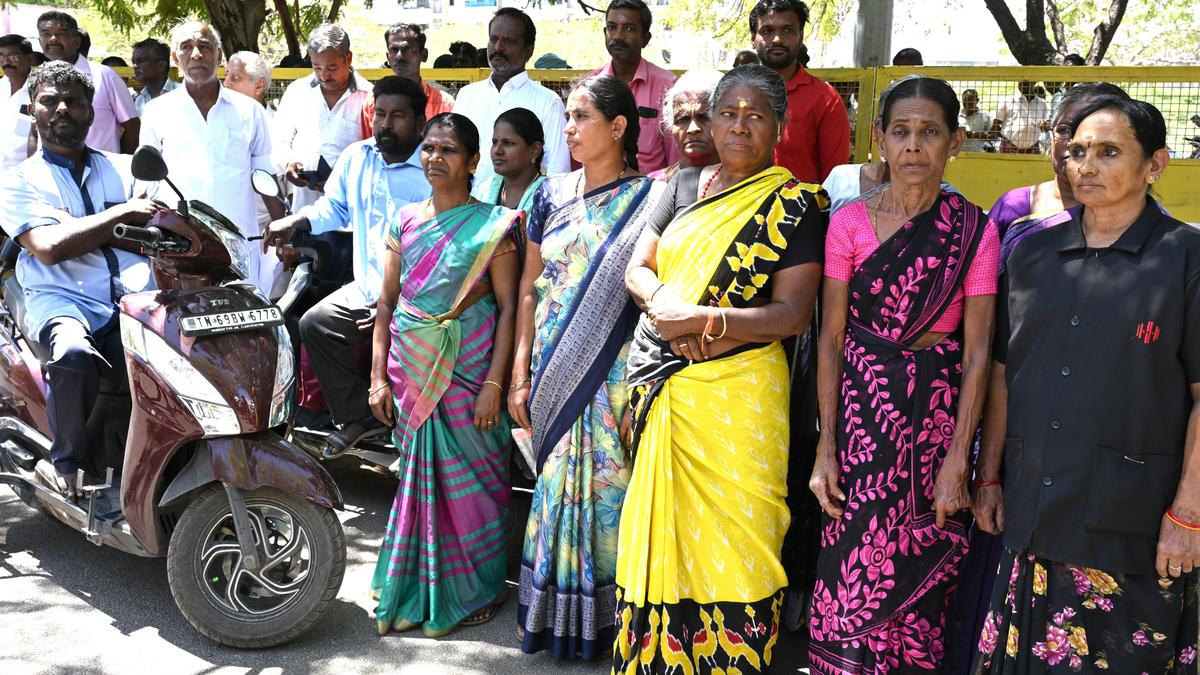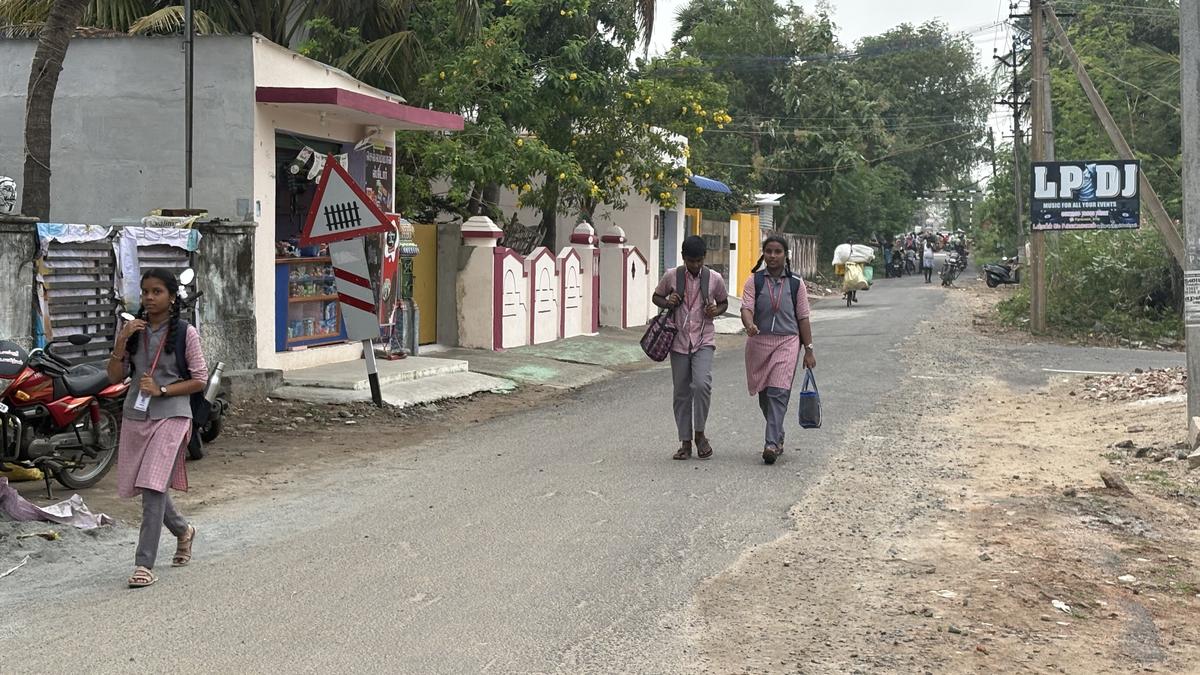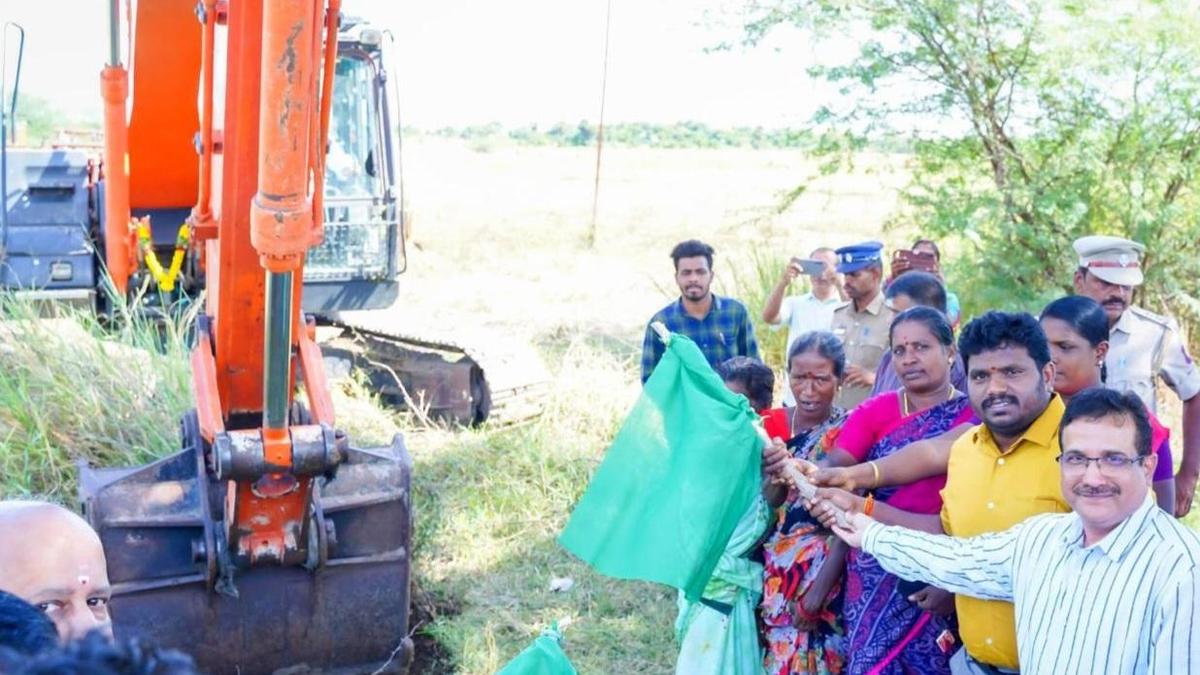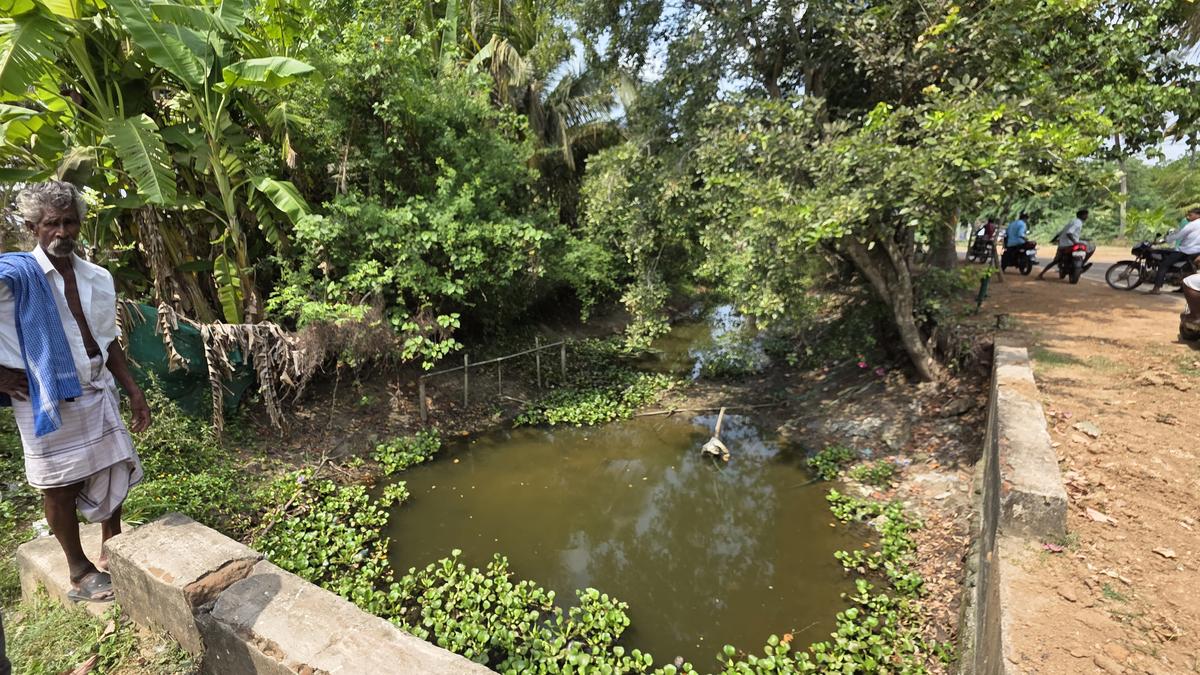
Few districts in Tamil Nadu have witnessed as many protests over drinking water as Nagapattinam. Demonstrations in front of panchayat offices, road blockades, and petitions to the Collector about taps running dry and saline borewells have been recurring issues for decades. Against this backdrop, the initiative by Collector P. Akash assumes significance.Under his close monitoring, the first phase of the initiative was taken up at six sites across the district last year. Work is under way at those locations and encouraged by the progress so far, the administration has now expanded the programme significantly. The second phase covers 17 panchayats and 21 sites across all five blocks in the district. What makes this phase different is the emphasis on community participation, with residents being actively involved in protecting and maintaining their local water sources.Surveys and site visitsAravind S. from the district convergence team said the expansion was being carried out through expert-led surveys.“Hydrogeologist V. Haridas is leading field visits to all the identified sites. Inspections continued even during the rains this season,” he said. “Community involvement has now become an important component, and we are working closely with local leaders on the ground. Covering all five blocks is the major difference from the first phase. Eventually, the plan is to expand the initiative across the district.”He added that Village Water and Sanitation Committees have been formed in every panchayat, with the district administration issuing Standard Operating Procedures to each of them. The programme is making use of the Jal Jeevan Mission’s water user committee structure to ensure that restored water sources remain community-managed assets in the long term.He stressed that the effort needs to be comprehensive. “Many sites have potential, but the water is contaminated due to improper waste management. Simply removing invasive species and water weeds can make a significant difference to water quality. But building wells alone will not do — you need infrastructure, ecology restoration, and community management working together,” he said.The sites identified include Ilavathadi, Vadaku Panayur, Agaram, North Panayoor, and Udayampayyoor in Kulappad panchayat.A different approachS. Mohanasundaram, Assistant Director of Village Panchayats, said preliminary inspections at all 21 sites have been completed.“Each site has its own characteristics. We study the conditions at every location and carry out the work accordingly,” he said. Estimation and tendering processes were under preparation ahead of the construction work.The second phase focuses on tackling solid waste dumping and open defecation, both of which affect water quality. “When waste is dumped into waterbodies, pollution begins at the source itself. We are engaging local communities to address these issues,” Mr. Mohanasundaram said.Each committee has 10 to 15 members, including the BDO, panchayat secretary, representatives of local NGOs and women’s self-help groups, headmasters, Village Health Nurses (VHN), and Village Administrative Officers (VAO). “These committees already existed, but we are strengthening them further by including headmasters and VAOs to improve effectiveness,” he said.A forgotten legacyM. Revathi, ecologist and founder of INSPIRE, said the initiative goes beyond being just a water project.“Nagapattinam is not lacking in water. If the rainfall received during depressions and cyclones is harvested properly, it is more than enough,” she said. “Previous generations created intricate systems to store and channel water. Today, when V. Haridas maps underground fracture lines using resistivity equipment, we often find old wells located exactly along those lines. That knowledge was never really lost — it was simply abandoned after piped water supply became common.”The process begins with geophysical resistivity surveys to map underground fracture lines and water-flow pathways. Once these are identified, nearby abandoned wells or silted ponds are restored by clearing invasive karuvelam growth, desilting water bodies, and reviving inlet channels.Since fresh water is lighter than saline water and forms a protective layer above it, each restored water source helps push salinity back and recharge the surrounding shallow aquifer. Experts say Nagapattinam’s clay-heavy soil makes surface recharge more effective than deep extraction.Ms. Revathi said increasing salinity caused by prawn farms, salt pans, and indiscriminate borewell drilling has worsened the situation over the years.“The answer is not drilling deeper borewells because that only reaches more saline water. Sustained recharge of shallow aquifers helps fresh water hold back salinity. That is exactly what our traditional ponds once achieved,” she said.
17 panchayats, 21 sites and a community help scale up revival of water resources in Nagapattinam district
Community-driven water revival efforts in Nagapattinam district enhance local participation and tackle water quality issues across 17 panchayats.
703 words~3 min read