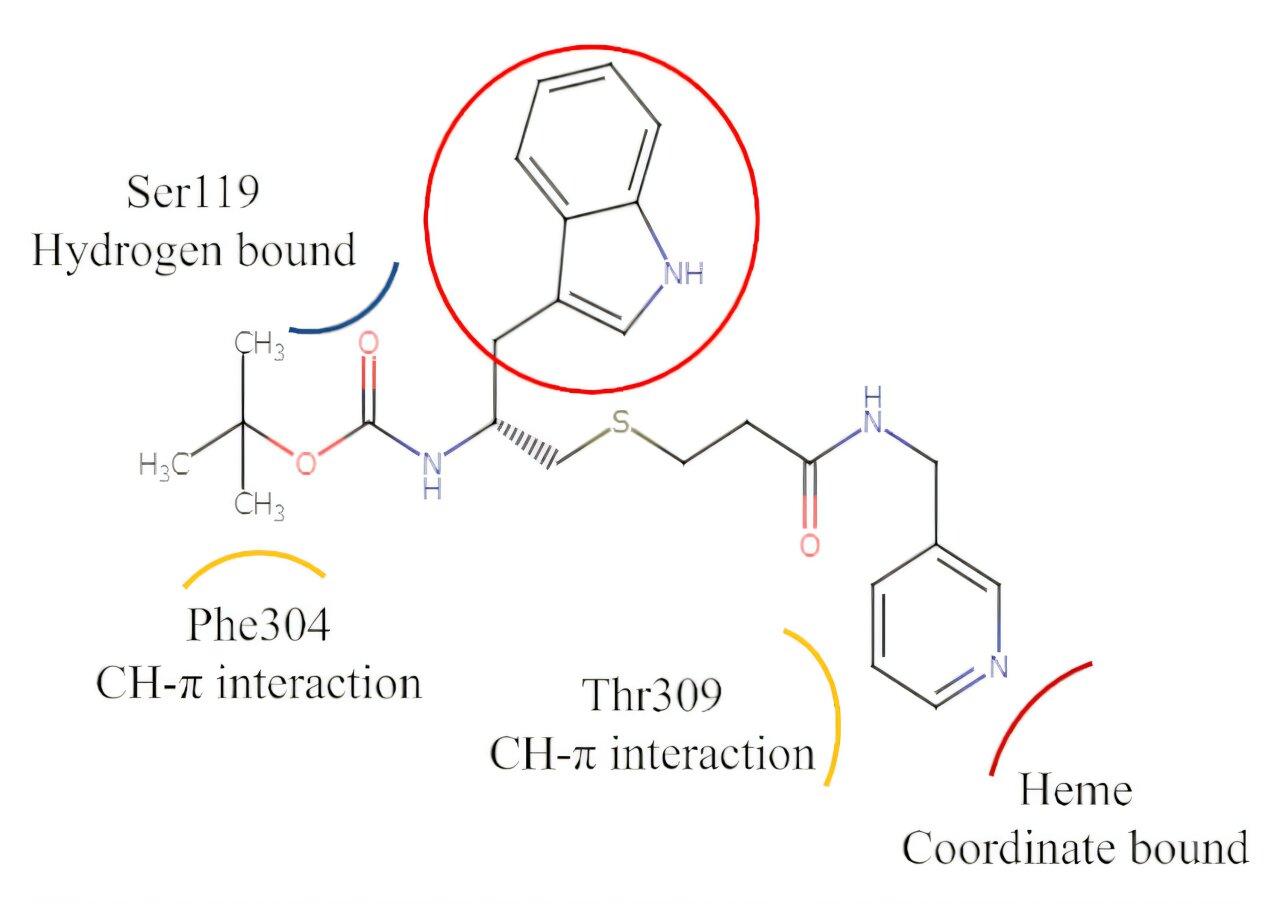
Red, blue, and yellow lines represent sites for coordination bonds with heme iron, hydrogen bonds with residues, and CH-π bonds, respectively. The red circle marks the site for introducing substituents when searching for novel compounds based on inhibitor 15b. Credit: Toyohashi University of Technology.
A research team led by Associate Professor Noriyuki Kurita from the Department of Computer Science and Engineering at Toyohashi University of Technology and by Associate Professor Pornpan Pungpo from Ubon Ratchathani University in Thailand has proposed a novel therapeutic agent for tuberculosis, using high-precision molecular simulation techniques.
The research is published in the Journal of Molecular Graphics and Modelling and In Silico Research in Biomedicine.
The proposed drug is anticipated to bind strongly to the drug-metabolizing enzyme cytochrome P450 (CYP), thereby inhibiting excessive CYP-mediated metabolism and preventing the degradation of co-administered drugs.
Additionally, because this agent targets enzymes released by the tuberculosis bacterium rather than the bacterium itself, the likelihood of bacterial mutation and resistance development is reduced, suggesting sustained therapeutic efficacy over an extended period.