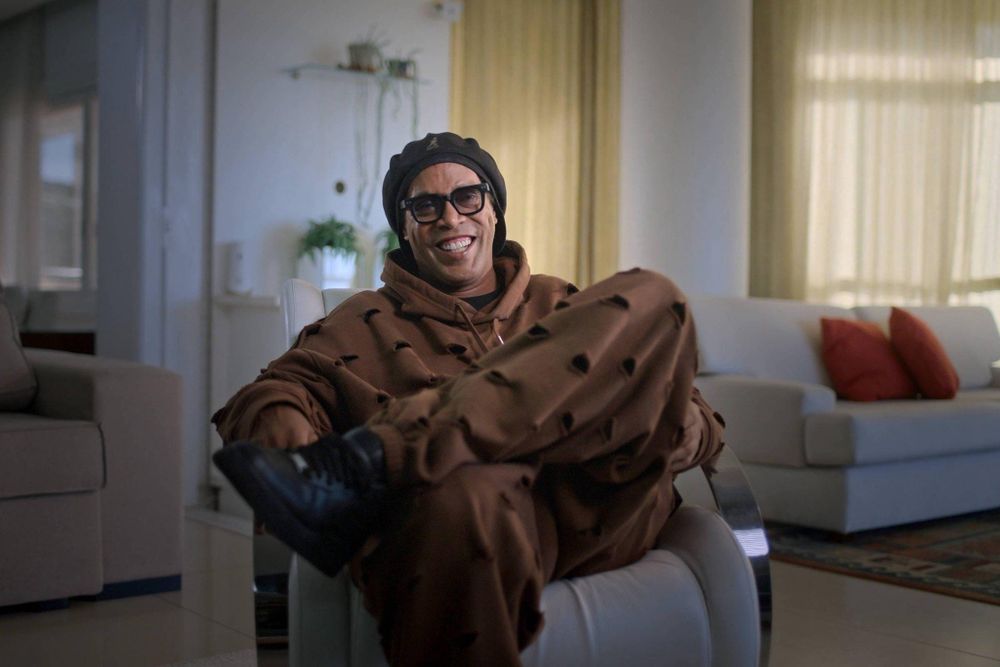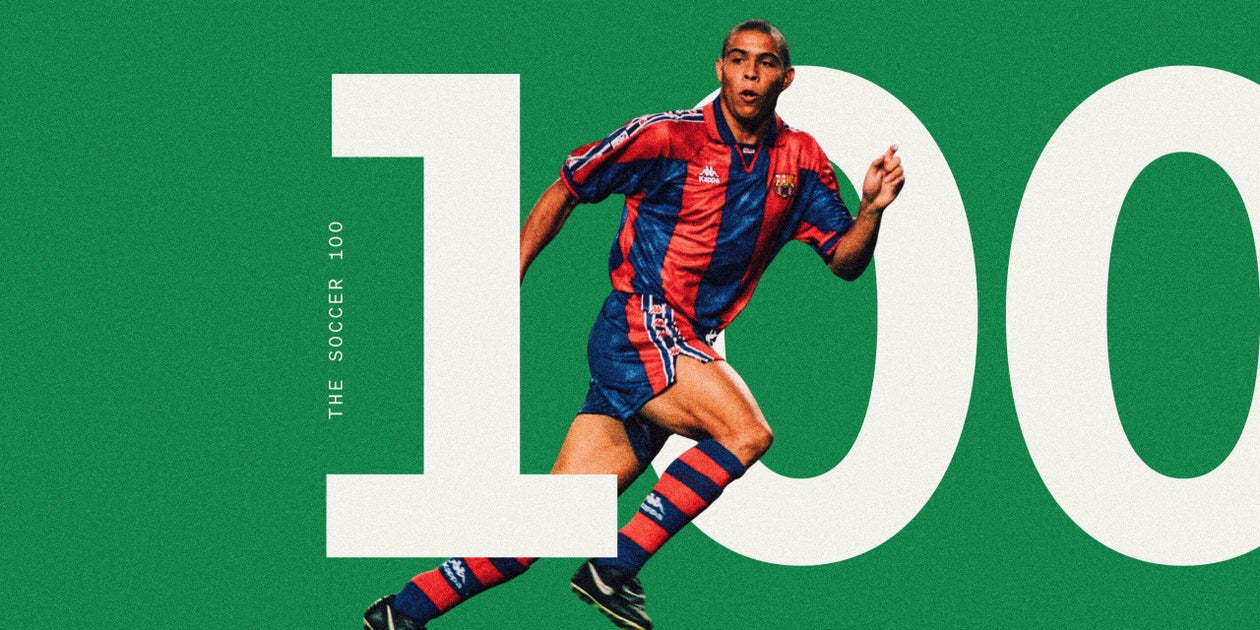
As part of our buildup to the 2026 FIFA men’s World Cup in the United States, Canada and Mexico, we are publishing excerpted chapters from The Soccer 100, The Athletic’s definitive book on the 100 greatest players of all time, courtesy of HarperCollins Publishers.The 10 players we will feature are the highest-ranked World Cup winners of our 100. Today, we look at one year in the glittering career of one of Brazil’s greatest strikers: Ronaldo’s single season with Barcelona.When you picture Ronaldo, it probably isn’t in a Barcelona shirt.He exists in the broader public consciousness in the white of Real Madrid, or the yellow of Brazil, or even the black and blue of Inter. You think of him scoring twice in the 2002 World Cup final or that hat-trick for Madrid against Manchester United in the following year’s Champions League. Or perhaps even some of his darker moments; his face contorted in agony after his second knee injury at Inter, or looking spaced-out before the 1998 World Cup final.But his one season at Barcelona, 1996–97, was his peak.Arguably, it was the peak of centre-forwards, full stop. It was where he recorded his biggest single-season goal tally. It was where he announced himself as a true world great. It was where he did things that made people who had seen it all in football admit they had never seen anything quite like him.The January 1997 edition of World Soccer magazine had Ronaldo on its cover under the headline “Best Ever?” It was a big question to ask about a 20-year-old halfway through his first season in one of Europe’s top leagues, but they weren’t wrong.Most of the players in this book justified their inclusion through a whole career of excellence — or at least an extended spell. Ronaldo does, too, but even if we were to forget the other 17 seasons of his career — the club trophies, the World Cup, the Golden Boot, the many cabinets of individual awards, the 305 goals for Cruzeiro, PSV, Inter, Madrid, Milan and Corinthians — and just concentrated on that single year in Catalonia, he would still qualify as one of the greats.At the start, Josep Lluís Núñez wasn’t sure. Barcelona’s club president had asked Bobby Robson, appointed as their manager in the summer of 1996, for his preference as a new striker. Robson suggested Alan Shearer, but was told in no uncertain terms by Blackburn Rovers that his fellow Englishman was not for sale… a few weeks before selling him to Newcastle United.Robson’s other option was Ronaldo.A young Ronaldo playing for PSV against Ajax in January 1995 (Clive Mason/Allsport/Getty Images)Just about to turn 20 at the time, the Brazilian had scored a bagful of goals in two seasons at PSV, although a knee injury — which would turn out to be a ticking time bomb — had curtailed his second year in the Netherlands.Robson thought he could be signed for $10million, but Núñez went back to PSV over and over, incrementally increasing his bids and, after each rejected offer, returned to Robson to ask if he was certain about this kid. “At one point, Núñez wagged his finger at me and warned, ‘Bobby, you know your job depends on this?’,” Robson wrote in his autobiography.Eventually, the deal was done for $20million, an extraordinary sum at the time, the world transfer record (albeit one broken shortly afterwards by Shearer’s move to Newcastle), and a particular gamble given Ronaldo’s youth and relative lack of pedigree. But Robson was sure.Ronaldo’s first goal came five minutes into his debut, in the Spanish Super Cup against Atlético Madrid. The first league goal was scored against Racing Santander three weeks later. Then he got two in the next game against Real Sociedad. Then another two against Real Zaragoza.By that point, his new team-mates were convinced, too.“I’d seen him on television at PSV and thought: ‘Wow’,” then Barca midfielder Luis Enrique told FourFourTwo magazine in 2017. “Then he came to Barcelona. He’s the most spectacular player I’ve ever seen. He did things I’d never seen before. We’re now used to seeing (Lionel) Messi dribble past six players, but not then.”Barcelona enjoyed Ronaldo at his peak (Shaun Botterill/Allsport/Getty Images/Hulton Archive)The seventh league game of the season came at Compostela, a small, relatively unremarkable side who have only spent four seasons in the Spanish top flight in their history. They haven’t had many former players or managers of particular note. They’ve never won a major trophy. At the risk of being insulting or patronising, what happened on October 12, 1996, might be the most notable event in the club’s history.
The Soccer 100: Ronaldo — How Barcelona enjoyed the striker at his peak
In the fifth of our 10 excerpts from The Soccer 100, we look back at one year the Brazilian forward spent at Camp Nou
2,226 words~10 min read