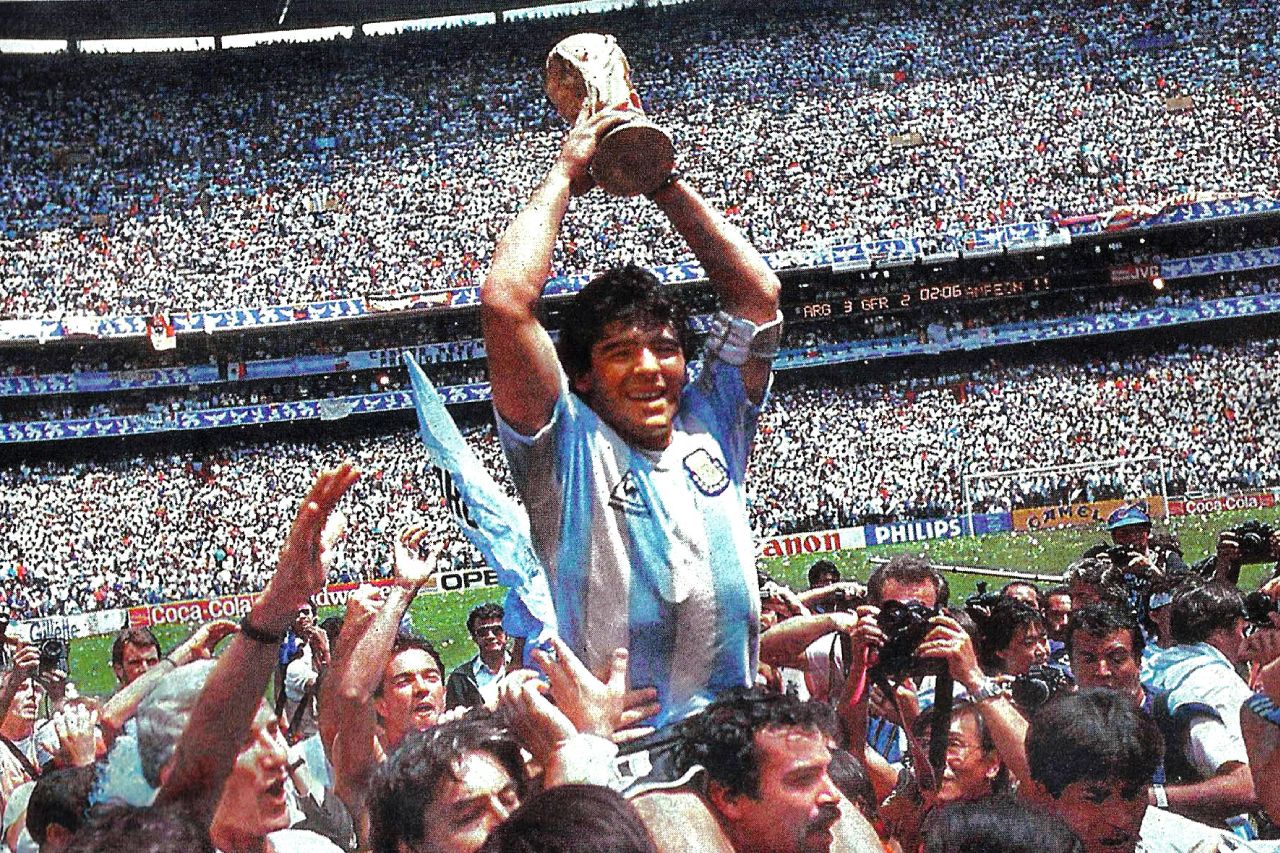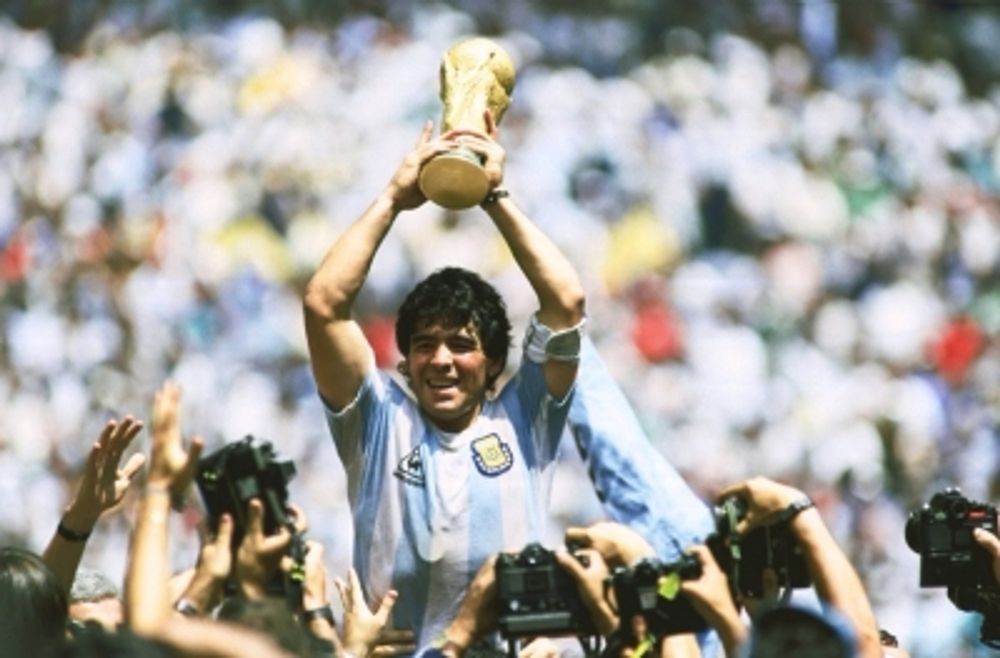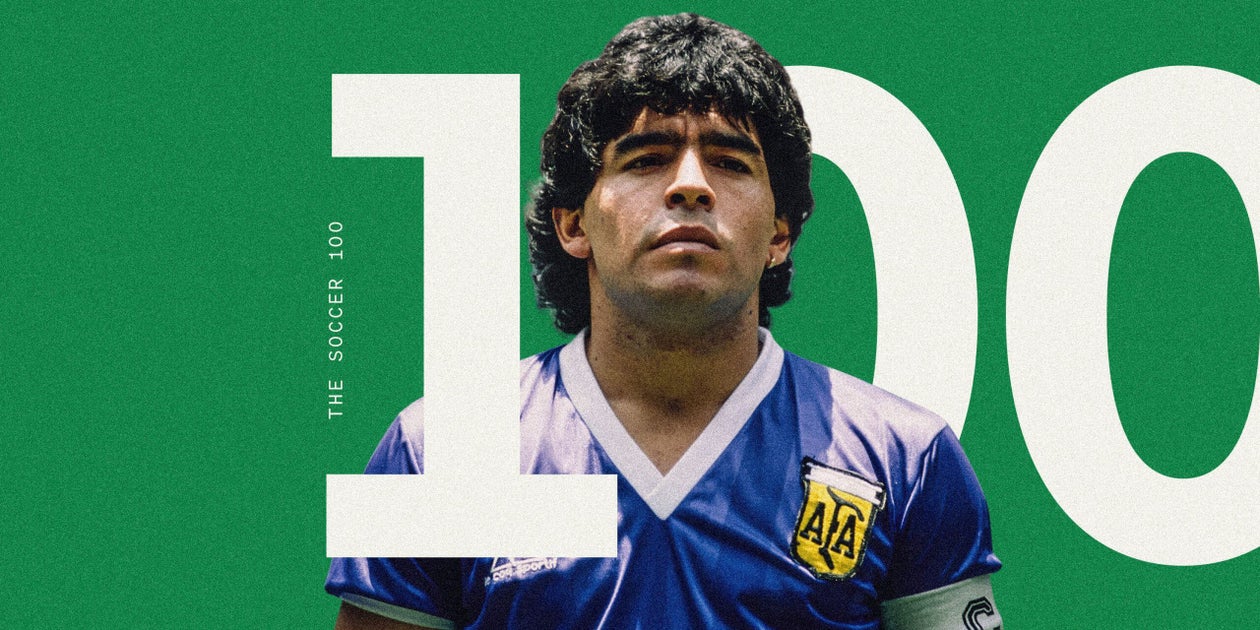
As part of our buildup to the 2026 FIFA men’s World Cup in the United States, Canada and Mexico, we are publishing excerpted chapters from The Soccer 100, The Athletic’s definitive book on the 100 greatest players of all time, courtesy of HarperCollins Publishers.The 10 players we will feature are the highest ranked World Cup winners of our 100. Today, in our penultimate extract, we turn to one of the greatest ever individual performances at the tournament.Can we quantify the most legendary individual sporting performance ever? It’s impossible to compare goals to home runs, touchdowns, or three-pointers, but there is one viable, if somewhat reductive, measure: Diego Maradona’s shirt from Argentina’s 2–1 victory over England in the quarterfinal of the 1986 World Cup is the most valuable match-worn jersey in the history of sport.In May 2022, Maradona’s shirt from that historic contest at the Estadio Azteca was put up for auction by Sotheby’s. It eventually sold for about $9.1 million, around a 60 percent increase on the previous record, Babe Ruth’s New York Yankees top between 1928 and 1930. While Ruth wore his jersey for two years, Maradona only wore his for 45 minutes, having changed at halftime because of the sweltering conditions in Mexico City.Sotheby’s conducted “extensive diligence and scientific research” to verify it was the correct shirt — not the one Maradona used throughout a tame first half, but the one in which he scored two of the most famous goals in football history within the space of five minutes; more celebrated than any of his many goals in the colors of Argentinos Juniors or Boca Juniors back in Argentina, or in Europe as he elevated Napoli to unprecedented levels.The first goal at the Azteca was blatant cheating. The second was indisputable brilliance. They served as a perfect microcosm of Maradona’s character.The shirt’s previous owner, England midfielder Steve Hodge, was never in doubt. Last to leave the pitch because he was conducting a pitch-side television interview, he happened to be walking back down the tunnel alongside a jubilant Maradona, ambitiously proposed the swap, and was surprisingly handed a shirt he possessed for 36 years and eventually earned him several times his career earnings.The shirt itself had essentially existed for less than a day.Diego Maradona’s 1986 World Cup match-worn shirt is presented at Sotheby’s in London (Tristan Fewings/Getty Images for Sotheby’s)With England wearing white, Argentina were unable to play in their traditional blue-and-white stripes. Therefore they were set to play in their away colors — solid blue — for the second game running, having done so for a 1–0 second-round win over neighbor Uruguay. But Argentina’s players had been troubled by the heaviness of those shirts and worried they would be even more uncomfortable for a midday kickoff.So, the day before the England quarterfinal, Argentina procured a lighter shirt, with faint vertical stripes, from a run-of-the-mill Mexico City sports shop. The Argentina crest was sewn on the night beforehand, alongside the logo of shirt manufacturer Le Coq Sportif — who, of course, had not actually made these shirts — while the shirt numbers were silver-gray, glittered, and designed for American football jerseys. Somewhat unexpectedly, this slapdash design process created the most valuable sporting item of clothing ever.But all this was in keeping with the amateurish nature of the tournament. Mexico, who stepped in as replacement for Colombia as host in May 1983 largely due to economic issues, produced a finals featuring stadiums with poor facilities and dreadful pitches. Argentina manager Carlos Bilardo said his players were so exhausted from their club campaigns that he did not hold proper training sessions — the side effectively pretended to train to prevent criticism from journalists for not training at all.As several Argentina players would later agree, while the conditions made the tournament unpleasant, it perhaps suited the plucky nature of their side.Diego Maradona shakes hands with Peter Shilton prior to kick off (David Cannon/Allsport/Getty Images)The narrative in the buildup to Argentina’s clash with England was heavily based around the Falklands War, the 10-week conflict in 1982 that began when Argentina invaded the Falkland Islands (or, as Argentinians refer to them, las Islas Malvinas), a British territory in the South Atlantic about 300 miles from the Argentine coast. The conflict cost the lives of 649 Argentinians, 255 Britons, and three islanders before Argentina surrendered.Four years on, the meeting between the countries was inevitably framed in relation to that war. Both camps were under strict instructions not to engage with politically motivated questions in prematch press conferences. Most obeyed the order, although Argentina goalkeeper Nery Pumpido did veer off-message and declared that “beating the English would represent a double satisfaction for everything that happened in the Malvinas.”Argentina had breezed through the group stage, with routine 3–1 and 2–0 victories over South Korea and Bulgaria sandwiching a 1–1 draw with Italy, the nation where Maradona now played his club football with Napoli — and a team he would inspire to the first Scudetto in their 61-year history in 1987 — before the win over Uruguay in the last 16.The eternal debate about facing Maradona’s Argentina was whether opposition managers should elect to man-mark him. A player of his talent necessitated special attention, yes, but the only match of the four in which Maradona had scored was the game against Italy, who were the only side who had man-marked him. It was thus far from certain that it was the right option.Besides, Maradona had increasingly embraced a free role, moving deep or wide in search of space. England, accustomed to playing a 4-4-2 with zonal defending, simply weren’t comfortable playing with a man-marker. Bilardo, meanwhile, made a significant tactical switch, scrapping his 4-3-1-2 and instead using a 3-5-2 formation to provide a spare man against England’s strike duo, with Maradona playing off Jorge Valdano rather than behind two strikers. This was a hugely surprising decision because it involved dropping Pedro Pasculli, the striker who had scored the only goal against Uruguay. He did not play another minute at the World Cup.Diego Maradona evades Gary Stevens to cross (Staff/AFP via Getty Images)Despite theoretically playing higher up the pitch, Maradona popped up everywhere against England. He dropped deep to collect short passes from Argentina’s less technical players but remained between the lines when the ball was at the feet of Sergio Batista, whom Maradona trusted to thread the ball between opponents and toward him. He moved to the flanks to find space before prompting one-twos with teammates, particularly Valdano.
The Soccer 100: Diego Maradona — How the master showcased his brilliance, and resilience, in the Estadio Azteca
In our ninth extract from The Soccer 100, we return to Mexico City in 1986 and the goals, grit and guile which saw Argentina past England
TL;DRAI
Questo articolo su Diego Maradona e la Coppa del Mondo 1986 non è rilevante per Warptech Tech News — la testata segue manager IT, CTO e responsabili AI italiani, non sport. Hai una news tech/business/AI che vuoi sintetizzare? Passami il titolo e il corpo e applicherò il format.
3,287 words~15 min read