Skip to content
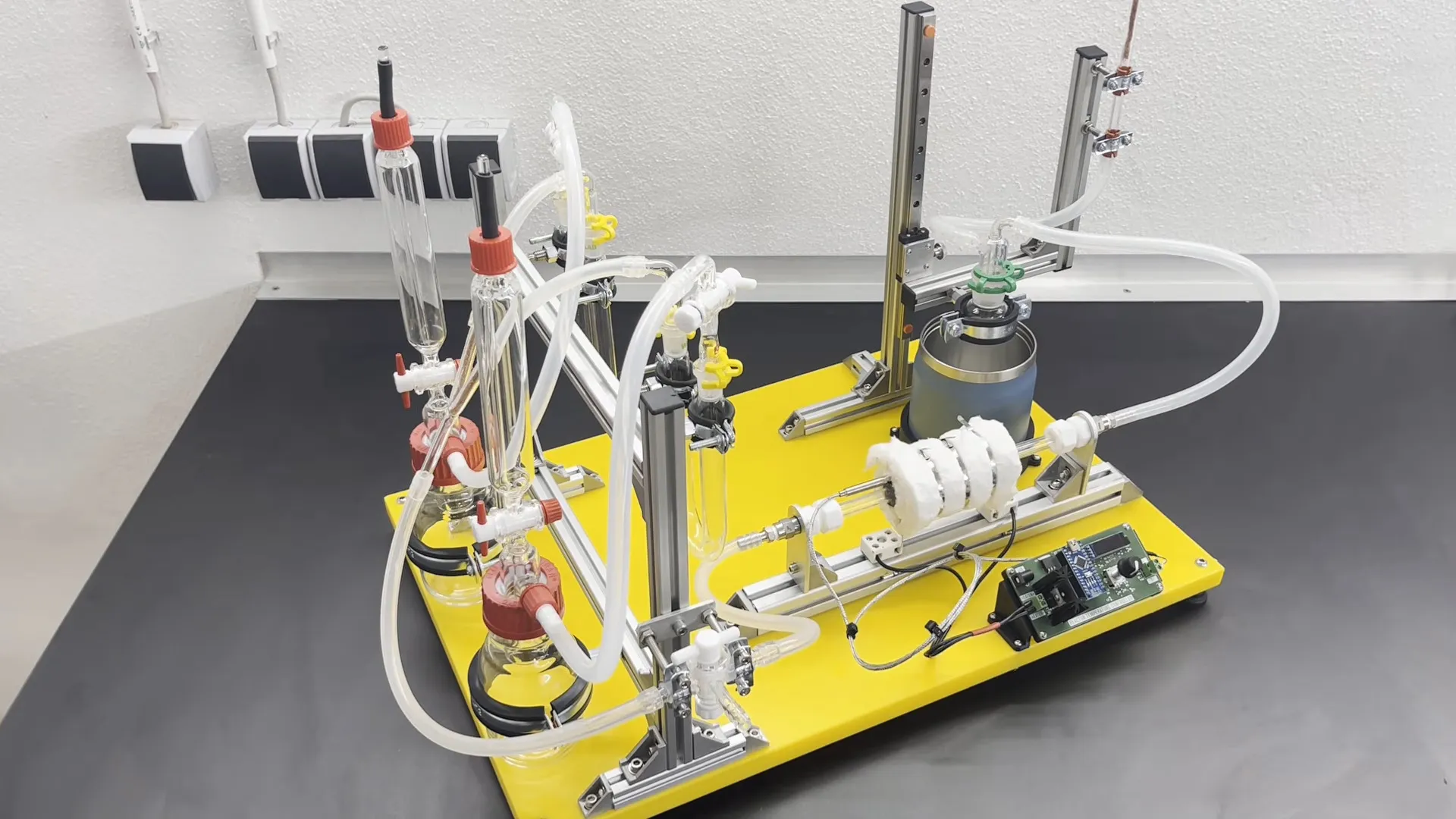
Plastics, oil, petrol– the modern world is entirely dependent on hydrocarbons. The good sources are slowly running low and supply is increasingly complicated by geopolitical factors we really don’t want to get into, but hey! It’s just hydrogen and carbon, right like it says in the name. How hard could it be to roll your own at home. Well, if you’ve got a lab like [Marb]’s Lab on YouTube, it might just be doable, as he demonstrates in his latest video.
The Fischer-Tropsch reaction was discovered back in 1925 in Germany by a couple of gents named Fischer and Tropsch. In the unpleasantness that followed later, Germany made good use of their process on an industrial scale, since they had ample coal and no oil on hand. Coal-rich South Africa has also made us of it, particularly during the Apartheid-era trade restrictions. Every so often the idea of industrializing the process comes up in the USA, but there’s still enough oil there it doesn’t make sense economically.
Those nations all have something in common: they’re all coal-rich countries, and that makes sense because coal is easily converted to carbon monoxide and hydrogen– a combo known as syngas– and it just so happens that those are the feedstock for this reaction. The actual chemistry going on inside is quite complex, but conceptually it is pretty simple: hydrogen and carbon monoxide mix over a hot metal catalyst, and combine to form various hydrocarbons.