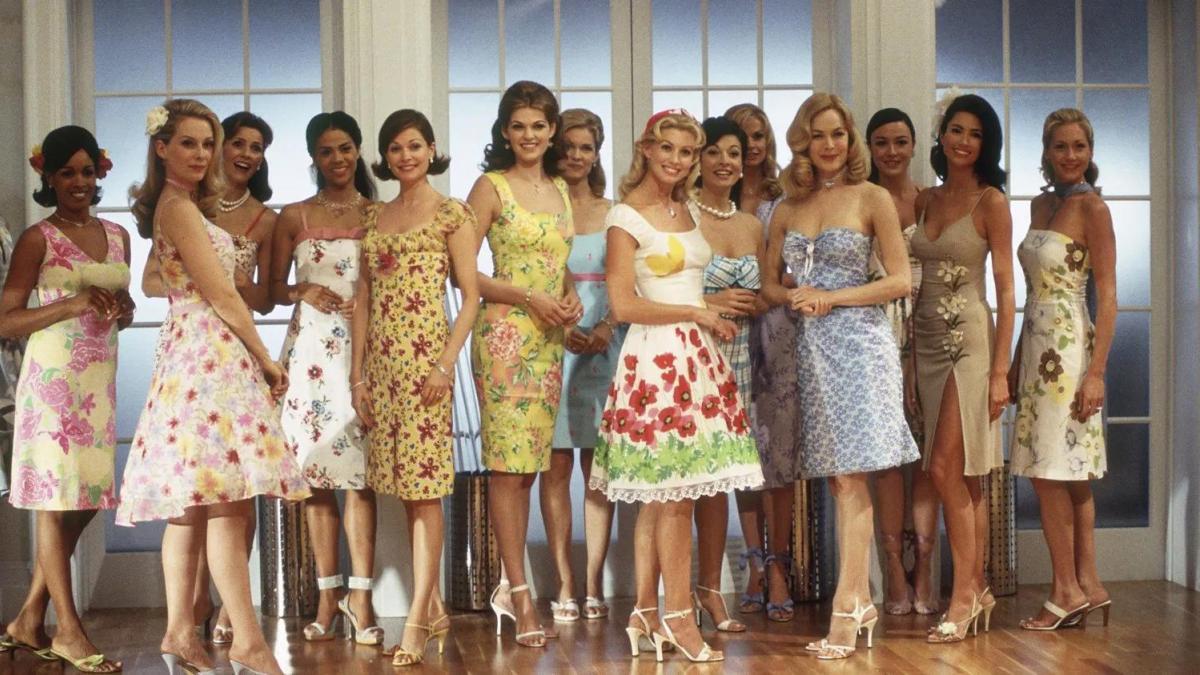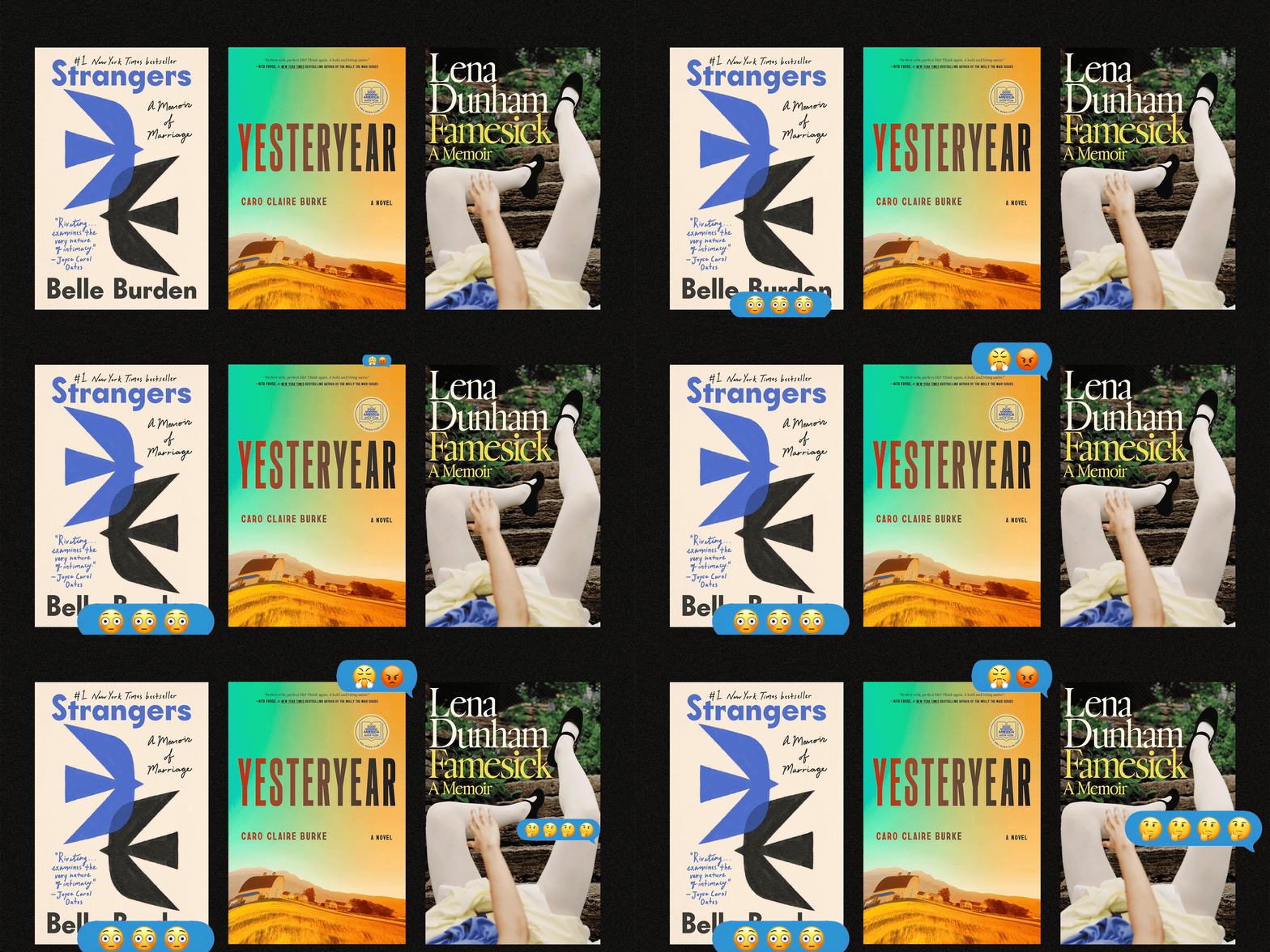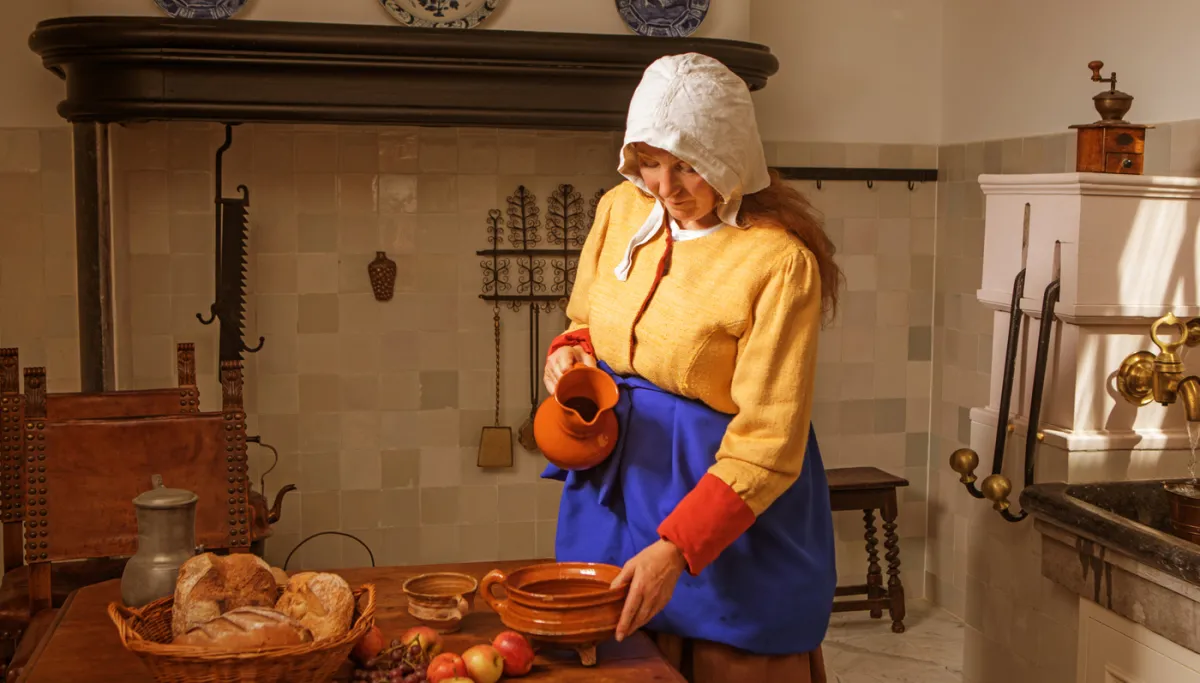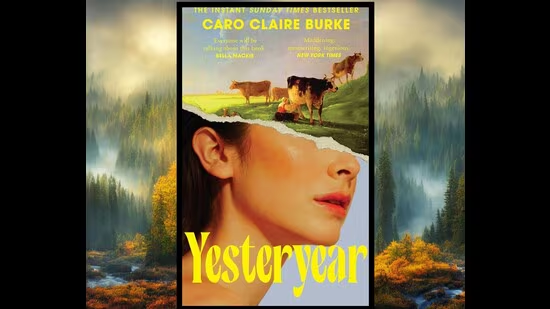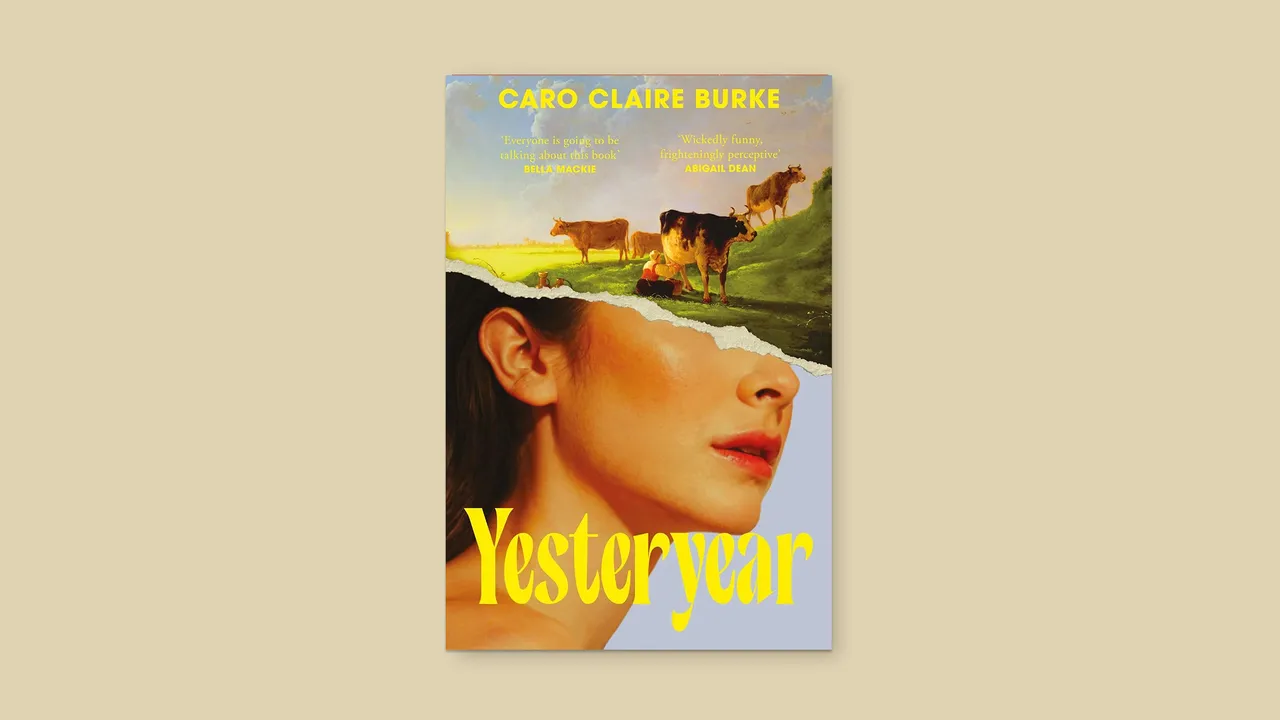
The premise of Caro Claire Burke’s best-selling début novel, “Yesteryear,” is a marvel. The book follows an influencer who rails against feminism and praises outmoded gender roles, only to find herself spirited back in time to 1855, where she must practice what she preaches. Burke’s heroine, Natalie, is a trad wife with a large internet following, fundamentalist Christian convictions, a brood of cherubic children, a working farm, and a penchant for handcrafting items that could be purchased at the drugstore. “I want it to feel like stepping into a time machine,” she tells a contractor renovating the house where she films viral videos of herself churning butter. But, as “Yesteryear” demonstrates, nostalgic performances perfected for social media and actually “stepping into a time machine” are vastly different propositions.Unfortunately, a marvellous premise does not a successful novel make (despite the book’s sales, the fervid discourse surrounding it, and the plans for a film adaptation starring Anne Hathaway). You don’t have to sympathize with the politics or aesthetics of trad wives to suspect that fiction featuring one of them should evince some genuine curiosity about one’s point of view. “Yesteryear” is funny and briskly readable (a somewhat contrived twist at the end notwithstanding), but Natalie is a placeholder, not a person. She is repeatedly touted as smart—Burke makes a big show of how she went to Harvard—yet we never see her mind at work. Her faith, which supposedly animates many of her decisions, remains incoherently sketched, with hallmarks of many different and conflicting denominations; she wears “prairie dresses,” as some fundamentalists do, but drinks caffeinated beverages with abandon. At no point are we given to understand that any aspect of Natalie’s shiny, manicured existence in the present or a drab, gruelling existence in her past is the slightest bit worthwhile.Liberal readers seemed to flock to “Yesteryear,” maybe in an effort to enter the mind of the sort of woman they rarely encounter firsthand—or perhaps merely to gawk at the spectacle of a flailing political enemy. The novel indulges only the latter, lesser instinct. In assuring us that, behind the scenes, Natalie is exactly how the left-wing haters who leave nasty comments on her photos imagine her to be, Burke recapitulates the simplifications and caricatures that social media already encourages. A book does not need to transport us across epochs to work, but it should always be the first responsibility of fiction to take us somewhere even more strange and surprising: into jarringly unfamiliar lives.For more: Read Sophie Elmhirst’s piece on the trad-wife influencer Alena Kate Pettitt, and the rise of the online movement.Editor’s PickInside Lebanon’s Fraught Push to Disarm HezbollahLebanon has pledged to bring all weapons under state control. But, in the face of continued Israeli attacks, Hezbollah, the powerful Iran-backed group that has long held sway over the country, refuses to hand over its munitions. Can one of the world’s most heavily armed militias be curbed without ripping the country apart? Read or listen to the story »More Top StoriesDonald Trump’s $1.8-billion “Anti-Weaponization” fund is meant to help his most loyal supporters seek redress for political persecution. But for some, Antonia Hitchens writes, it may still fall short.In a new book, a reporter has chronicled a year spent integrating A.I. tools into every part of her life. What lessons can we learn from her experiment?“Power Ballad,” the latest film from the director of “Once,” is “a sentimental tale of family and friends fostering and thwarting a dream,” Richard Brody writes.David Remnick remembers Donald Newhouse, the newspaper visionary and owner of Condé Nast, who died this week, at the age of ninety-six.The most-clicked story in yesterday’s newsletter was Justin Chang’s ranking of all the films in competition at Cannes.
Why “Yesteryear” Is Everywhere
From the daily newsletter: a book about a time-travelling “trad wife” has spent the past seven weeks on the New York Times’ best-seller list—but why?
617 words~3 min read