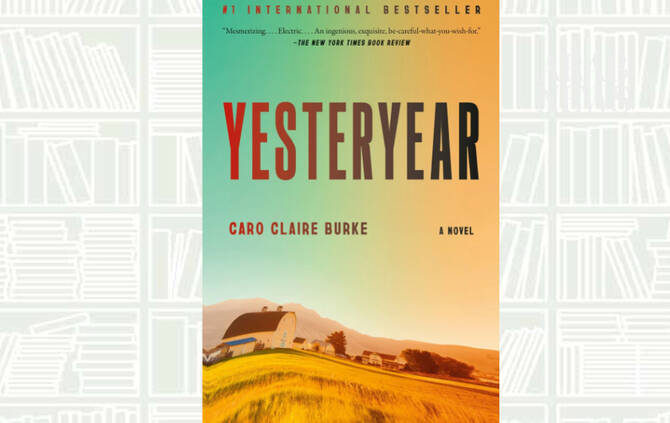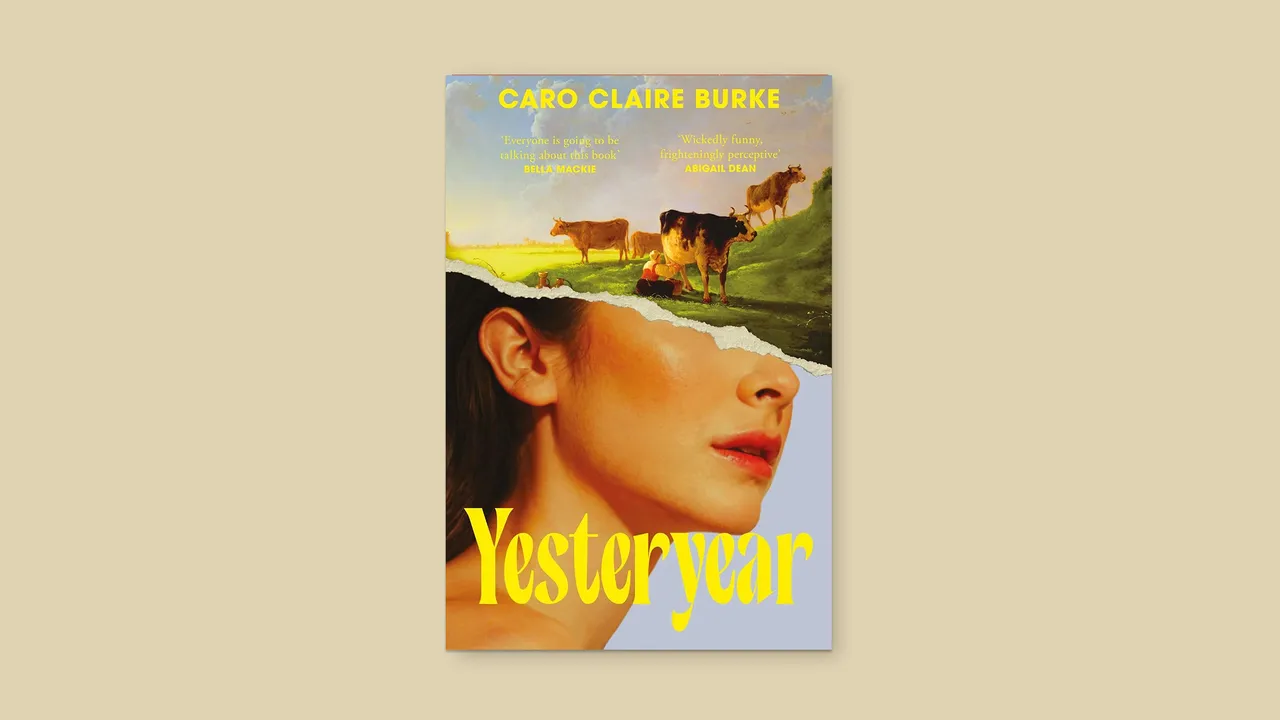
There is a striking irony at the heart of Caro Claire Burke’s debut novel, Yesteryear. It’s protagonist Natalie Heller Mills builds a lucrative online career romanticising traditional womanhood, presenting domestic life through carefully composed images of motherhood, homemaking and rural abundance. Then, quite literally, she gets what she has wished for.Cover of the book Yesteryear by Caro Claire Burke.Burke takes a premise that could have easily become broad satire and grounds it in something far more thoughtful. When Natalie finds herself in the nineteenth century, the gap between aesthetic nostalgia and lived reality becomes impossible to ignore. The endless labour of keeping a household running, the dangers surrounding childbirth, and the lack of autonomy available to women are not presented as dramatic revelations but as facts of everyday life. That restraint is precisely what makes this novel so effective. Rather than sensationalising history, Burke lets its everyday realities quietly dismantle the fantasy that Natalie has spent years selling.What stays with this reviewer the most is Burke’s refusal to mock her protagonist, Natalie. She is often misguided, but is also intelligent enough to recognise the contradictions between the world she promotes and the one she now inhabits. Her gradual reckoning gives the novel its emotional weight, and Burke deserves credit for resisting the temptation to turn her into either a villain or an easy symbol. But throughout, she remains frustratingly human!That said, Yesteryear is also a novel that occasionally gets in its own way. Burke is clearly an assured writer, but quite often she doesn’t trust the strength of her story enough. The prose leans heavily into lyrical, flowery passages that are though beautifully written in isolation but often slow down the narrative’s momentum and repeatedly underline emotions that have already landed. Some readers may end up wishing for a leaner edit. Had Burke exercised a little more restraint, the novel could have comfortably lost well over a hundred pages without losing any of its emotional or thematic depth.The book even brings to mind works such as The Handmaid’s Tale and Little House on the Prairie, though Burke is shown as less interested in oppression or pioneer romance than in the stories people tell about the past. She understands that nostalgia is rarely about history itself. It’s about longing, selective memory, and the comforting illusion that another era was somehow simpler or better.Despite its uneven pace, Yesteryear succeeds in what it sets out to attempt because it asks timely questions without reducing these to a merfe social media discourse. Burke examines the tradwife culture, not as an internet trend to ridicule but as a symptom of a much older longing for certainty and belonging. It’s here that one feels that one may have wanted a tighter novel, but never doubts the intelligence behind it. If nostalgia is history with the rough edges sanded away, Yesteryear is a novel determined to put these back.Title: YesteryearAuthor: Caro Claire BurkePublisher: HarperCollinsPrice: ₹599For more, follow HT City Delhi Junction
Book Review | This time-travel tale puts nostalgia on trial
Author Caro Claire Burke’s debut work, Yesteryear is an inventive time-travel novel that dismantles the fantasy of nostalgia with empathy and intelligence. It’s indulgent prose, however, often slows an otherwise compelling story.
494 words~2 min read