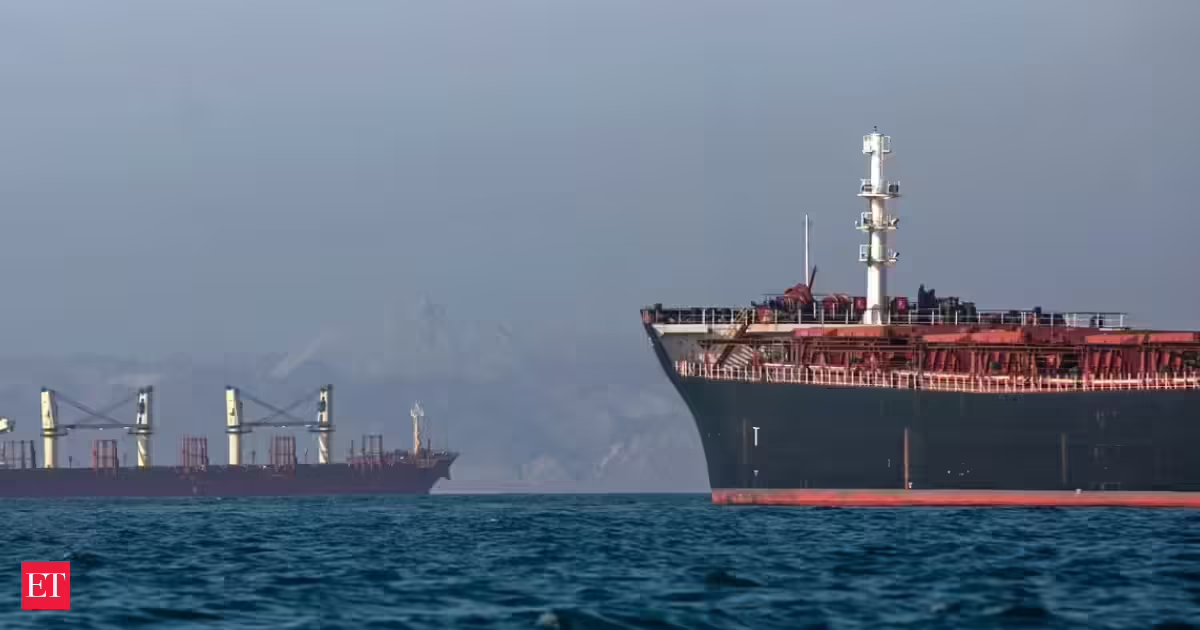
The United States and Iran might be edging closer to an agreement for ending their ongoing war. Such a deal would be momentous for the global economy, which has suffered from the closing of the Strait of Hormuz. But the stakes may be highest for Iran, which has been under a severe U.S.-imposed blockade for months—and broader sanctions for years.
What sort of sanctions relief can Iran expect? How has Iran managed its wartime economy amid the U.S. blockade? And will the situation at the Strait of Hormuz ever revert to the prewar status quo?
Those are just a few of the questions that came up in my recent conversation with FP economics columnist Adam Tooze on the podcast we co-host, Ones and Tooze. What follows is an excerpt, edited for length and clarity. For the full conversation, look for Ones and Tooze wherever you get your podcasts. And check out Adam’s Substack newsletter.
Cameron Abadi: What exactly are the potential economic concessions that could be made toward Iran [regarding its frozen assets around the world]? And how could that work in practice?
Adam Tooze: If you dig into this a little bit, what’s really at stake here is a pool of [frozen Iranian] assets—essentially claims that Iranians have, or the Iranian government, or Iranian suppliers, or Iranian banks have on the rest of the world that could run to as much as $120, $130 billion, which would be as much as one third of Iran’s desperately diminished GDP. And the crucial thing to understand is that most of these are not in the United States. They are sanctioned and frozen in place as a result of the threat of secondary sanctions by the United States against anyone that does any business with Iran.