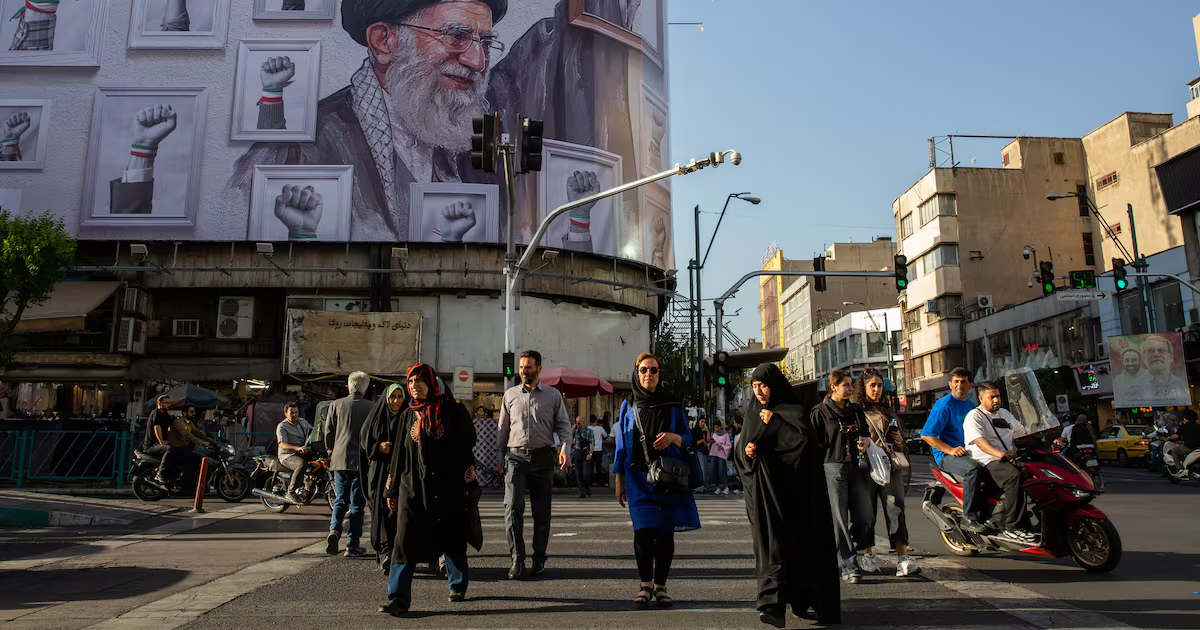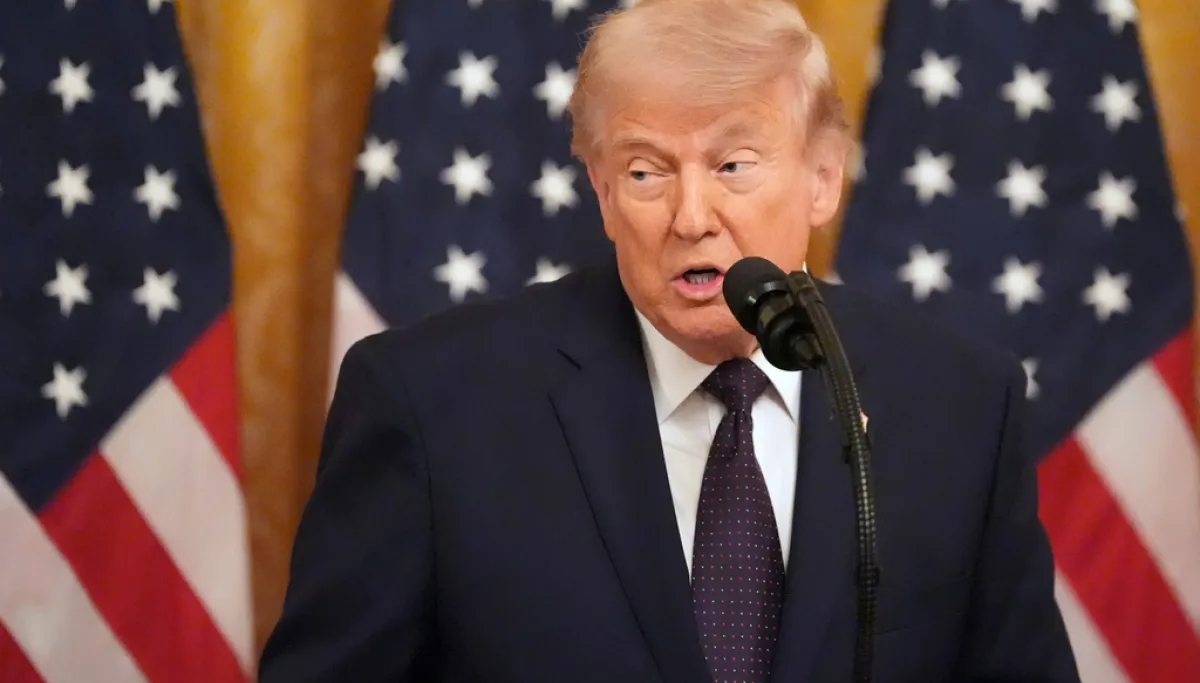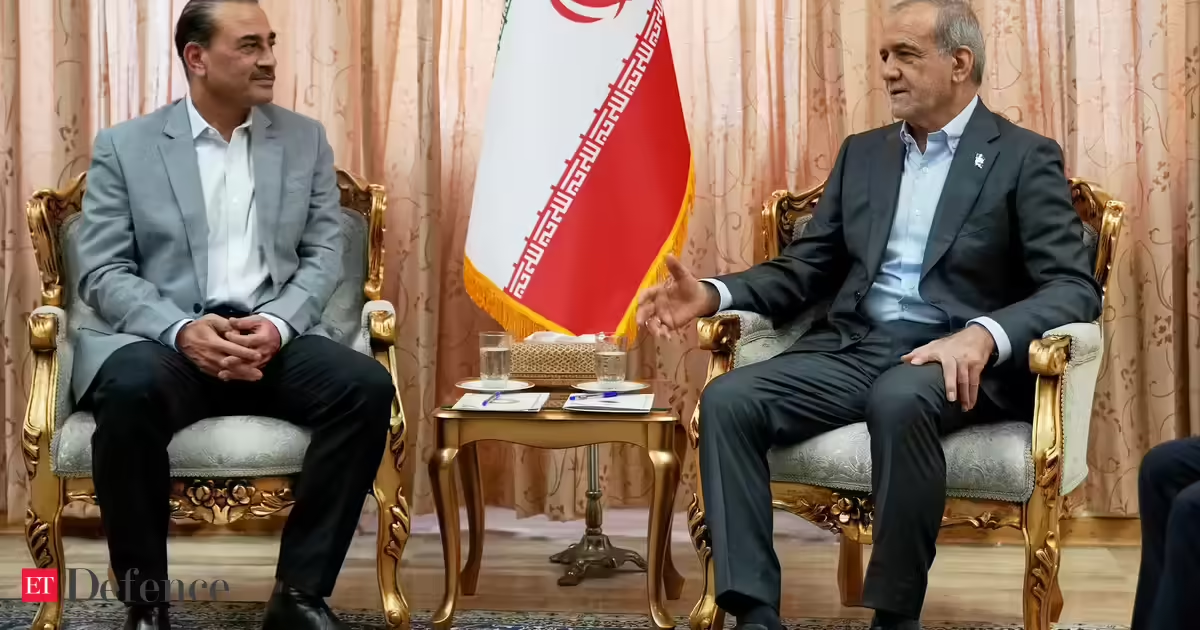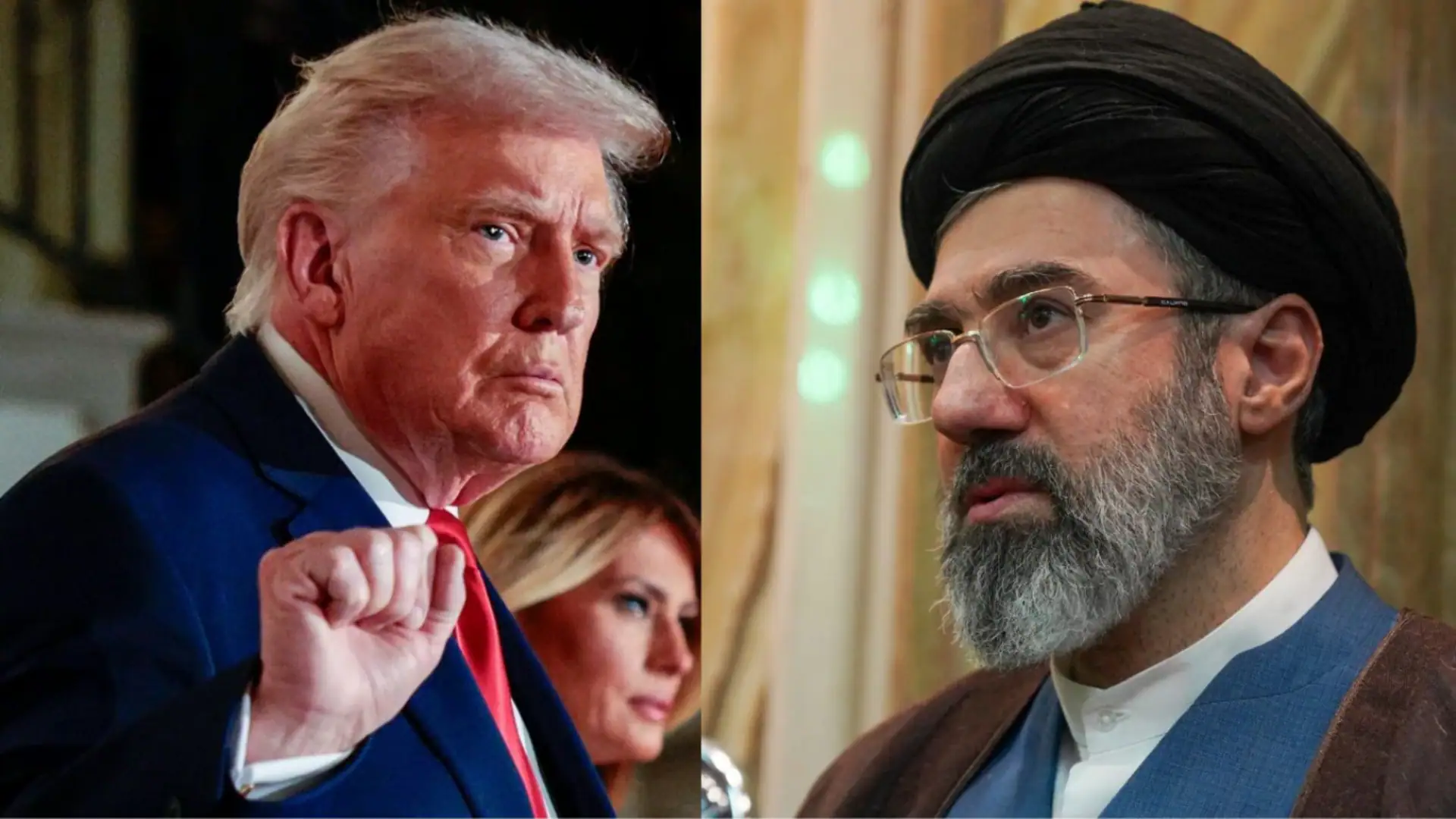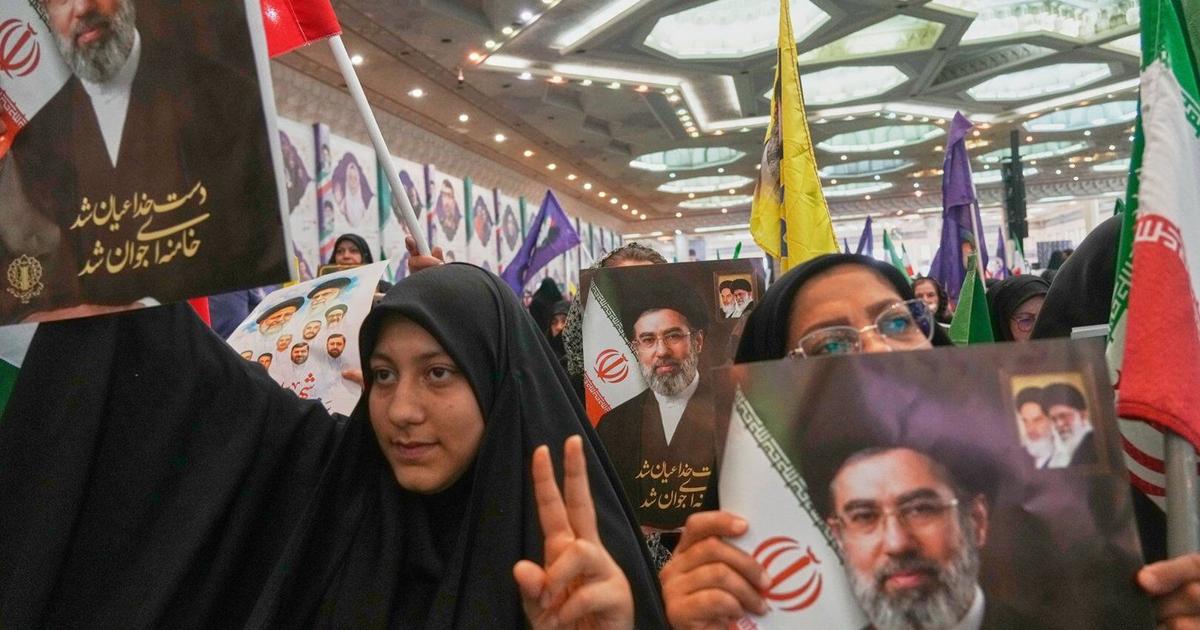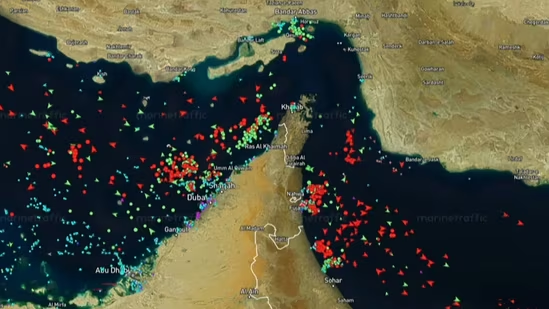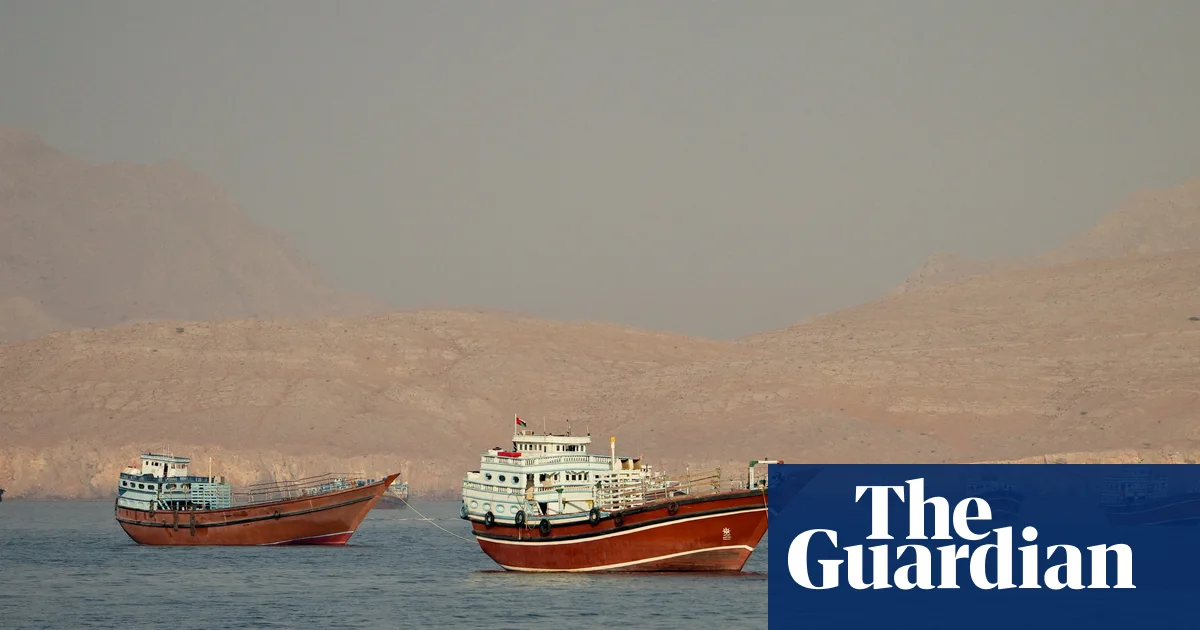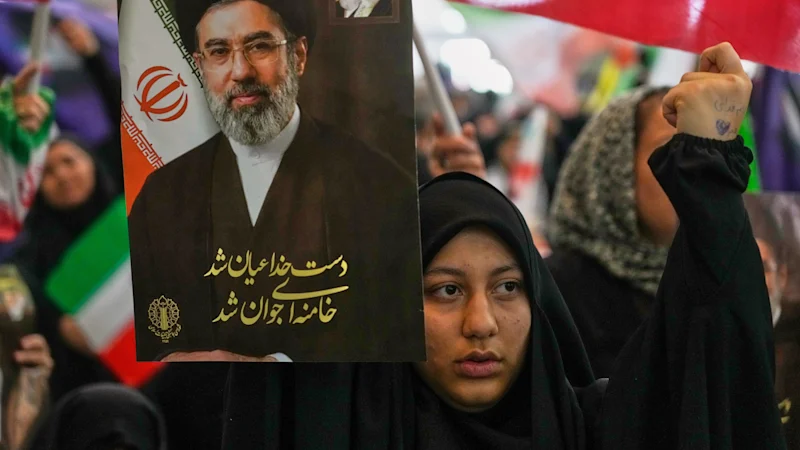
Amelia Nierenberg and Ephrat LivniMay 25, 2026 — 11:30amThe United States and Iran have signalled that they are moving closer to a deal to end the war in the Middle East. But neither country has released a copy of the possible deal, and it remains unclear exactly what they agreed to – or if they agreed to much at all.In interviews, US and Iranian officials have described basic elements of a deal differently. Notably, they have portrayed discussions about the future of the nuclear program – and Iran’s existing stockpiles of highly enriched uranium – in divergent terms.An Iranian woman carries a portrait of Supreme Leader Mojtaba Khamenei. Instead of being toppled, the regime appears to have further entrenched its position following the US-Israeli attack.AP Photo/Vahid SalemiHere are five of the main issues at stake and the positions each side has revealed so far.1. Iran’s nuclear programUS President Donald Trump has repeatedly said Iran must give up its stockpile of highly enriched uranium, which the US and Israel fear could be used to build a nuclear weapon. Iran has resisted.One big question is what Iran would do with its existing stockpile of enriched uranium. It has about 440 kilograms of uranium enriched to 60 per cent, and roughly 11 tonnes of other uranium enriched at various levels, the International Atomic Energy Agency says.Iran’s Natanz nuclear site, where it produced a vast majority of its nuclear fuel, has been targeted repeatedly by the US and Israel.Planet Labs PBCA US official told reporters on Sunday that the United States and Iran have agreed in principle to a deal that would include a commitment from Iran to dispose of its highly enriched uranium. The mechanism for disposal is still being negotiated, they said.Another question is whether Iran could continue to enrich uranium in future.The US official said the deal does not stipulate a moratorium on enrichment, noting that the issue would be addressed in future talks. In previous negotiation rounds, Washington has sought at least a 20-year commitment from Iran.US Secretary of State Marco Rubio signalled on Sunday that the Trump administration was prepared to accept an interim agreement that did not immediately take away Iran’s ability to make nuclear weapons.“You can’t do a nuclear thing in 72 hours on the back of a napkin,” Rubio said in a brief interview during a visit to India. He suggested that the United States could renew its threats to attack Iran if the negotiations did not bear fruit within two months.But three senior Iranian officials said on Saturday that nothing involving the nuclear stockpile had been agreed to.Iran had originally baulked at including any agreement on its highly enriched uranium in the initial phases of a deal. The three Iranian officials, speaking anonymously, told The New York Times on Saturday that all nuclear matters would be negotiated within 30 to 60 days. It was not clear whether the proposal that the Iranian officials said they had agreed to was the same draft memorandum that Trump posted on Saturday or the one that the US official referred to on Sunday.2. The Strait of HormuzBefore the United States and Israel began the war against Iran on February 28, the strait was open, and oil and gas shipments flowed freely through the waterway.After the war started, Iran effectively closed the strait by striking commercial ships and halting traffic, causing a spike in energy prices worldwide. In April, the US imposed a naval blockade on Iran’s ports and on Iranian-linked ships globally. Now, Iran is trying to assert its control over the strait by charging for passage.While its navy has sustained heavy losses, Iran still has many smaller craft that it can use to project power across the contested strait.Getty ImagesSo one big question is whether Iran would reopen the strait. Another is whether the United States would end its blockade.Iran’s effort to formalise and monetise its control over the waterway violates international law and shipping rules, which prohibit charging for safe passage through international waterways, experts say.The Iranian officials said that under the proposed deal, Iran would allow ships to pass through the strait without payment – for now. But, in turn, the US would have to lift its blockade.On Sunday, Trump signalled that the US could be open to ending its naval blockade of Iranian ports but noted that he had ordered negotiators not to rush to secure an agreement. “The Blockade will remain in full force and effect until an agreement is reached,” he wrote on social media.3. Iran’s frozen assetsIran wants to recover assets frozen in overseas accounts by long-standing international sanctions.The Iranians say the proposed deal would release $US25 billion ($34.9 billion) in such assets.At this stage, the US is not offering to unfreeze any of Iran’s assets, the American official told reporters on Sunday, but they said the US has made clear that it is willing to begin that process if Iran follows through on its nuclear commitments.The official declined to specify which assets or how much would be unfrozen.Trump has criticised former US president Barack Obama, even within the past few weeks, for releasing $US1.7 billion in frozen Iranian assets in 2015 under the deal his administration negotiated that had suspended most of Iran’s nuclear activity. Trump pulled out of that deal in 2018.4. Iran’s proxy forcesIran supports militias around the region. The most powerful among them is Hezbollah in Lebanon. Israel and Hezbollah have continued to clash in recent weeks despite a ceasefire.The big question here is whether the proposed deal would halt the ongoing clashes. Another question is whether Iran would rein in its other regional proxies.A mosque damaged in an airstrike on a nearby Hezbollah medical centre in Maashouk, Lebanon, last week.AP Photo/Mohammed ZaatariThe Iranians say that under the proposed agreement, the fighting would stop on all fronts, including Lebanon.The Americans have not mentioned Hezbollah or the proxies as being part of the proposal.Still, Israeli Prime Minister Benjamin Netanyahu said in a statement on Sunday that he had spoken to Trump the night before, who “reaffirmed Israel’s right to defend itself against threats on every front, including Lebanon”.5. Iran’s missilesIsrael and Gulf Arab states allied with Washington are in range of Iran’s ballistic missiles, so Iran’s missile stockpiles are a major issue, especially for Israel.Early in the conflict, the Trump administration said Iran would have to give up its missiles or limit their range. But the deal under discussion now does not address Iran’s missile stockpile, the US official told reporters on Sunday.Iran built vast underground “missile cities” to shield its drone and missile arsenals – and most are thought to remain largely intact.APIsrael’s leaders would be disappointed with any deal that does not cover missiles. Netanyahu said in his statement on Sunday that he and Trump remain aligned in seeking to prevent Iran from obtaining a nuclear weapon, but analysts noted that the deal under discussion could fall far short of Israel’s aims.An unresolved disagreement about missiles could sow the seeds for future conflict if Israel were to move to take out Iran’s missile capabilities on its own.More:Middle East at warDonald TrumpIranTrump diplomacyTrump's White HouseTrump's AmericaFrom our partners
These are the five main issues to be resolved in the US-Iran deal
US President Donald Trump says the nations could be close to a peace deal. The big issues at stake include the fate of Iran’s nuclear program and reopening the Strait of Hormuz.
1,190 words~5 min read