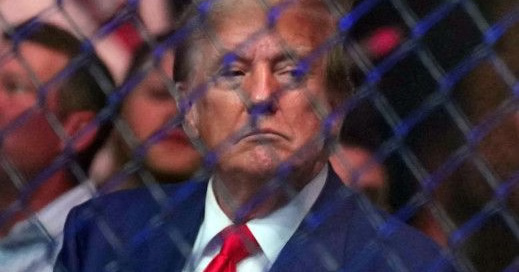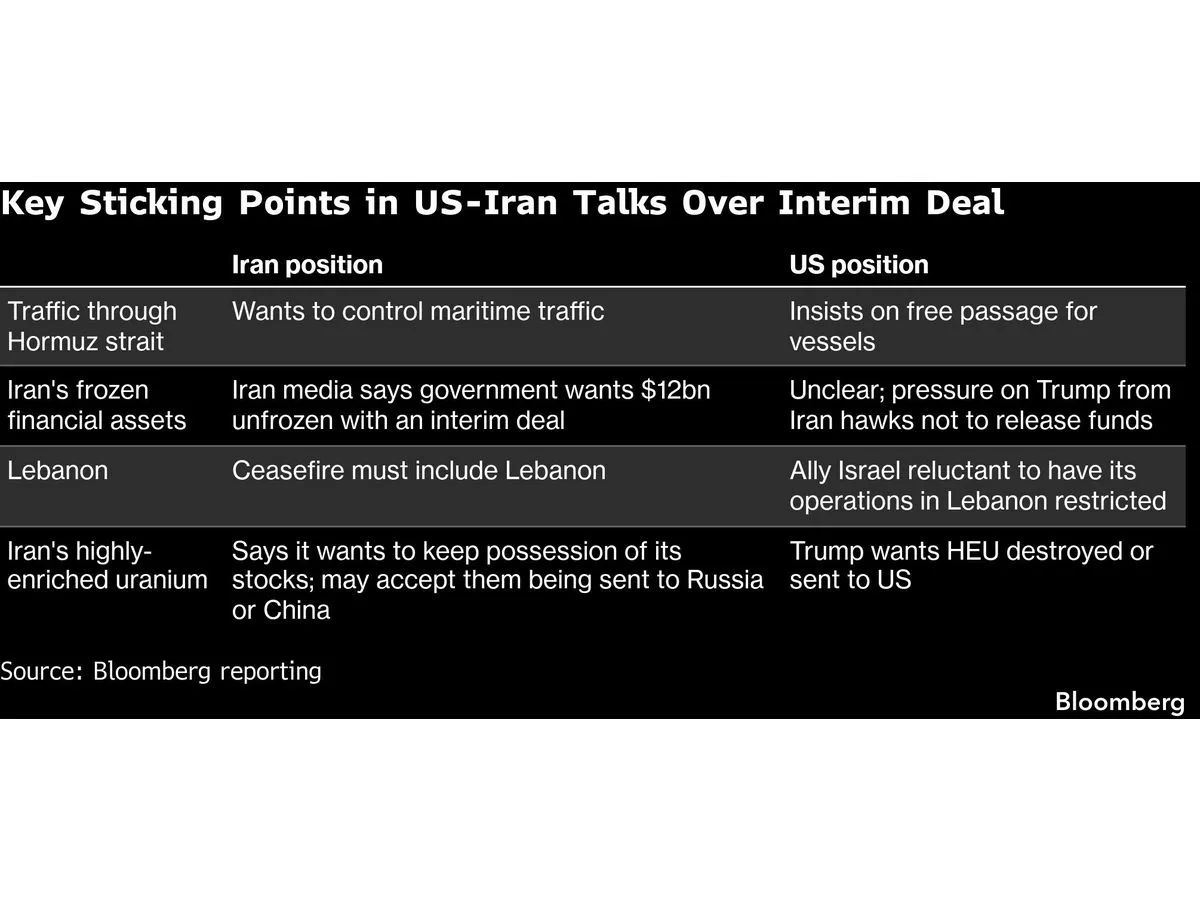
Skip to Content News Archives Economy Energy Oil & Gas Renewables Electric Vehicles Mining Commodities Agriculture Real Estate Mortgages Mortgage Rates Finance Banking Insurance Fintech Cryptocurrency Work Wealth Smart Money Wealth Management Investor Personal Finance Family Finance Retirement Taxes High Net Worth FP Comment Executive Women Puzzmo Newsletters Financial Times Business Essentials More Innovation Information Technology FP500 Podcasts Small Business Lives Told Tails Told Shopping Financial Post Store Obituaries Place a Notice Advertising Advertising With Us Advertising Solutions Postmedia Ad Manager Sponsorship Requests Classifieds Place a Classifieds ad Working Profile Settings My Subscriptions Saved Articles My Offers Newsletters Customer Service FAQ News Economy Energy Mining Real Estate Finance Work Wealth Investor FP Comment Executive Women Puzzmo Newsletters Financial Times Business Essentials HomePMN BusinessTrump Sends Mixed Signals on Iran as War Enters Fourth MonthThe White House has repeatedly sent conflicting messages on the prospects for a deal with Iran, highlighting President Donald Trump’s struggles to find an off-ramp to a conflict now in its fourth month.Author of the article:Last updated 14 minutes ago You can save this article by registering for free here. Or sign-in if you have an account.maezlx4v0gw94{]32qanyooc_media_dl_1.png Bloomberg reporting(Bloomberg) — The White House has repeatedly sent conflicting messages on the prospects for a deal with Iran, highlighting President Donald Trump’s struggles to find an off-ramp to a conflict now in its fourth month.Subscribe now to read the latest news in your city and across Canada.Exclusive articles from Barbara Shecter, Joe O'Connor, Gabriel Friedman, and others.Daily content from Financial Times, the world's leading global business publication.Unlimited online access to read articles from Financial Post, National Post and 15 news sites across Canada with one account.National Post ePaper, an electronic replica of the print edition to view on any device, share and comment on.Daily puzzles, including the New York Times Crossword.Subscribe now to read the latest news in your city and across Canada.Exclusive articles from Barbara Shecter, Joe O'Connor, Gabriel Friedman and others.Daily content from Financial Times, the world's leading global business publication.Unlimited online access to read articles from Financial Post, National Post and 15 news sites across Canada with one account.National Post ePaper, an electronic replica of the print edition to view on any device, share and comment on.Daily puzzles, including the New York Times Crossword.Create an account or sign in to continue with your reading experience.Access articles from across Canada with one account.Share your thoughts and join the conversation in the comments.Enjoy additional articles per month.Get email updates from your favourite authors.Create an account or sign in to continue with your reading experience.Access articles from across Canada with one accountShare your thoughts and join the conversation in the commentsEnjoy additional articles per monthGet email updates from your favourite authorsSign In or Create an AccountorThat pattern continued on Friday. Trump said in a social media post late in the morning that he was ready to make a “final determination” on a preliminary agreement to extend a fragile ceasefire. Hours later, however, Trump left his Situation Room meeting without any decision being made, the New York Times reported, citing a senior administration official. The back-and-forth continued a pattern of both sides suggesting an agreement was near, but then signaling disagreement over many of the same issues that have long bedeviled a deal, including the fate of Iran’s uranium and nuclear ambitions as well as freedom of navigation in the Strait of Hormuz. Get the latest headlines, breaking news and columns.By signing up you consent to receive the above newsletter from Postmedia Network Inc.A welcome email is on its way. If you don't see it, please check your junk folder.The next issue of Top Stories will soon be in your inbox.We encountered an issue signing you up. Please try againTraders have been whipsawed by abrupt turns in rhetoric, but hopes that a ceasefire deal could pave the way for an end to the Iran conflict helped drive stocks toward a historic streak of weekly gainsStill, investors face the danger that their expectations will be upended by yet another change in direction from Trump. There’s an “uncertainty discount” at play, said Kevin Book, managing director at ClearView Energy Partners, a Washington-based consulting firm, with markets facing “the challenge of going into a weekend not knowing what the president is going to say.” Trump has no public events on his schedule for Friday. He’s shown a penchant for launching military strikes and other significant announcements after US markets close and on weekends. Much of the Middle East has been observing the Eid holiday this week.In his post on Friday, Trump repeated demands that Iran never develop nuclear weapons and reopen Hormuz without tolls. But he did not say whether Iran had agreed. The post merely highlighted the uncertainty clouding negotiations in recent days. On Thursday, US officials confirmed that negotiators had reached a memorandum of understanding to extend the ceasefire by 60 days and launch further talks on the nuclear issue, pending Trump’s approval.Yet just hours after that confirmation, Treasury Secretary Scott Bessent declined from the White House podium to even acknowledge a tentative deal. Vice President JD Vance later told reporters the sides were “going back and forth on a couple of language points.”Bessent outlined three “red lines” as prerequisites for any agreement: Iran reopening Hormuz, surrendering its highly enriched uranium and ending its nuclear program. Yet even on those sticking points, Trump has sent mixed messages on whether and how he might compromise. On Hormuz, Trump previously said Iran and the US could manage its traffic in a joint venture. This week, Trump said emphatically no one country would control the strait but that the US would “watch over” it. On Iran’s nuclear program, Trump has said he would accept only a permanent suspension. More recently, he told reporters a 20-year halt to the program would be “enough.”Iran’s side of the talks have also remained opaque. Earlier Friday, Iranian state media said the MOU wasn’t finalized and had changed in recent days. Iranian Parliament Speaker Mohammad Bagher Ghalibaf said they had “no trust in guarantees or words” and that “no action will be taken before the other side acts.” Trump has insisted he won’t be rushed into a bad deal, even as he denies that war isn’t the military quagmire he’s long warned against. The conflict he’s called an “excursion” has well surpassed the initial four- to six-week timeline administration officials initially projected. Trump is facing pressure to end the war, with polls showing Americans disapprove of the conflict and soaring gasoline prices amplifying worries about his economic agenda. In public, the president has said he doesn’t care about the political strains as he seeks to gain leverage in talks with Iran.For all the mismatched rhetoric, there is a broad understanding Trump alone will make the final call. “Everything depends on what the president wants to do,” Bessent said.—With assistance from Courtney McBride, Jennifer A. Dlouhy and Skylar Woodhouse.(Adds New York Times report on no decision being reached in second paragraph.) Join the Conversation This website uses cookies to personalize your content (including ads), and allows us to analyze our traffic. Read more about cookies here. By continuing to use our site, you agree to our Terms of Use and Privacy Policy.
Trump Sends Mixed Signals on Iran as War Enters Fourth Month
The White House has repeatedly sent conflicting messages on the prospects for a deal with Iran, highlighting President Donald Trump’s struggles to find an off-ramp …
TL;DRAI
US negotiators confirmed a 60-day Iran ceasefire MoU Thursday; Treasury Secretary Bessent declined to acknowledge it hours later, in a pattern of contradictory signals now four months running. Hormuz disruption risk and policy volatility keep energy prices unpredictable — a macro input for capex planning and supply chain risk assessment in organizations with global operations.
1,201 words~5 min read