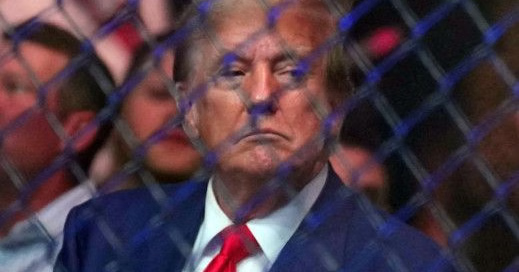
Repeated claims of progress, threats and stalled talks have left markets, too, scepticalLast updated: May 27, 2026 | 13:553 MIN READFor weeks, Trump has alternated between declaring diplomatic progress, threatening overwhelming military force and postponing attacks, creating a pattern that initially moved global oil and stock markets sharply but is now increasingly being met with scepticism by investors and analysts.Gulf news ArchivesFor weeks, Trump has alternated between declaring diplomatic progress, threatening overwhelming military force and postponing attacks, creating a pattern that initially moved global oil and stock markets sharply but is now increasingly being met with scepticism by investors and analysts.The shifting rhetoric has become one of the defining features of the conflict that erupted on February 28, as Washington and Tehran remain locked in a cycle of brinkmanship, failed negotiations and fragile ceasefire efforts.The New York Times noted that Trump repeatedly suggested the war was nearing an end even as military escalation continued. On March 23, Trump announced a five-day pause on attacks targeting Iranian energy infrastructure and said “very good and productive conversations” were taking place with Tehran. Markets rallied sharply on hopes that the administration was seeking an off-ramp from the conflict. Oil prices fell more than 10 per cent that day, with Brent crude briefly dropping below $100 a barrel. Worst day of the yearBut within days, Trump returned to threats, warning on March 30 that the US could target Iran’s energy infrastructure if the Strait of Hormuz was not reopened immediately. The S&P 500 then recorded its worst day of the year. The pattern repeated itself throughout April and May.On April 4, Trump warned that “all Hell will reign down” within 48 hours if talks failed. Days later, he announced a two-week ceasefire brokered by Pakistan — one of the most significant diplomatic developments of the war so far. Trump’s Iran timeline: Claims vs realityMarch 6: Trump demands Iran’s “unconditional surrender” March 23: Claims “productive conversations”; oil prices fall sharply March 30: Threatens energy infrastructure strikes April 4: Warns “all Hell will reign down” April 7: Threatens destruction, then announces ceasefire May 23: Says final deal details are being discussed May 26: Fresh US strikes hit southern IranMarkets initially welcomed the truce, which was expected to reopen the Strait of Hormuz, through which roughly a fifth of the world’s oil and gas normally passes. But Iran later accused Israel of violating the agreement through continued fighting involving Hezbollah, and the strait remained effectively closed. Shipping traffic through Hormuz subsequently collapsed, according to data cited in the NYT analysis. The talks then became further entangled after the collapse of negotiations in Islamabad on April 11, followed by a US naval blockade targeting Iranian oil exports.Major sticking points unresolvedIran responded by insisting the strait would remain closed as long as the blockade continued.Despite repeated claims by Trump that negotiations were progressing positively, major sticking points — including uranium stockpiles, sanctions relief, Hormuz and the sequencing of any broader nuclear agreement — have remained unresolved.In early May, Trump again suggested a breakthrough was near, saying discussions with Iran “could lead to something very positive for all”. But when Tehran later sent what Trump reportedly described as a hardline letter with no major concessions, he dismissed it as “totally unacceptable”. Over the Memorial Day weekend, Trump once more declared that a deal to extend the ceasefire and reopen Hormuz was close. Yet by Monday, the United States had resumed strikes on southern Iran and Trump again warned that the “shooting” could restart. Trump reinforced that combative tone on Tuesday with a lengthy Truth Social post mocking media coverage of the conflict and insisting Iran would only truly lose if it fully surrendered to the “magnificent U.S.A.” He claimed Iran’s navy was “resting at the bottom of the sea” and said its military should march out of Tehran “hands held high” waving white flags. The remarks came less than 24 hours after Trump again suggested diplomacy with Tehran remained possible.Trump is expected to convene his full cabinet at Camp David on Wednesday as uncertainty deepens over whether the US is nearing a diplomatic breakthrough with Iran — or another return to military escalation.Analysts say the repeated cycle of optimism, escalation and reversal has begun to erode market confidence in Trump’s rhetoric.According to The New York Times analysis, markets that once reacted sharply to Trump’s comments have become increasingly less responsive as promised diplomatic breakthroughs repeatedly failed to materialise.A Senior Associate Editor with more than 30 years in the media, Stephen N.R. curates, edits and publishes impactful stories for Gulf News — both in print and online — focusing on Middle East politics, student issues and explainers on global topics.
Trump says peace is near — so why does the Iran war keep escalating?
Trump’s shifting Iran strategy: promises of peace, renewed strikes and rising tensions in the Strait of Hormuz unsettle markets and test global confidence.
847 words~4 min read