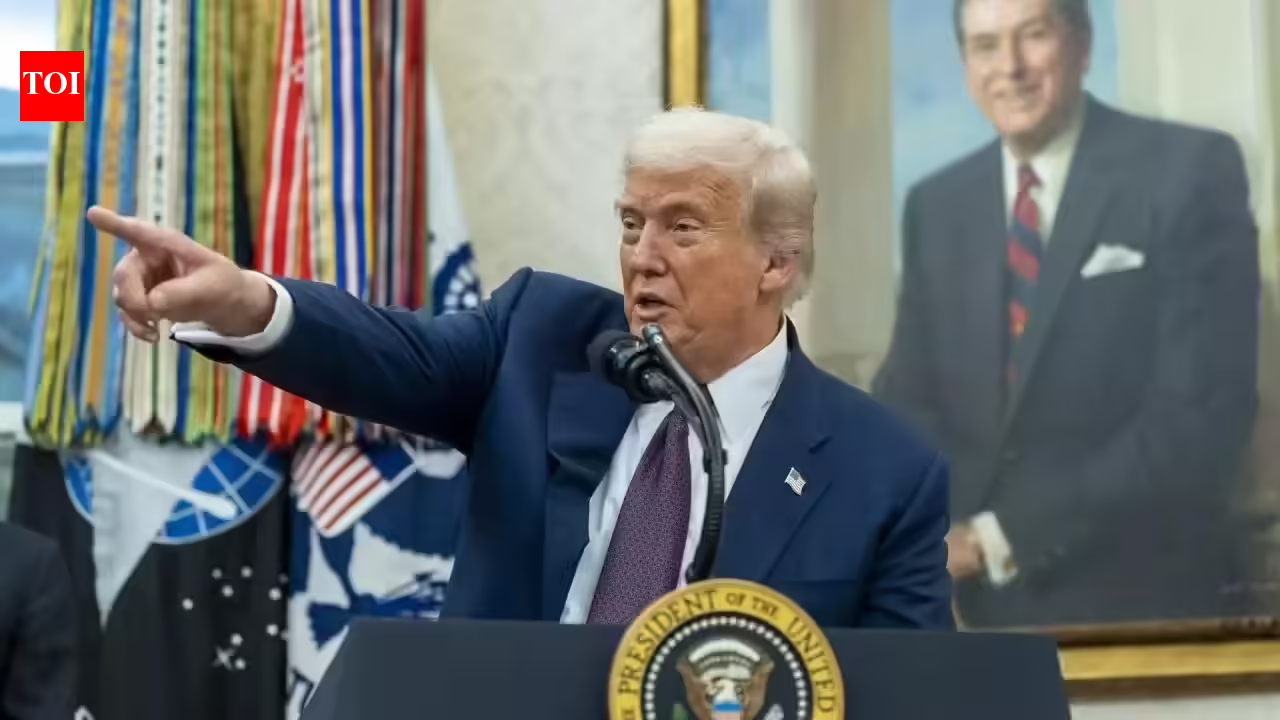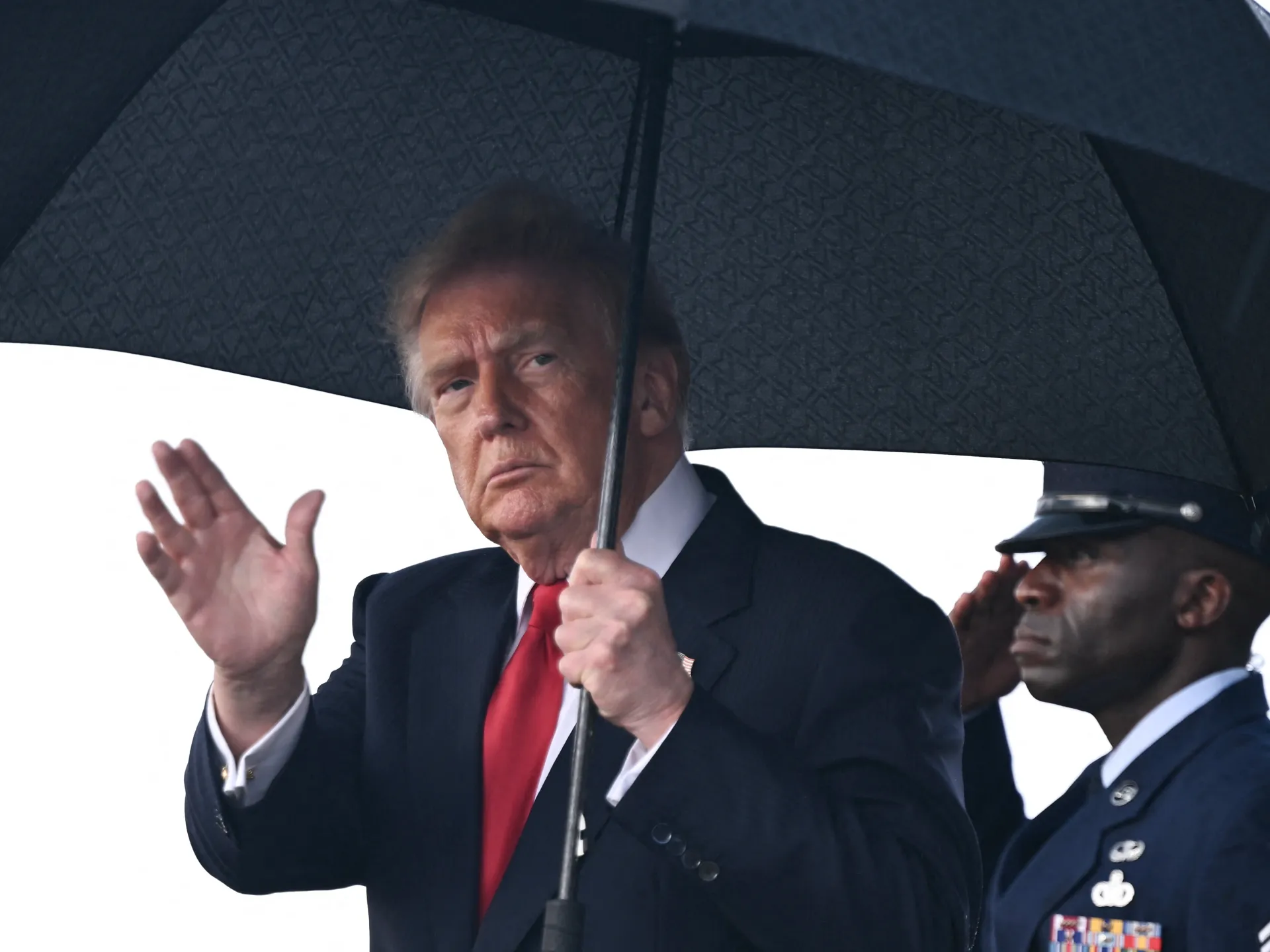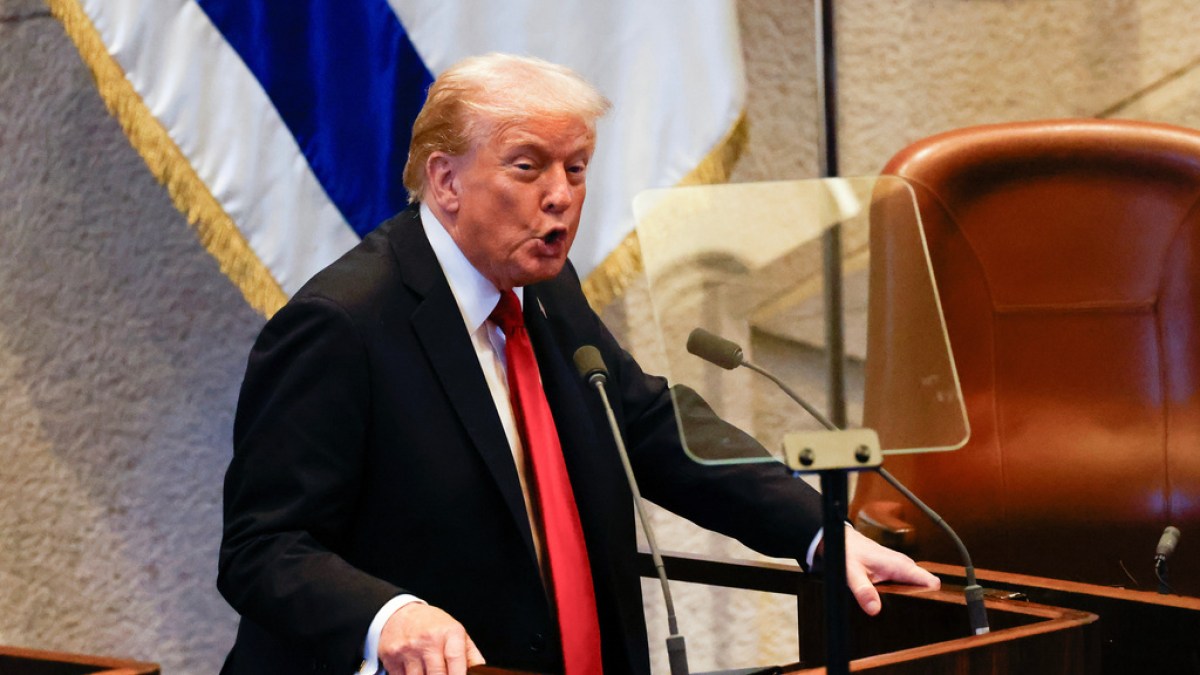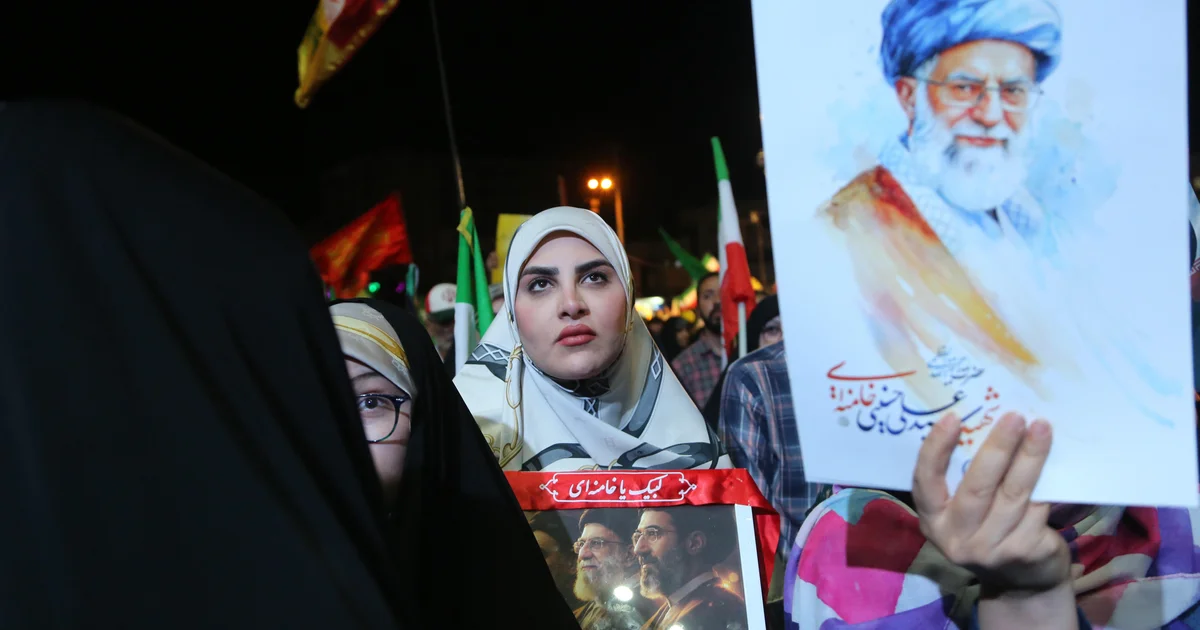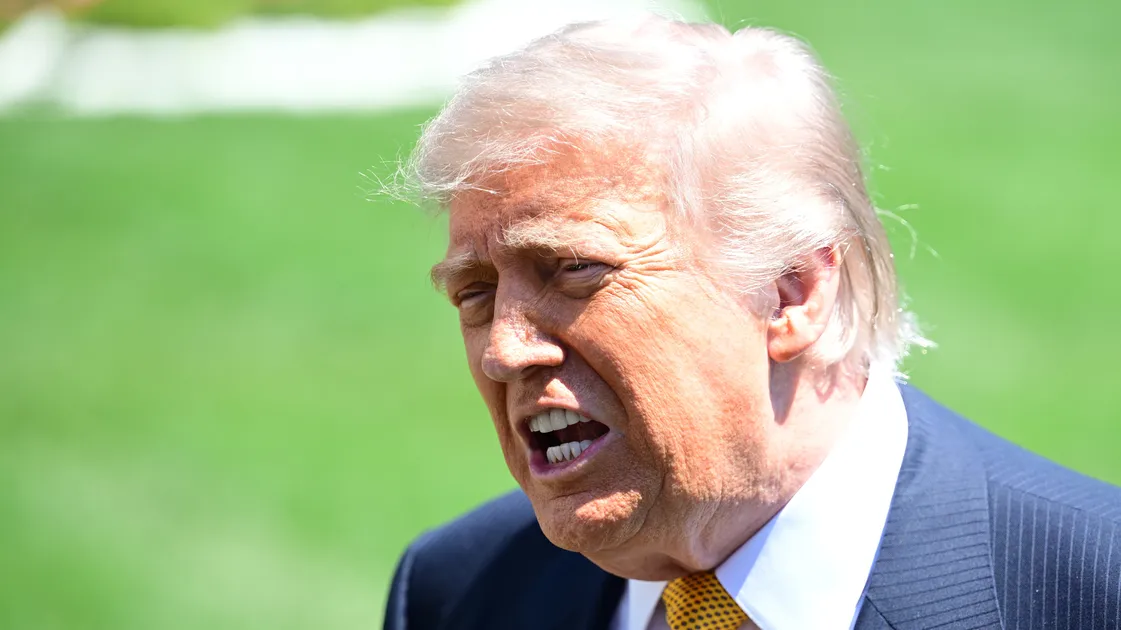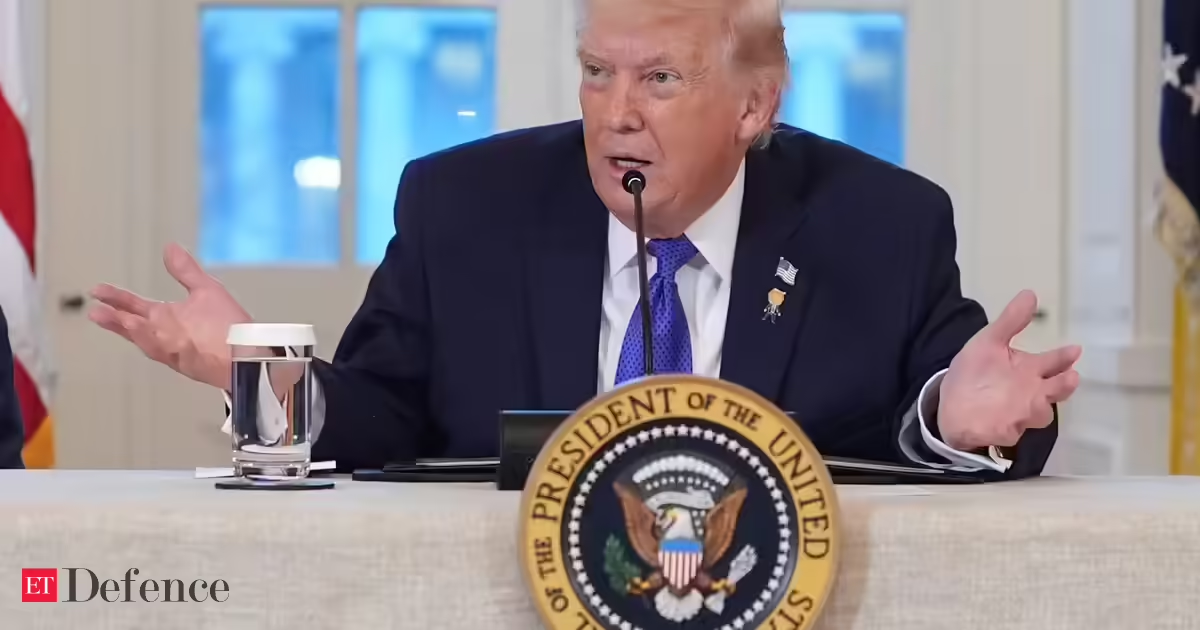
US President Donald Trump was projecting cautious optimism, telling Americans that negotiations with Iran were moving in the right direction and dismissing critics who questioned the diplomacy. “Just sit back and relax,” he wrote on Truth Social. “It will all work out well in the end.” The message reflected a belief inside the administration that a ceasefire framework, however fragile, could eventually evolve into a broader political settlement.But the Iran situation has suddenly taken a turn.Iran has now suspended indirect negotiations with the US, accusing it and Israel of violating the terms of the ceasefire through Israel’s escalating military operations in Lebanon. Tehran is threatening to shut down the Strait of Hormuz completely and activate additional pressure points across the region, such as at Bal el Mandeb, another maritime chokepoint. Meanwhile, military exchanges between US and Iranian forces have resumed, oil prices are surging again and the prospect of a wider regional war is suddenly back. For Trump, who built much of his political identity around ending costly foreign wars and projected confidence that Iran deal was around the corner, it could hardly be worse.Also Read:Iran suspends indirect US contacts, threatens wider pressure on key shipping routesThe deeper problem for Trump is that a return to full-scale confrontation with Iran would not merely be a military challenge. It would threaten Trump’s political standing, the Republican Party’s congressional prospects and the economic stability that American voters care about most.Trump's art of the deal is unravellingThe latest rupture came after Iran announced on Monday that it was suspending all indirect exchanges with the US through mediators. Iranian officials argued that Israeli military action in Lebanon constituted a violation of ceasefire understandings that had formed the basis of ongoing negotiations. Iranian Foreign Minister Abbas Araghchi declared that the ceasefire was “on all fronts” and that violations in Lebanon invalidated the agreement as a whole. Iranian state-linked media subsequently reported that Iran and its regional allies were considering measures that included a complete closure of the Strait of Hormuz and renewed pressure through the Bab el-Mandeb corridor.Also Read: 'Every choice has a price, and the bill comes due'- Iran's Ghalibaf warns US over ceasefire violationsThis represents a significant setback for Trump. The administration had spent weeks trying to build momentum toward a revised agreement after Trump reportedly returned a draft proposal with tougher demands concerning Iran’s nuclear activities and freedom of navigation through Hormuz. What appeared to be difficult but manageable negotiations have now become entangled with developments in Lebanon and Israel’s confrontation with Hezbollah.The central problem is that the US cannot fully separate the Iran issue from the broader regional conflict. Iran increasingly insists that Lebanon, Gaza and maritime security are interconnected issues. Israel, meanwhile, views Hezbollah as an immediate security threat and has shown little willingness to limit operations simply to preserve US-Iran diplomacy. As a result, events on one front can derail progress on another.Netanyahu’s plans may not align with Trump’sThe widening divergence between Israeli and American priorities creates another complication for Trump. Benjamin Netanyahu faces intense domestic pressure after months of conflict with Hezbollah. Residents of northern Israel continue to complain about insecurity, while casualties among Israeli soldiers have fuelled criticism of the government. Netanyahu therefore has strong political incentives to project strength and continue military operations against Hezbollah positions in Lebanon. From his perspective, escalation demonstrates resolve but from Trump’s perspective, escalation risks collapsing diplomacy.This tension has become increasingly visible. Iranian officials openly accuse Israel of sabotaging negotiations. Analysts say that a successful US-Iran agreement could reduce the likelihood of broader conflict and potentially constrain future Israeli military options. For Netanyahu, maintaining military pressure may therefore appear strategically advantageous even if it complicates American diplomacy.Trump consequently finds himself trapped between competing factors. Pressuring Israel could provoke backlash from key domestic constituencies and allies. Supporting Israeli escalation could destroy any remaining diplomatic track with Tehran, and neither option is politically comfortable.Military escalation may not offer a clear path to victoryOne reason Trump may resist returning to war is that the military outlook remains deeply uncertain. The US has already demonstrated overwhelming conventional superiority. American strikes have targeted Iranian military infrastructure, radar facilities and missile sites. Yet despite those attacks, Iran has shown considerable resilience. Iranian officials claim damaged military facilities have been repaired. Iran has also continued missile launches and retaliatory operations against American assets and regional partners. Over the weekend, US Central Command confirmed strikes on Iranian military facilities, while Iran’s Revolutionary Guard claimed attacks on a US base connected to American operations. Beyond Hormuz, Iran retains the capacity to target critical infrastructure throughout the Gulf. Energy facilities, desalination plants, ports and military installations across American partner states remain vulnerable. Any renewed campaign against Iranian infrastructure would likely trigger retaliatory strikes against these targets. That creates a dangerous cycle. Every escalation designed to weaken Iran risks expanding the conflict geographically.The costs at homeFor most American voters, the war is not primarily about military strategy or regional geopolitics but about prices. Markets reacted sharply to reports that Iran had suspended talks and could move toward a more comprehensive closure of Hormuz. Oil prices surged, with Brent crude approaching $96 a barrel. Analysts warn that prolonged disruptions could trigger broader economic stress and further inflationary pressure.This comes at a particularly sensitive moment for Trump. Inflation has already become one of the administration’s most damaging political vulnerabilities. Rising gasoline prices feed directly into voter perceptions of economic management. Electricity costs, transportation expenses and consumer prices all become affected when energy markets tighten.Historically, foreign policy crises hurt presidents most when they intersect with household economics. Americans may tolerate overseas conflicts if they remain distant and inexpensive. They become far less forgiving when wars begin showing up in utility bills, fuel costs and grocery prices. That is exactly the danger Trump now faces.Public opinion is moving against himThe political numbers are becoming increasingly alarming for Trump. Recent polling shows Trump suffering some of the worst approval ratings of either of his presidencies. The latest Economist/YouGov survey found only 34 percent approval against 59 percent disapproval, producing a net approval rating of minus 26, the lowest recorded across both Trump terms. The same polling also showed Democrats holding an advantage in congressional voting preferences ahead of the midterm elections. Even more concerning for Republicans is voter enthusiasm. Democratic voters appear significantly more motivated to participate in the upcoming elections than Republican voters. Historically, that combination has often foreshadowed difficult midterm outcomes for the president’s party. If the midterm elections were held right now, the latest Economist/YouGov poll found, Democrats would beat Republicans (39% said they would vote for the Democratic Party candidate in the district where they lived, against 33% who would vote for the Republican candidate). And Democratic voters also looked more eager to show up to vote at all (75% said they would, against 64% of Republicans).The Iran conflict appears to be contributing to those trends. Polls conducted during the war showed limited public support for the military campaign. Americans remain unconvinced that the conflict is either short or clearly winnable. Many expect a prolonged confrontation and express skepticism about whether the US is actually gaining the upper hand. In the last Economist/YouGov poll that asked about the Iran war, those surveyed did not seem convinced that this was a quick or a winning war either. More than 80% thought it would last longer than a month from now. And only 32% thought the US was currently winning.This is particularly damaging because Trump’s political brand was never built around launching wars. Unlike many traditional Republican foreign policy figures, Trump spent years criticising military interventions in Iraq and Afghanistan. He repeatedly presented himself as the leader who would avoid endless wars rather than begin new ones. A prolonged confrontation with Iran directly undermines that image.Midterms are now a big constraintTrump publicly insists that he does not care about the midterm elections. Politically, however, the administration cannot afford to ignore them. Control of Congress determines whether a president can advance legislation, secure funding priorities and avoid relentless investigations. If Republicans lose either chamber, Trump’s governing agenda becomes significantly more difficult to implement.Midterm elections often become referendums on the sitting president. When approval ratings fall sharply, congressional candidates from the president’s party frequently pay the price. The current warning signs are already visible. Polling indicates Democratic voters are more energised. Trump’s approval numbers have deteriorated substantially since he entered office with nearly half the country supporting him. A worsening war combined with rising inflation would likely deepen those problems. In effect, every missile exchange in the Gulf now carries domestic political consequences in dozens of competitive congressional districts.The options aren't attractiveThe option that appears least attractive to the US is also the one that could become harder to avoid if escalation continues. Limited strikes can punish Iran but cannot necessarily compel the regime. If missile attacks, maritime disruption and proxy operations continue despite air campaigns, pressure would inevitably grow for more forceful measures. Yet a large-scale ground operation against Iran would carry enormous risks.Iran is not Iraq in 2003. It possesses a larger population, a more capable military, difficult terrain and extensive regional networks. Even advocates of aggressive military action acknowledge that any ground campaign would require substantial resources and could produce unpredictable consequences.The US administration understands these realities. That leaves Trump with an uncomfortable dilemma. Escalation may not produce decisive results. De-escalation may require concessions that critics portray as weakness. Yet the middle ground is shrinking as diplomacy collapses and regional tensions rise.The paradox confronting Trump is that neither peace nor war currently offers an easy political victory. A negotiated settlement would require compromises that critics in the US, Israel and parts of the Republican coalition might oppose. A return to war risks higher oil prices, continued military exchanges, deteriorating approval ratings and potentially disastrous midterm consequences.Yet the status quo is also unstable. Iran’s suspension of talks demonstrates how fragile the diplomatic track has become. The conflict in Lebanon continues to generate new tensions. Shipping routes remain vulnerable and energy markets remain nervous. Every additional military exchange increases the risk of miscalculation. For Trump, the strategic calculation is becoming increasingly stark. The costs of war are becoming more visible while the prospects for decisive success remain uncertain. That is why the administration continues to search for a diplomatic breakthrough despite repeated setbacks.(With TOI inputs)
'Sit back and relax': Can Trump afford to go back to war with Iran?
US President Trump's cautious optimism regarding Iran negotiations has been shattered as Tehran suspends talks, citing Israeli actions in Lebanon. This escalation threatens the Strait of Hormuz, reignites military exchanges, and jeopardizes Trump's political standing and economic stability ahead of crucial midterm elections.
1,729 words~8 min read