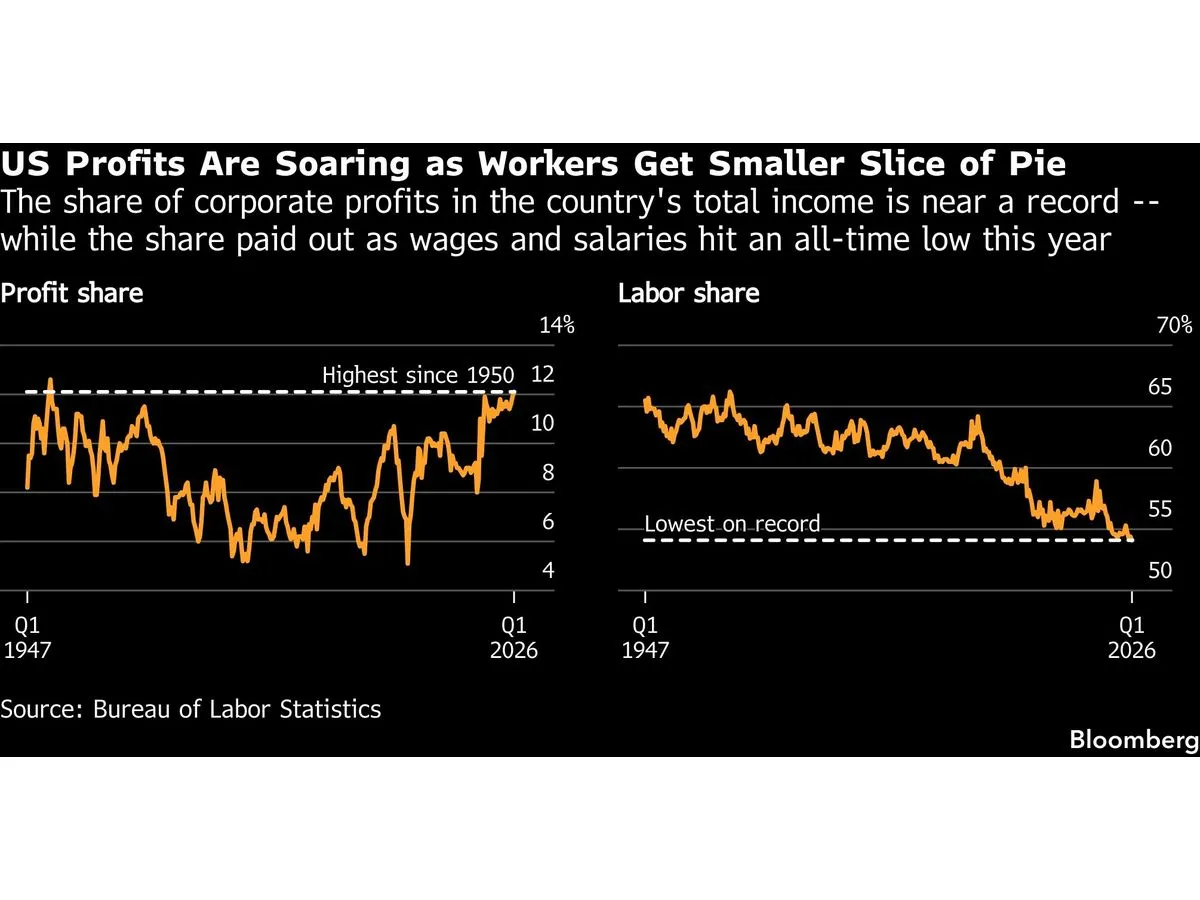
Skip to Content News Archives Economy Energy Oil & Gas Renewables Electric Vehicles Mining Commodities Agriculture Real Estate Mortgages Mortgage Rates Finance Banking Insurance Fintech Cryptocurrency Work Wealth Smart Money Wealth Management Investor Personal Finance Family Finance Retirement Taxes High Net Worth FP Comment Executive Women Puzzmo Newsletters Financial Times Business Essentials More Innovation Information Technology FP500 Podcasts Small Business Lives Told Tails Told Shopping Financial Post Store Obituaries Place a Notice Advertising Advertising With Us Advertising Solutions Postmedia Ad Manager Sponsorship Requests Classifieds Place a Classifieds ad Working Profile Settings My Subscriptions Saved Articles My Offers Newsletters Customer Service FAQ News Economy Energy Mining Real Estate Finance Work Wealth Investor FP Comment Executive Women Puzzmo Newsletters Financial Times Business Essentials HomePMN BusinessTrump's economy polling slides as Iran war saps his superpowerPresident Donald Trump is barreling toward the midterm elections with a vulnerability that’s something new in his political life: Voters are losing faith in the Trump economy.Author of the article:Last updated 3 minutes ago You can save this article by registering for free here. Or sign-in if you have an account.mw7pskwiww2]7kjfoxk(5tuh_media_dl_1.png Bureau of Labor StatisticsUnited States President Donald Trump is barrelling toward the midterm elections with a vulnerability that’s something new in his political life: voters are losing faith in the Trump economy.Subscribe now to read the latest news in your city and across Canada.Exclusive articles from Barbara Shecter, Joe O'Connor, Gabriel Friedman, and others.Daily content from Financial Times, the world's leading global business publication.Unlimited online access to read articles from Financial Post, National Post and 15 news sites across Canada with one account.National Post ePaper, an electronic replica of the print edition to view on any device, share and comment on.Daily puzzles, including the New York Times Crossword.Subscribe now to read the latest news in your city and across Canada.Exclusive articles from Barbara Shecter, Joe O'Connor, Gabriel Friedman and others.Daily content from Financial Times, the world's leading global business publication.Unlimited online access to read articles from Financial Post, National Post and 15 news sites across Canada with one account.National Post ePaper, an electronic replica of the print edition to view on any device, share and comment on.Daily puzzles, including the New York Times Crossword.Create an account or sign in to continue with your reading experience.Access articles from across Canada with one account.Share your thoughts and join the conversation in the comments.Enjoy additional articles per month.Get email updates from your favourite authors.Create an account or sign in to continue with your reading experience.Access articles from across Canada with one accountShare your thoughts and join the conversation in the commentsEnjoy additional articles per monthGet email updates from your favourite authorsSign In or Create an AccountorAs the standoff in the Strait of Hormuz drags on and U.S. gasoline prices remain high, Trump’s approval ratings have slumped near the lowest in either of his presidential terms. In particular, Americans have soured on his handling of the economy, a category that’s usually top of mind for voters and had long been Trump’s silver bullet in a career marked by tumult and scandal.Public angst over affordability helped Trump win back the White House and hasn’t gone away since. Data due out Wednesday is expected to show inflation back above four per cent for the first time since the spring of 2023. The White House sought to show it’s focused on the issue, touting bigger tax refunds for Americans and the abundance of domestic energy that it says will shield the U.S. from a global supply squeeze.Get the latest headlines, breaking news and columns.By signing up you consent to receive the above newsletter from Postmedia Network Inc.A welcome email is on its way. If you don't see it, please check your junk folder.The next issue of Top Stories will soon be in your inbox.We encountered an issue signing you up. Please try againBut this message has been drowned out by Trump himself. The president has frequently shifted the spotlight to other issues, like his White House renovations. He’s vowed to stay the course in the war with Iran, which he started. On top of that, he insists he doesn’t think about the resulting price spikes and doesn’t care about the November elections where they could be a key factor.“I think the president was being truthful when he said he really didn’t care about the midterms. Quite frankly, he’s got bigger things to deal with right now,” said Mick Mulvaney, a former congressman and acting Trump chief of staff. “But House and Senate Republicans do care. And if gas is still north of $4 by Labor Day, everybody in town knows that means trouble for the incumbent party. Big trouble.”The White House declined to make anyone available for an interview or indicate what steps it is considering. Spokesman Kush Desai pointed to “temporary disruptions” due to the Iran conflict.“The administration has never lost focus, however, on implementing the president’s proven economic agenda on the home front,” he said in a written statement. “As the Iranian terror threat is neutralized, Americans will again see cooling inflation, gas prices at multi-year lows, and accelerated economic growth.”Trump and key aides, such as Treasury Secretary Scott Bessent, have leaned on the argument that energy prices will rapidly fall once the Iran conflict is resolved and Hormuz reopens. It’s not clear when or how that might happen, with clashes escalating this month.But even if it does, energy prices won’t automatically reset to where they were. Damage to oil facilities, and risks that the conflict could flare up again, will get in the way, according to Joseph Brusuelas, chief economist at RSM US.“We think that the drag on the economy due to the war will weigh heavily on household consumption among middle-class, working-class and the working poor ahead of the November congressional election,” he said.For Trump and his party, the stakes are high. Republicans have a narrow House majority and are looking to buck history by avoiding the typical midterm swing toward the opposition. Trump has warned he may be impeached, like in his first term, if Democrats win the House. The GOP’s majority in the Senate looks safer, since Democrats would need breakthroughs in conservative states such as Texas or Iowa to have a shot, but could still be at risk if the economic headwinds rise.Some of the data is ominous. Consumer sentiment is in the doldrums, and the latest reading showed a slump among Republicans and independent voters too. Inflation climbed to 3.8 per cent in April and it wasn’t just driven by gasoline: Grocery prices rose the most in almost four years, with further increases in the pipeline as the Iran war hits fertilizer supplies.Higher prices are eating into paychecks. Inflation-adjusted hourly earnings just posted their first decline in three years. Americans have less cash to put aside for rainy days, driving the personal savings rate to a multiyear low.All of this helps explain the recent profusion of bad polling numbers for Trump.Gallup’s Economic Confidence Index hit the lowest point in his presidency, though it’s still above the nadir under former President Joe Biden in 2022. A Reuters/Ipsos poll found 73 per cent of respondents disapprove of Trump’s handling of the cost of living, up from 44 per cent when he took office. And an Economist/YouGov survey gave him an overall approval rating of 34 per cent, his lowest ever — while finding that for two weeks in a row, almost two-thirds of respondents said the economy is getting worse.To be sure, there are saving graces for Trump and the GOP — including a corresponding lack of confidence in their Democratic rivals, who recently presided over the worst inflation in four decades. And there are economic indicators to belie the gloom.The labour market is stuck in what economists call a “low-hire, low-fire” mode, but jobless rates are low by historical standards. Hiring may also be improving. Employers added 172,000 jobs in May — capping the strongest three-month stretch in more than two-years.Consumer spending has mostly held up in the face of higher prices. One reason is the bigger tax refunds that Americans received, thanks to the cuts Trump pushed through Congress last year. That’s where the president’s allies want the midterm campaign focus to be.The economy “poses a risk,” said Louisiana Senator John Kennedy. “When moms and dads lie down to sleep at night and can’t, one of the things they’re most worried about is the cost of living,” he said. “I think we have a good story to tell on what we’ve done to address it through the one big beautiful bill, but I wish the president would talk more about it.”More than tax cuts, the biggest engine of U.S. economic growth has been the rush to expand artificial intelligence. It’s a tailwind for the long-struggling manufacturing industry, which has seen the longest expansion of factory activity since 2022. It’s also lifted the stock market to record highs, which Trump likes to cite.AI may cut both ways on the campaign trail, though. The U.S. public is increasingly pushing back against the spread of data centres. And while corporate profits have surged, and stock-market wealth skews to affluent Americans, the slice of the national pie that’s paid out to workers as wages or salaries is at an all-time low.Some call this a K-shaped economy. Republican Senator Thom Tillis of North Carolina sees it as a hurdle for his party in the midterms, and thinks Trump and the White House should be doing more to reassure voters.“We’ve got to get out there and let people know that people are feeling pinched. I get it, rich people aren’t. They’re doing just fine,” Tillis said. “People that grew up like me are hurting. And if we don’t resonate with those voters, it could have electoral consequences in November.”The challenge is tougher because fallout from the Iran conflict has taken away some of Trump’s core second-term arguments.He’d regularly point to cheaper gasoline to wave away other cost-of-living concerns. Another example is mortgage rates: They declined steadily during his first year back in office, easing at least some of the public outrage over housing costs, but have climbed halfway back up again since March.Overall, the consensus view among forecasters is that Americans will be headed to the ballot box with growth slower, and prices higher, than they would have been absent the war.“One does not have to be an economist or a political analyst,” said Brusuelas of RSM, “to understand it does not bode well for incumbents and the governing majority.”—With assistance from Erik Wasson and Gregory Korte. Join the Conversation This website uses cookies to personalize your content (including ads), and allows us to analyze our traffic. Read more about cookies here. By continuing to use our site, you agree to our Terms of Use and Privacy Policy.
Trump's economy polling slides as Iran war saps his superpower
Trump's economy polling slides as Iran war saps his superpower
1,795 words~8 min read