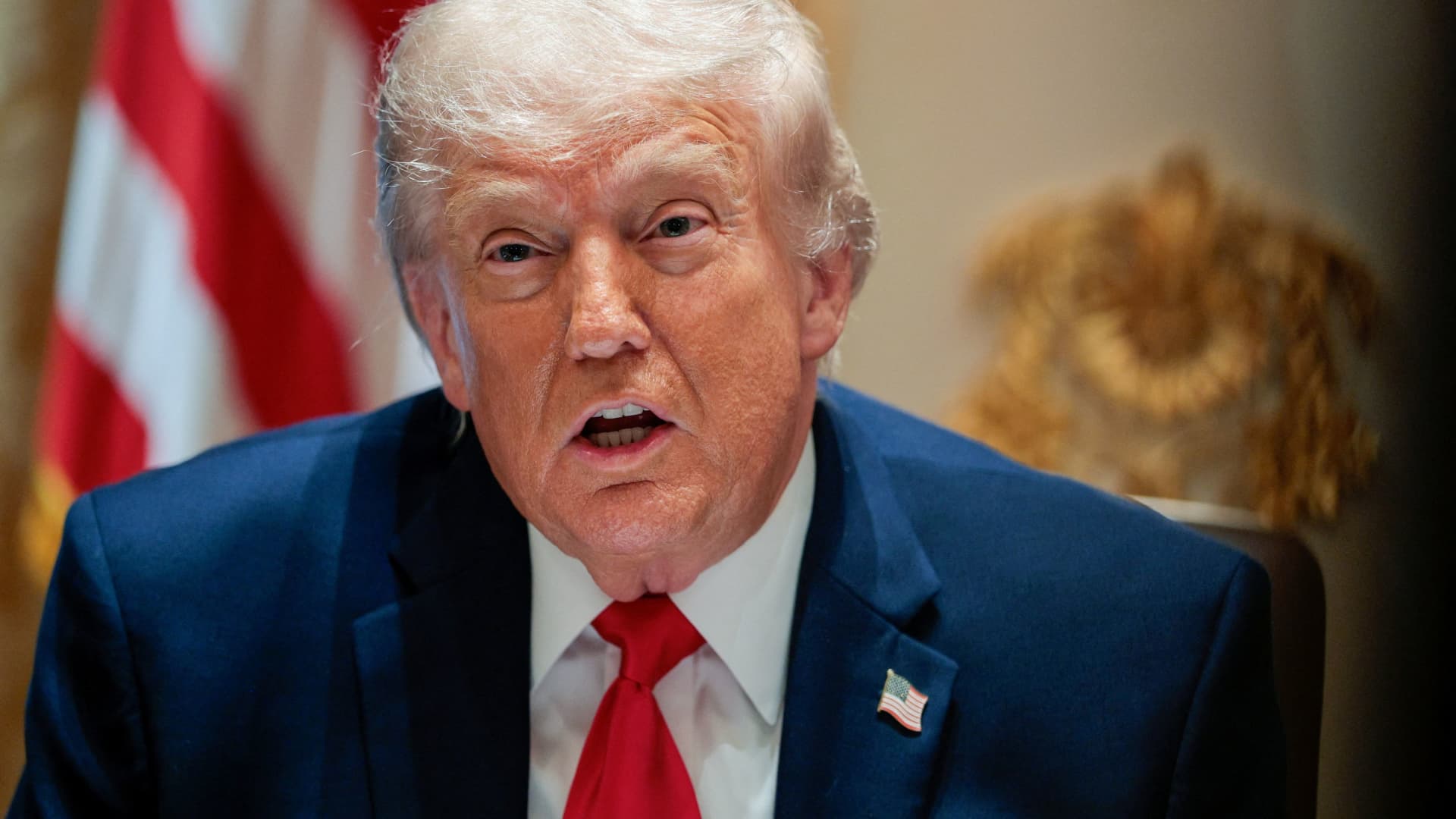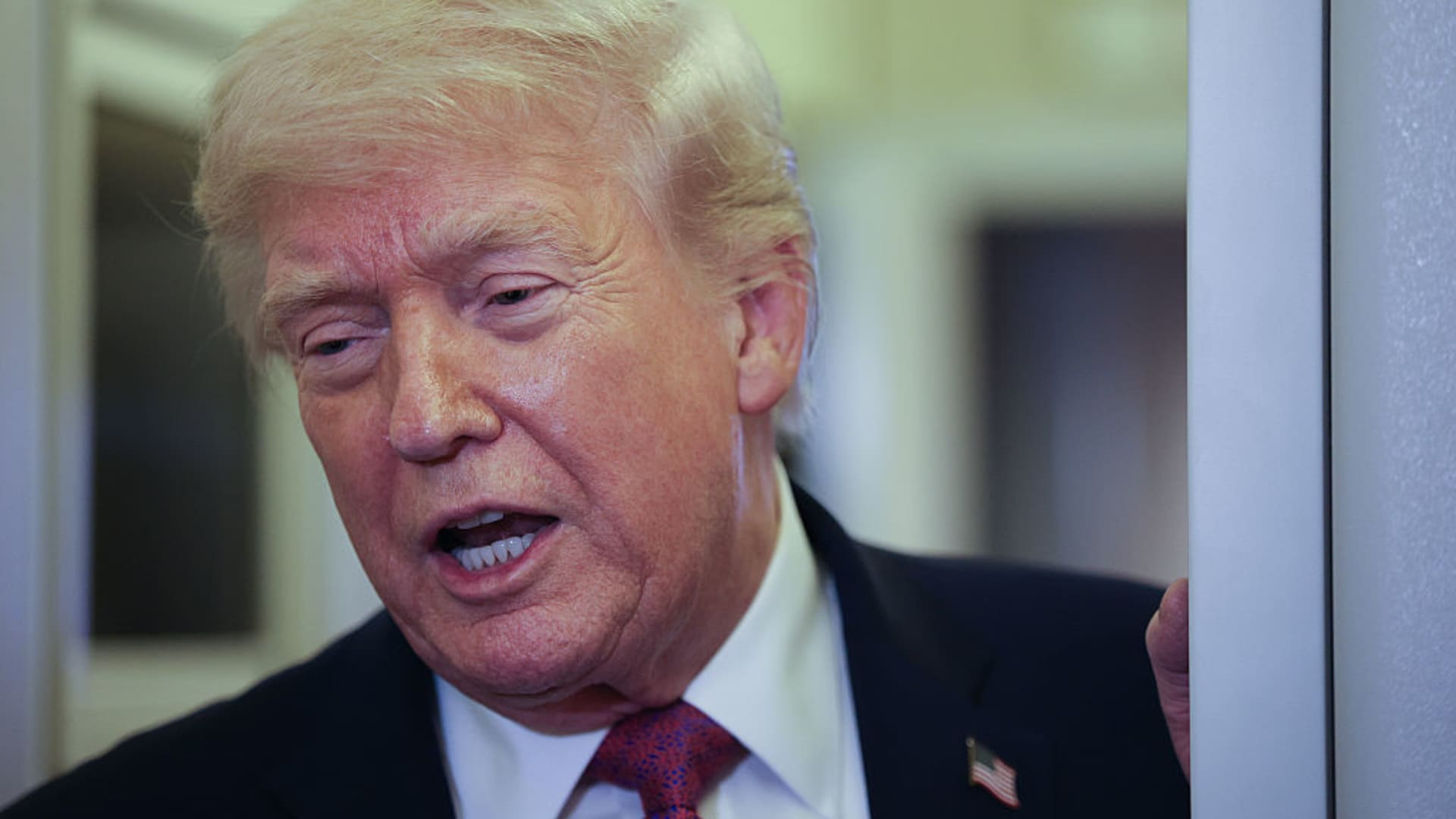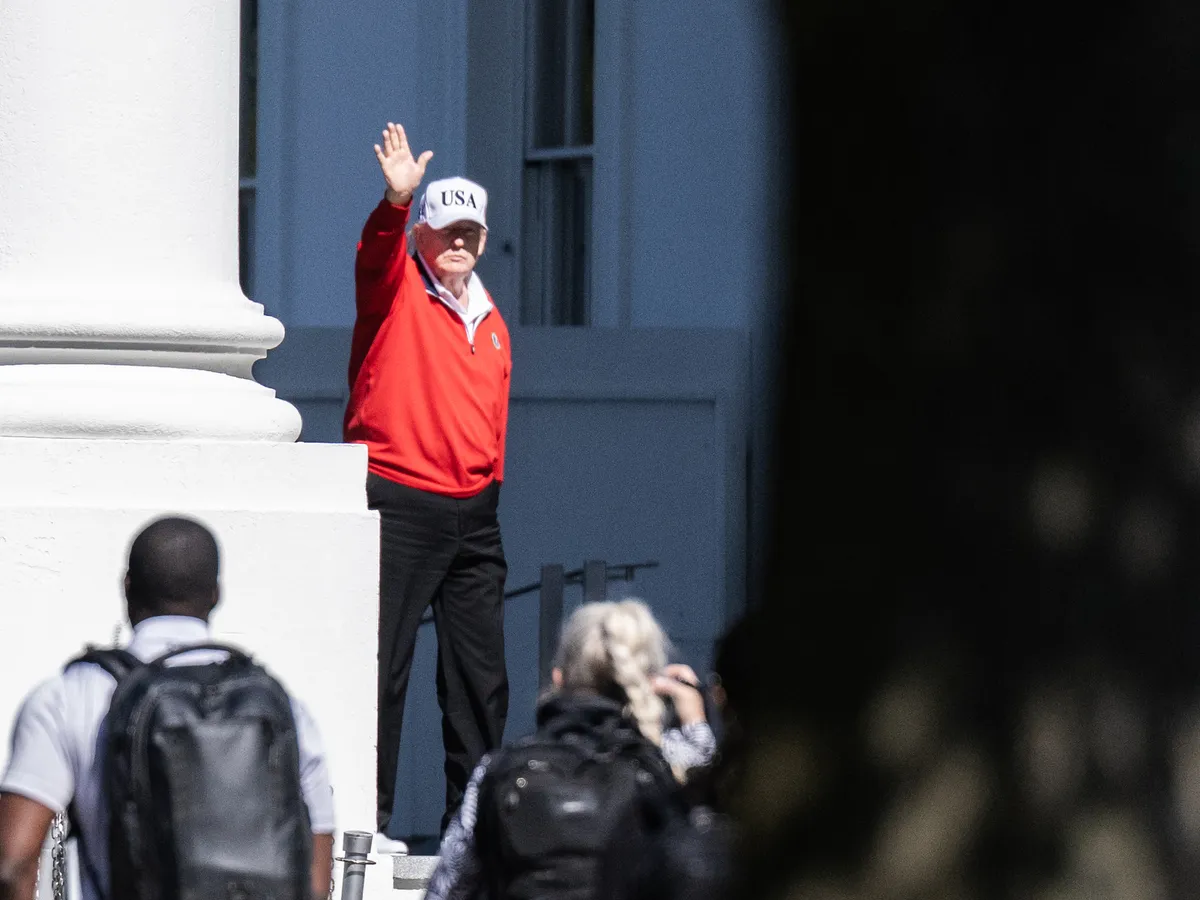
Skip to Content News Archives Economy Energy Oil & Gas Renewables Electric Vehicles Mining Commodities Agriculture Real Estate Mortgages Mortgage Rates Finance Banking Insurance Fintech Cryptocurrency Work Wealth Smart Money Wealth Management Investor Personal Finance Family Finance Retirement Taxes High Net Worth FP Comment Executive Women Puzzmo Newsletters Financial Times Business Essentials More Innovation Information Technology FP500 Podcasts Small Business Lives Told Tails Told Shopping Financial Post Store Obituaries Place a Notice Advertising Advertising With Us Advertising Solutions Postmedia Ad Manager Sponsorship Requests Classifieds Place a Classifieds ad Working Profile Settings My Subscriptions Saved Articles My Offers Newsletters Customer Service FAQ News Economy Energy Mining Real Estate Finance Work Wealth Investor FP Comment Executive Women Puzzmo Newsletters Financial Times Business Essentials HomeNewsTrump says deal will 'work out well' even as U.S., Iran clashTrump said constant speculation over whether he’ll agree to a deal isn’t helpingAuthor of the article:Last updated 1 hour ago You can save this article by registering for free here. Or sign-in if you have an account.U.S. President Donald Trump waves as he returns to the White House after spending the day at Trump National Golf Club in Sterling, Virginia on May 31, 2026 in Washington, D.C. Photo by Roberto Schmidt/Getty ImagesU.S. President Donald Trump said talks with Iran over an interim peace deal will “work out well,” even as the countries’ forces clashed again near the Strait of Hormuz.Subscribe now to read the latest news in your city and across Canada.Exclusive articles from Barbara Shecter, Joe O'Connor, Gabriel Friedman, and others.Daily content from Financial Times, the world's leading global business publication.Unlimited online access to read articles from Financial Post, National Post and 15 news sites across Canada with one account.National Post ePaper, an electronic replica of the print edition to view on any device, share and comment on.Daily puzzles, including the New York Times Crossword.Subscribe now to read the latest news in your city and across Canada.Exclusive articles from Barbara Shecter, Joe O'Connor, Gabriel Friedman and others.Daily content from Financial Times, the world's leading global business publication.Unlimited online access to read articles from Financial Post, National Post and 15 news sites across Canada with one account.National Post ePaper, an electronic replica of the print edition to view on any device, share and comment on.Daily puzzles, including the New York Times Crossword.Create an account or sign in to continue with your reading experience.Access articles from across Canada with one account.Share your thoughts and join the conversation in the comments.Enjoy additional articles per month.Get email updates from your favourite authors.Create an account or sign in to continue with your reading experience.Access articles from across Canada with one accountShare your thoughts and join the conversation in the commentsEnjoy additional articles per monthGet email updates from your favourite authorsSign In or Create an AccountorTrump, in a Truth Social post late on Sunday U.S. time, said constant speculation over whether he’ll agree to a deal — which will likely see the two sides extend their ceasefire by around two months, with Iran reopening the strait and the U.S. lifting a blockade of Iranian ports — weren’t helping.“It is MUCH tougher for me to properly do my job and negotiate, when political hacks keep negatively ‘chirping,’” Trump said, “that I should move faster, or move slower, or go to war, or not go to war, or whatever. Just sit back and relax, it will all work out well in the end.”Iran accused Washington of sending conflicting signals and dragging out negotiations. Tehran continues to engage with the U.S. with “distrust,” Foreign Ministry Spokesman Esmail Baghaei said Monday.Iran’s Parliament Speaker and lead negotiator, Mohammad Bagher Ghalibaf, said Israel’s escalation in Lebanon over the weekend and the blockade on Iranian ports are “clear evidence of U.S. noncompliance with the ceasefire,” according to a social media post. “Every choice has a price, and the bill comes due. It will all fall into place.”The naval blockade and escalation of war crimes in Lebanon by the genocidal Zionist regime are clear evidence of U.S. noncompliance with the ceasefire.Every choice has a price, and the bill comes due. It will all fall into place.— محمدباقر قالیباف | MB Ghalibaf (@mb_ghalibaf) June 1, 2026Trump is under pressure to end a war that’s sent energy prices surging and is unpopular with most Americans. Yet he needs to balance that with the likely criticism that will come his way if Washington unfreezes billions of dollars of Iranian funds, as Tehran is demanding.Breaking business news, incisive views, must-reads and market signals. Weekdays by 9 a.m.By signing up you consent to receive the above newsletter from Postmedia Network Inc.A welcome email is on its way. If you don't see it, please check your junk folder.The next issue of Posthaste will soon be in your inbox.We encountered an issue signing you up. Please try againIran also wants control of maritime traffic through the Hormuz strait — a crucial conduit for oil and liquefied natural gas. It says itself and Oman have the right to exercise sovereignty over the waterway and that shipping regulations imposed during the war will endure.“It will certainly be hard, complicated and difficult and there will be criticism and pressure against us, but we will pursue carrying it out, and naturally we will not back down from this,” Deputy Foreign Minister Kazem Gharibabadi said in an interview on state TV. “These arrangements are not temporary.”Tensions remain high and the U.S. struck Iranian radar and command-and-control sites over the weekend. The American military said it was a “measured” response to “aggressive Iranian actions” including the shootdown of a drone over international waters.Iran’s Islamic Revolutionary Guard Corps targeted an air base in retaliation, the semi-official Fars news agency reported, without identifying where the site was. On Monday morning, Kuwait said its air defenses were responding to “hostile missile and drone attacks.”Three ballistic missiles targeted the Ali Al-Salem airbase in Kuwait and were intercepted, a person familiar with the strikes said, asking not to be identified by name because details aren’t public.The clashes are the latest in a series of skirmishes over the past week. None of them has derailed the talks taking place between Washington and Tehran. Iran’s semi-official Tasnim news agency, which has close ties to the IRGC, said Sunday that both sides continued proposing amendments to a draft deal, though stressed there’s no guarantee they’ll reach an agreement.Oil prices rose on Monday, with Brent climbing 3.4 per cent to US$94.17 a barrel. The benchmark fell more than 11 per cent last week, with traders increasingly optimistic that there will be a deal and that the sides won’t revert to a full-on war.Trump’s post on the negotiations was his first since a White House Situation Room meeting on Friday in which he said he would make a “final determination.” Instead, he held off as the sides continue to negotiate details related to Iran’s stockpiles of highly-enriched uranium and how the reopening of the Hormuz waterway, which probably needs to be demined first, will be carried out.Iran says any agreement with the U.S. must apply to all fighting across the region, including in Lebanon where Tehran-backed Hezbollah and Israel are engaged in a parallel war.Israel has deepened its invasion of the Arab country, capturing the Crusader-era Beaufort Castle over the weekend, while Hezbollah has stepped up attacks on Israel’s north. The Israeli military said Hezbollah fired more than 300 “projectiles” at its soldiers in Lebanon and at northern Israel over the weekend.U.S. Secretary of State Marco Rubio spoke with Lebanese President Joseph Aoun and Israeli Prime Minister Benjamin Netanyahu to push for a new ceasefire initiative, an Axios reporter said in a post on X, citing an unidentified U.S. official. The US proposed that as a first step, Hezbollah would stop all attacks on Israel and Israel would refrain from escalation in Beirut.Israel is not party to the talks between the U.S. and the Islamic Republic and it’s not clear whether it will agree to stop its campaign in Lebanon if the war in Iran is resolved.On Saturday, Iranian state TV reported the existence of a new draft agreement, which it said gives the Islamic Republic “exclusive authority to determine the nature of transiting vessels” in Hormuz, a negotiating point the U.S. is unlikely to accept.The draft also said the U.S. has committed to giving Iran access to US$12 billion in frozen funds within 60 days, to be sent directly to Iranian banks without restrictions, according to Iranian TV. It said the document was “unofficial” and not “finalized.”The White House did not respond to a request for comment on the report.French President Emmanuel Macron condemned Israel’s latest advance in Lebanon and called for a ceasefire. “Nothing justifies the major escalation currently underway in southern Lebanon,” he said in a post on X.Israeli airstrikes in response to renewed attacks by Hezbollah in March have devastated swaths of southern Lebanon and the capital, Beirut, and killed at least 3,370 people, according to the Lebanese health ministry.Israel Katz, the Israeli defense minister, said the military had planted its flag on the historic Beaufort Castle near Nabatieh and that the expansion amounted to “a permanent presence” in the region.With assistance from Galit Altstein, Skylar Woodhouse, Golnar Motevalli, María Paula Mijares Torres and Benoit Berthelot Join the Conversation This website uses cookies to personalize your content (including ads), and allows us to analyze our traffic. Read more about cookies here. By continuing to use our site, you agree to our Terms of Use and Privacy Policy.
Trump says deal will 'work out well' even as U.S., Iran clash
U.S. President Donald Trump said talks with Iran over a peace deal will “work out well,” as the countries’ forces clashed again. Read more.
1,577 words~7 min read