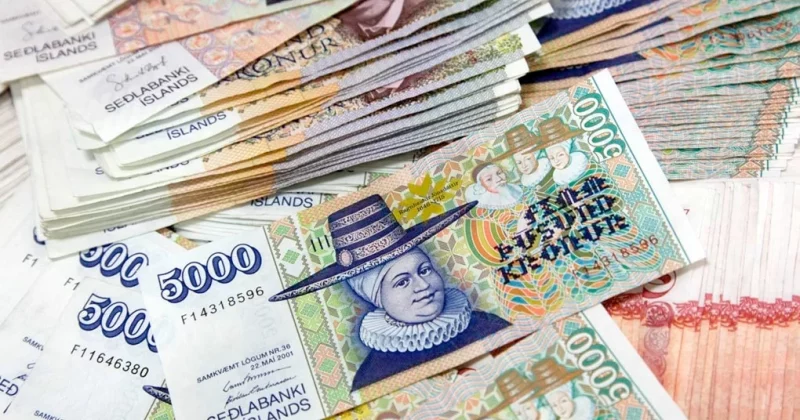
Iceland’s Finance Ministry has concluded that maintaining the króna as the nation’s currency costs more than it’s worth. The finding, drawn from a government-commissioned expert report, is the most significant policy signal Reykjavik has sent about its monetary future in years.
The report ties the króna directly to persistently high inflation, elevated interest rates, and cyclical economic instability. Iceland currently carries the highest borrowing costs in western Europe, a distinction no small island nation of roughly 380,000 people wants to hold.
The case against the króna
Iceland’s 2008 financial crisis remains the most vivid illustration. When the country’s three largest banks collapsed in spectacular fashion, the króna’s rapid depreciation turned a banking disaster into an inflation crisis. Imported goods became vastly more expensive almost overnight.
Iceland actually applied for EU membership in 2009, in the immediate aftermath of the financial crisis, but withdrew the application in 2015 after a change in government. The fishing industry, which remains a cornerstone of the Icelandic economy, has historically been a major sticking point in EU negotiations.