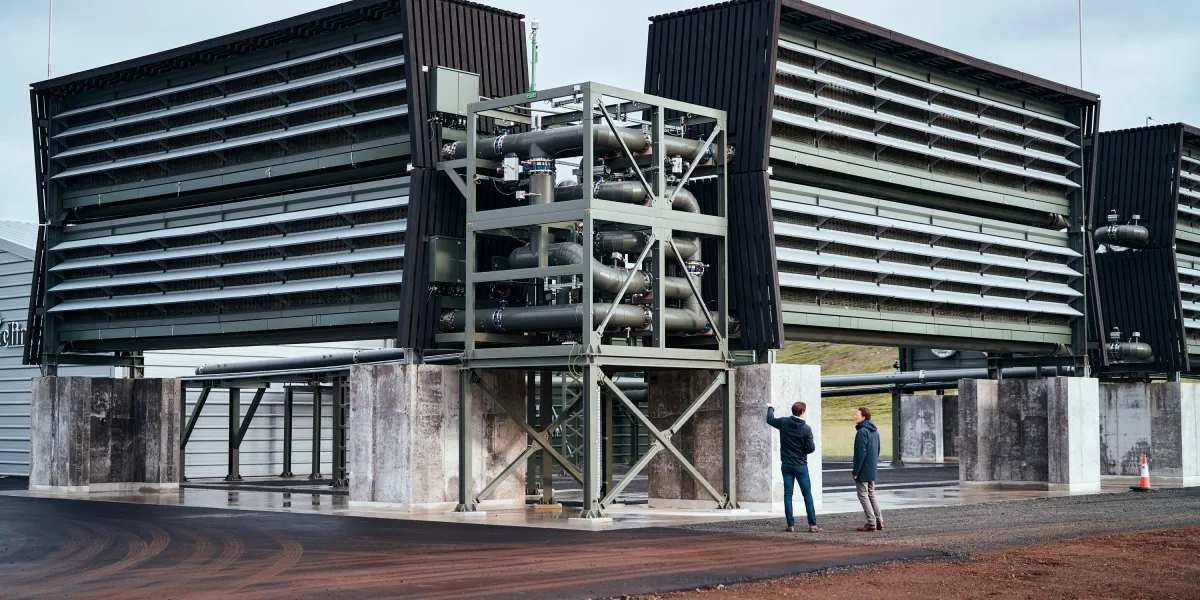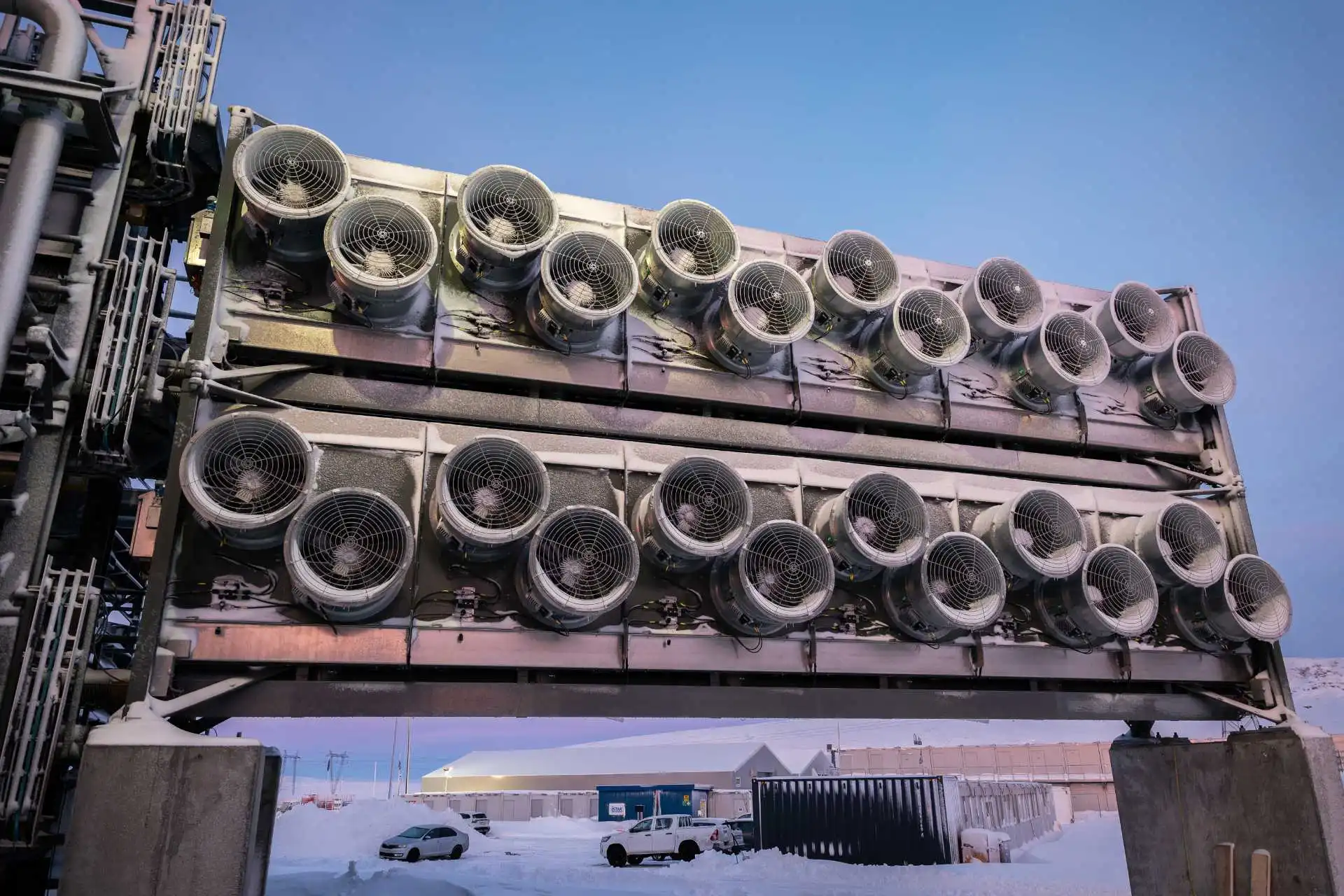
As Occidental Petroleum and BlackRock prepare to bring Stratos — the world’s largest direct air capture plant — online in the Permian Basin, a familiar debate has reignited: Does direct air capture actually remove more carbon than it emits?
But that question, while important, isn’t the right one for policymakers and investors to ask.
The more instructive questions are: For a given amount of money, which technology delivers the greatest public health and climate benefit? And how efficient does direct air capture need to be, and how clean does the electrical grid have to be before direct air capture investments outperform wind and solar? Our new research, produced by a team of scientists at Boston University, PSE Healthy Energy, and the Harvard T.H. Chan School of Public Health, answers these questions.
We modeled deployments of direct air capture, utility-scale wind, and utility-scale solar across the U.S. through 2050, and asked which delivers the most health and climate benefit per dollar. Under realistic assumptions about DAC’s current cost and energy requirements, wind and solar won in nearly every region, in every year. The technology approached competitiveness only under a cost and efficiency “breakthrough” scenario requiring electricity usage and costs to plunge far below anything demonstrated today. Even then, direct air capture barely edged out renewables nationally and still lost to wind in the Upper Midwest.