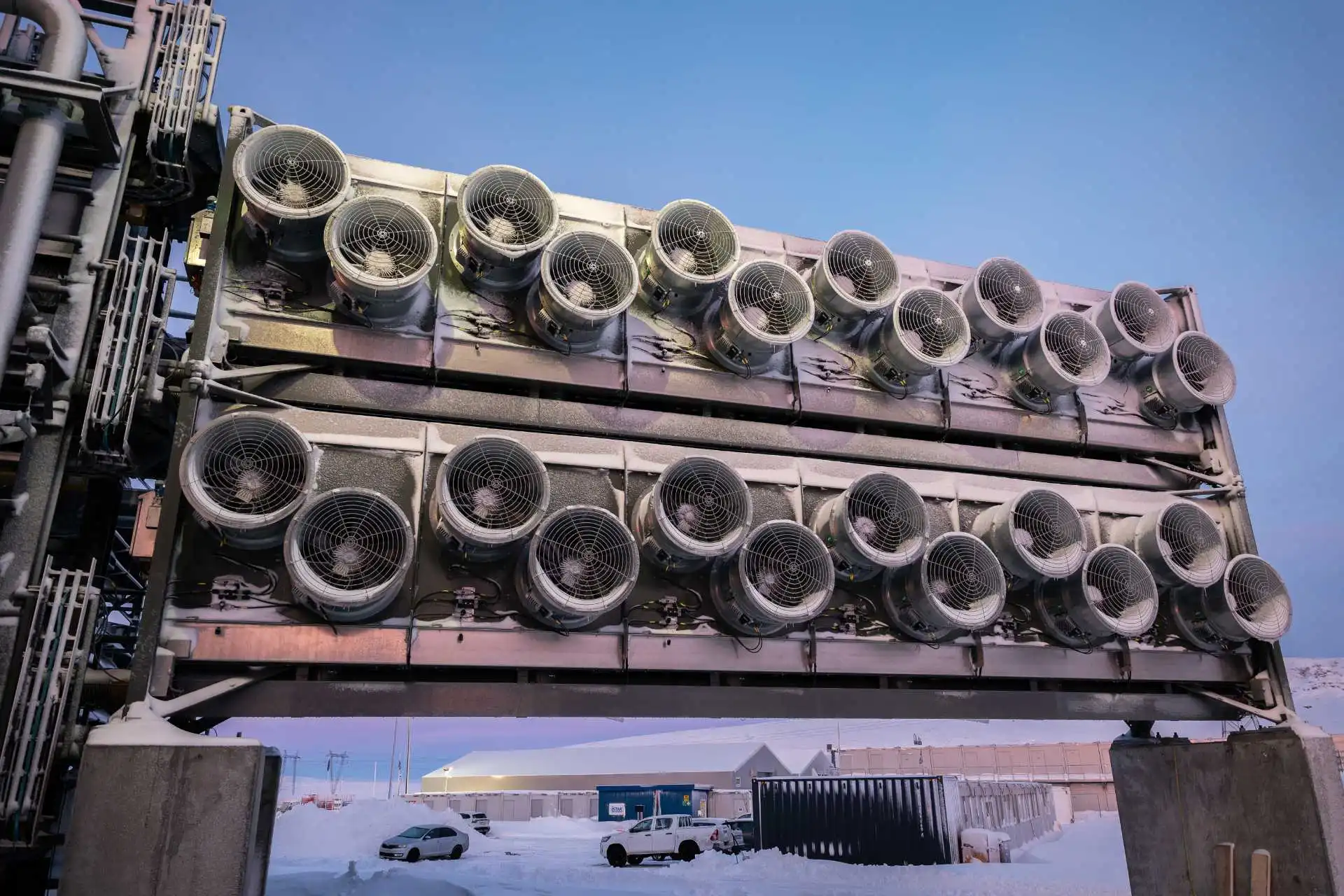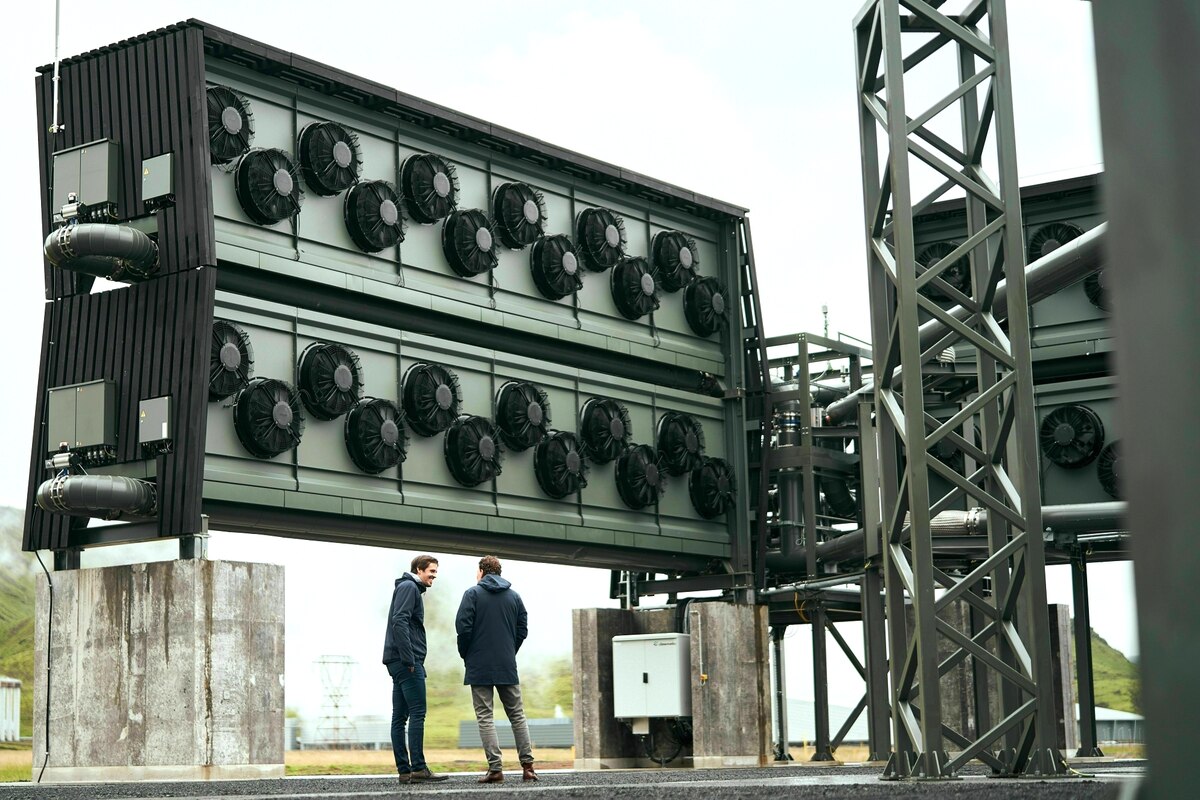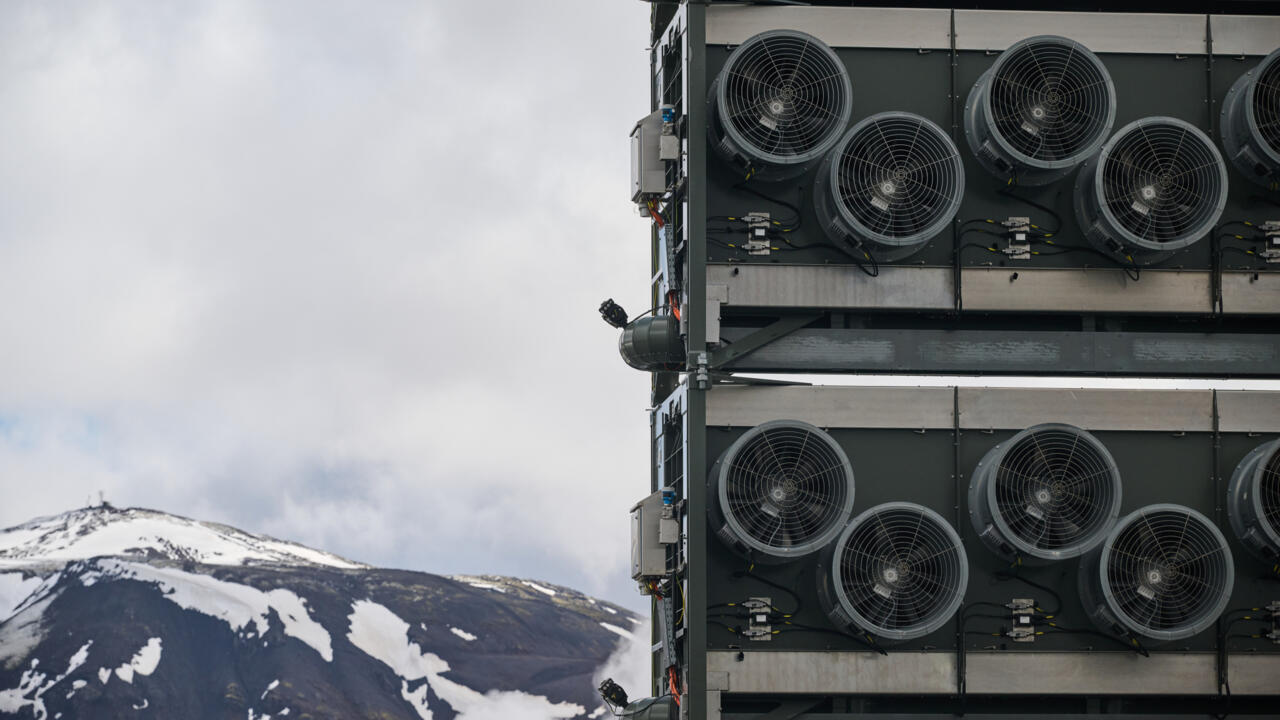
In a warehouse in Brisbane, California, just south of San Francisco, Christian Theuer demonstrates a carbon removal process called Direct Air Capture. He’s the director of policy at Heirloom Carbon Technologies, which aims to remove a billion tons of carbon dioxide from the atmosphere within the next decade using limestone.“Behind you,” he points out, “is a demo kiln,” which they use to heat up crushed limestone that separates it into carbon dioxide and calcium oxide powder.The carbon dioxide is removed and permanently stored in concrete or underground. The powder is then used to capture more CO2 — soaking it up from the air like a sponge — and turning back into limestone. “Once that's done, we take that same limestone, put it right back into the kiln, wring it out like a wash cloth for the CO2 and put it right back into the facility, and that loops continuously,” Theuer explained.So far, Heirloom has been operating on a pretty small scale. Its first Direct Air Capture facility in Tracy, California, has the capacity to remove 1,000 tons of carbon dioxide a year. But it’s costly. Right now, it’s in the high hundreds of dollars to capture one ton of CO2.Theuer says the industry needs to get that down to $100 per ton captured to make the economics work “otherwise, it'll just continue to be a science experiment.”The company plans to open a much larger project in Louisiana with the capacity to remove up to 200,000 tons initially. But when we visited, the timeline was up in the air.Erin Burns, executive director of Carbon180, a nonprofit that advocates for large-scale carbon removal, says the Trump Administration rescinded Biden-era funding for several direct air capture projects. But, she adds, Congress has protected the planned hub in Louisiana and another one in Texas, which is backed by Occidental Petroleum.“They continue to have bipartisan support, and interestingly, they also have a lot of support in the states that are hosting them,” said Burns. “It's not a question right now whether or not it's protected. It's a question of timing and how that's going to get rolled out, which is a little unclear right now.”Support from oil companies is one reason critics are skeptical of carbon removal as a real climate solution. Some say it’s just a tactic to keep drilling and burning fossil fuels. It’s also energy intensive.Heirloom has pledged not to take investment from fossil fuel companies. Its customers include Microsoft, Meta, Shopify and United Airlines, which buys captured CO2 to use in sustainable aviation fuel.
The high cost of vacuuming carbon from the sky
Marketplace’s Amy Scott reports on companies pouring millions of dollars into efforts to rid old and new CO2 emissions from our atmosphere, which could help mitigate the climate crisis.
423 words~2 min read