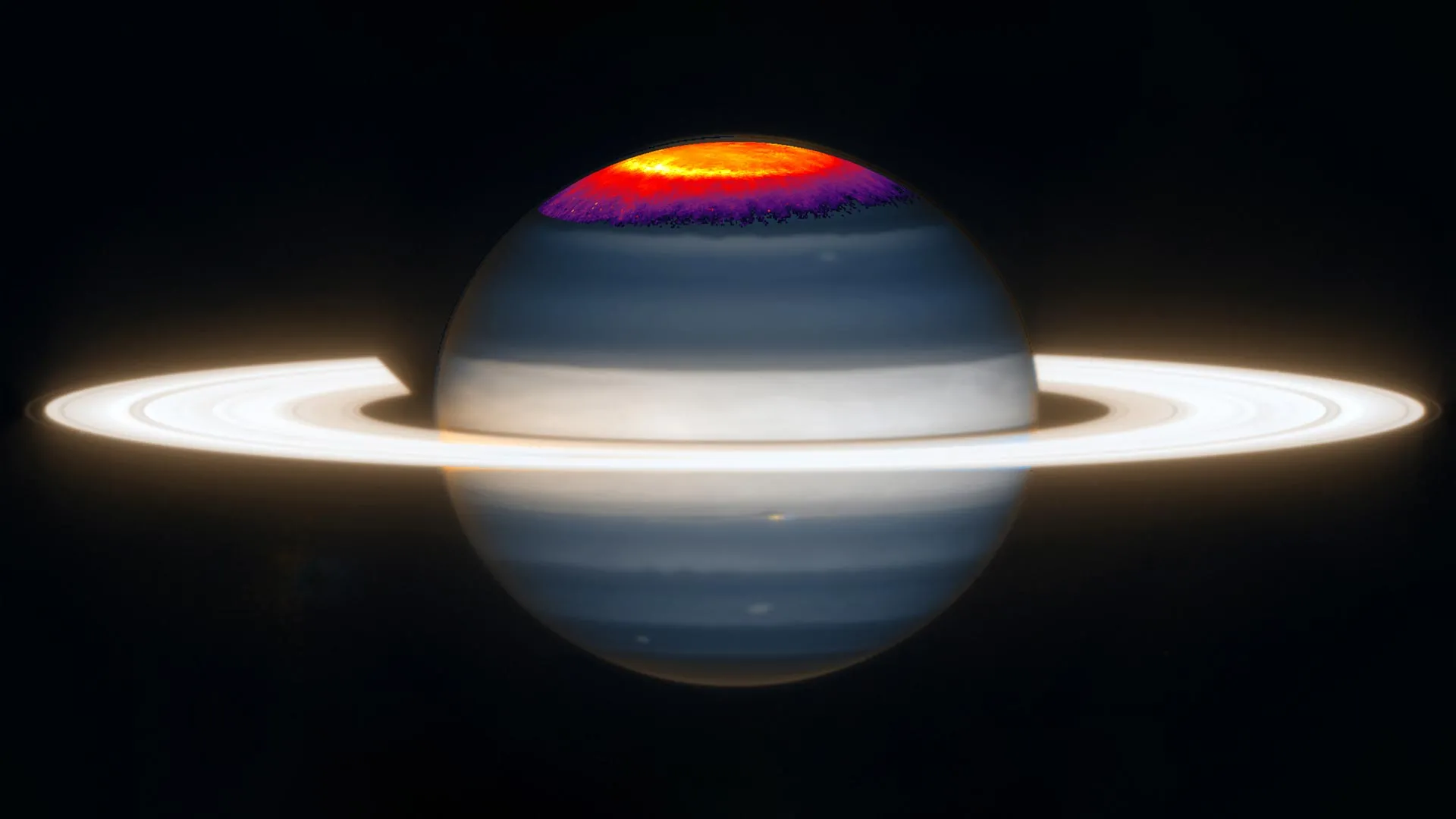
For years, Saturn appeared to be doing something impossible.
Measurements suggested the giant planet's rotation rate was changing over time, as if Saturn were somehow speeding up or slowing down. That puzzling result left scientists searching for answers. Now, researchers using the James Webb Space Telescope (JWST) say they have finally solved the mystery.
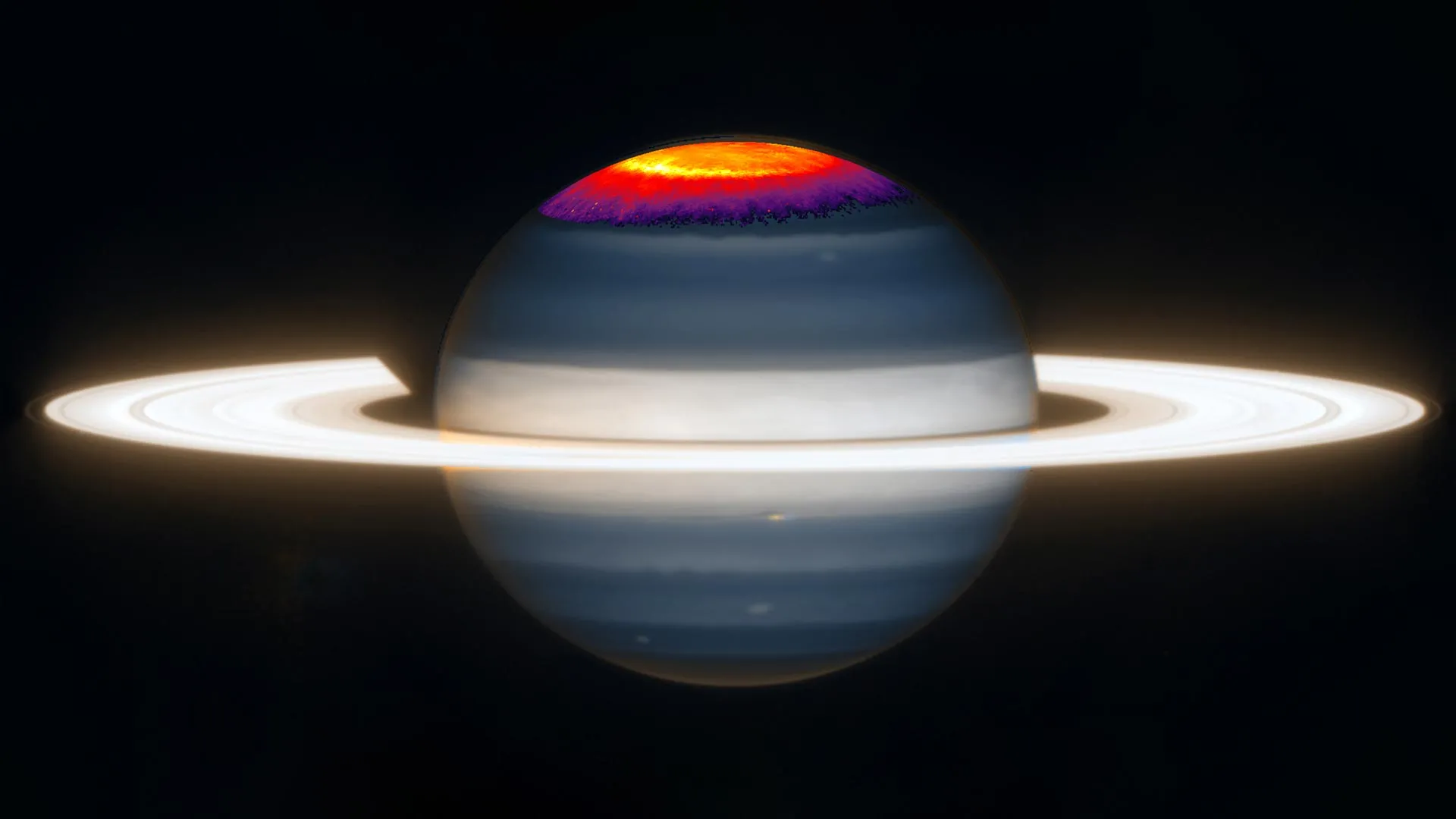
The new findings, published in the Journal of Geophysical Research: Space Physics, reveal that Saturn's spectacular northern lights are at the heart of the phenomenon. The study shows that the planet's aurora drives a powerful cycle involving heat, winds, and electrical currents that can make Saturn appear to spin at different speeds depending on how it is measured.
Saturn's Rotation Mystery
The puzzle dates back decades, but it gained renewed attention after observations from NASA's Cassini spacecraft in 2004 suggested that Saturn's rotation rate was gradually changing.