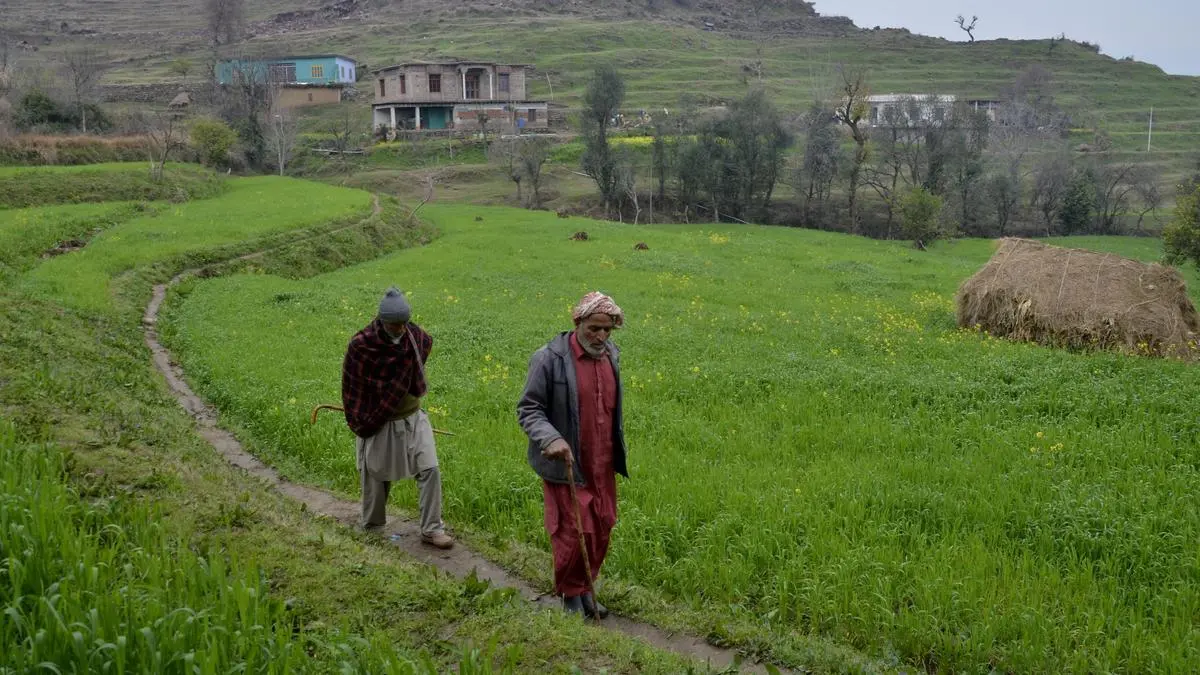
Official data shows a worrying decline in agricultural land, with nearly 34,000 hectares of cultivable land lost in the region between 1996 and 2023, raising concerns over the long-term sustainability of farming.
| Photo Credit:
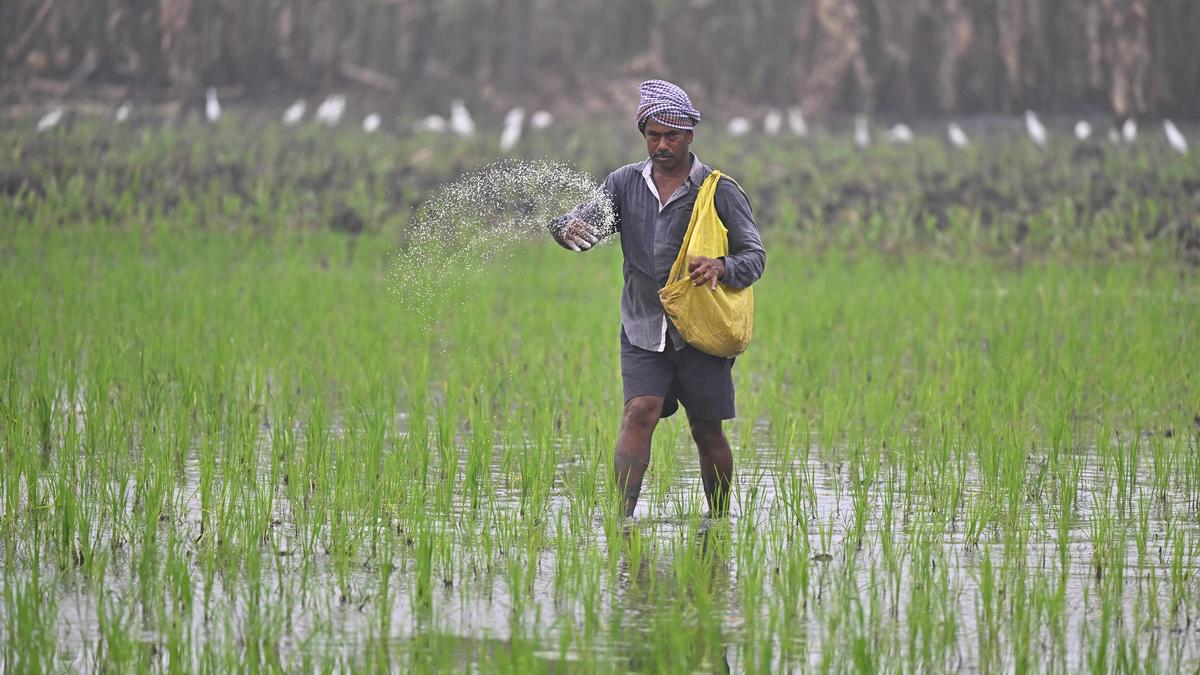
As paddy transplantation begins across rural areas of Kashmir, concerns are mounting over the rapid shrinking of agricultural land in the region. Over the last few years, thousands of hectares of fertile farmland have been lost to unchecked construction, urban expansion, and conversion of fields into residential colonies and commercial spaces. Official data shows a worrying decline in agricultural land, with nearly 34,000 hectares of cultivable land lost in the region between 1996 and 2023, raising concerns over the long-term sustainability of farming.“The continuous conversion of farmland into residential and commercial spaces is posing a serious threat to food security in Kashmir. If this trend continues unchecked, the Valley will become increasingly dependent on imports from other states to meet its food requirements,” said a senior agriculture officer. Official estimates indicate that the region’s food grain production remains far below its overall requirement, increasing dependence on supplies imported from outside the Valley.“The region currently produces around 0.45 million tonnes of food grains annually against a requirement of nearly 1.34 million tonnes, highlighting Kashmir’s growing dependence on imports from other states”, said the official. Vanishing Thaejkaad Thaejkaad or paddy transplantation season is fast vanishing from the rural landscape of the Valley. The season usually begins in late May and continues till the end of June. Once a vibrant community activity with both men and women transplanting saplings while signing folksongs that echoed across villages. “Thejkaad was seen as festival in the Valley with farmers participating in it with joy and enthusiasm but now the tradition has almost vanished”, said Mushtaq Ahmad, a farmer from Pulwama. He said that with disappearing farmland, the tradition was steadily fading away from the villages. “The transplantation season has begun, but you will hardly see many people sowing paddy now,” Ahmad said, attributing the decline to the growing shift towards apple orchards and the conversion of farmland for construction purposes.Despite laws prohibiting the conversion of agricultural land, farmland in Kashmir continues to be converted at an alarming rate. Section 133 of the Jammu and Kashmir Land Revenue Act (Svt. 1996) bars the use of agricultural land for non-farm purposes without official permission, but violations continue to be reported across the Valley.Published on May 29, 2026