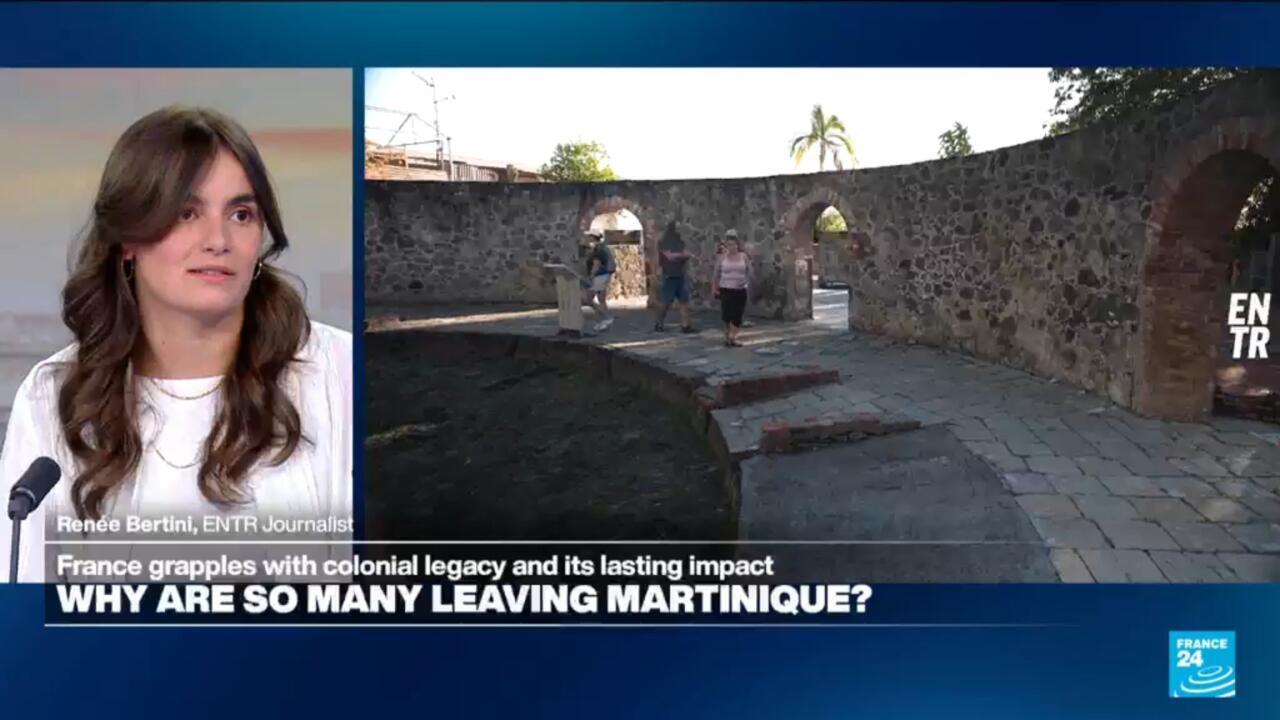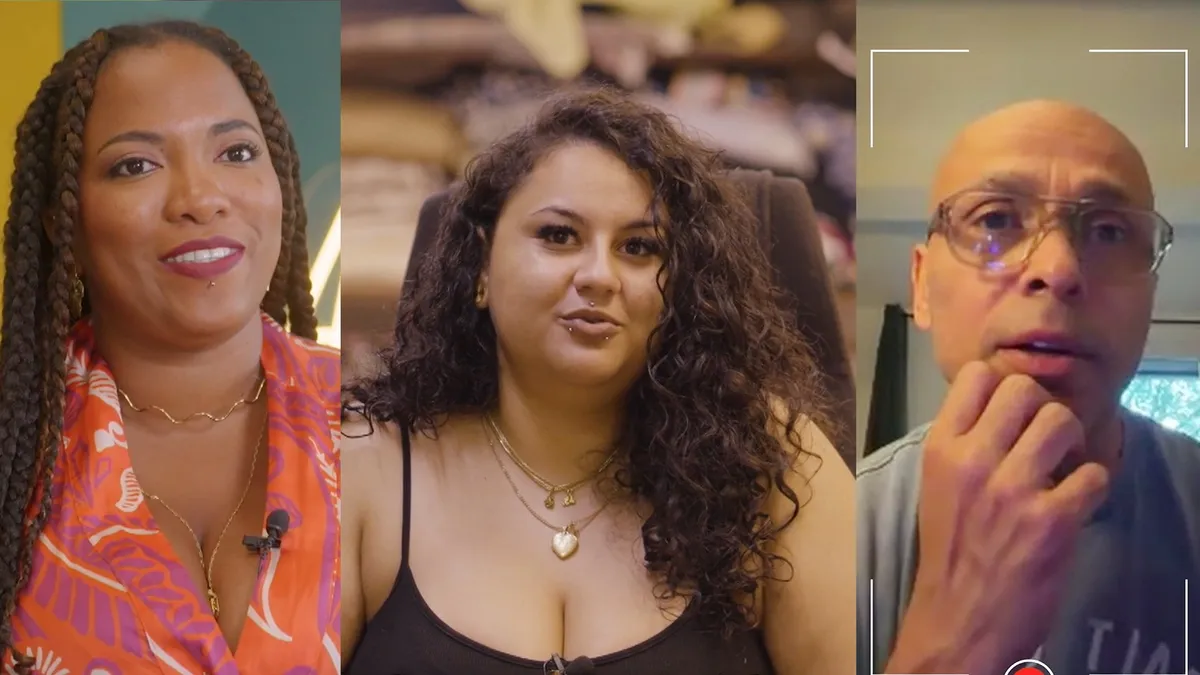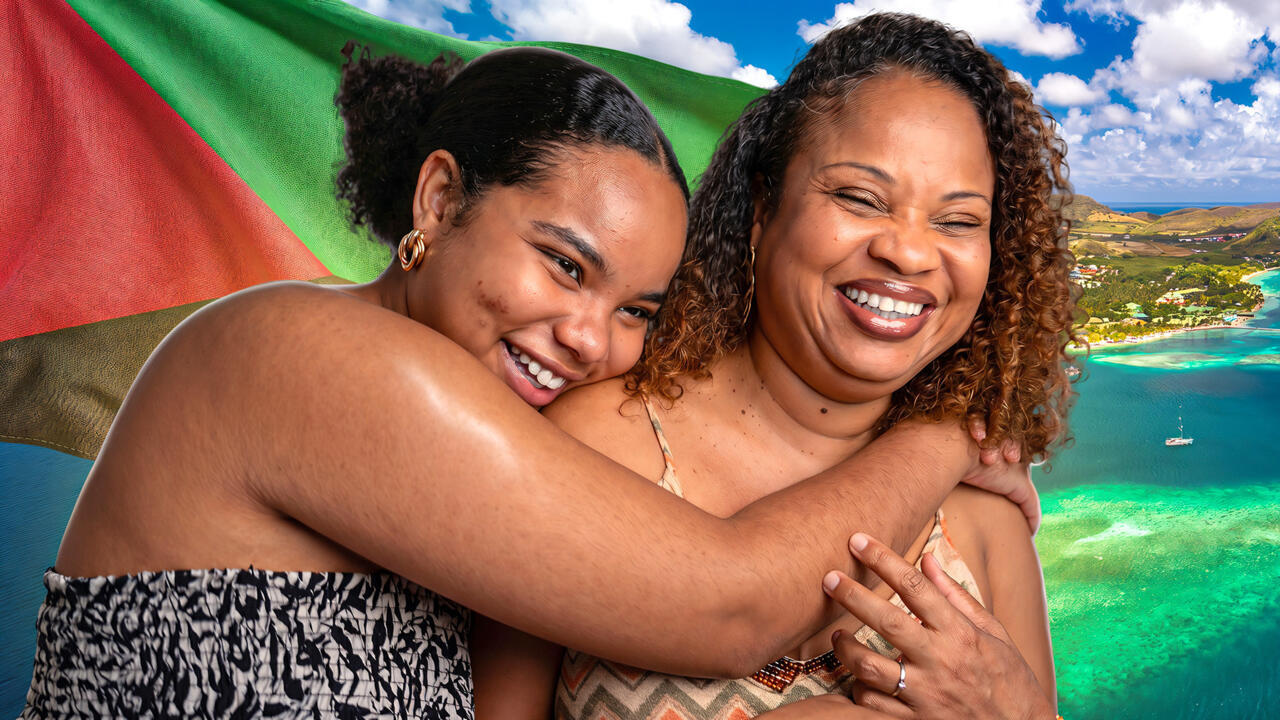
The sun sets over the beach of Schoelcher, a small town on the outskirts of Fort-de-France, in Martinique. The sky shifts through shades of mauve and orange as a group of teenagers plays on the basketball court, Caribbean music thumping from a portable speaker. Emmanuelle, 18, and three of her friends are sitting on a bench, their usual meeting point after classes at the University of the Antilles. Tonight, the conversation turns to 1T1 and Theomaa, two Guadeloupean artists coming to perform in Martinique. "It's going to be the event of the century! They sold out the Zénith in Paris, and now they're coming here. I have to be there!" says Emmanuelle, who rarely gets the chance to see her favourite artists live. "I get so jealous when I see people going to shows in mainland France, having a great time… we just don't have that here in Martinique," adds her friend Akeelah. Nathan chimes in: "If you have to buy a plane ticket just to see an artist, forget it." This concert is a small, but telling example of the sense of injustice many Martinicans feel toward the French mainland, commonly referred to as "France" or "là-bas" (over there) on the island. Martinique is one of four French territories in the Caribbean, it is not a French colony or a distant protectorate — it is France. A volcanic island of roughly 350,000 inhabitants, it has been a full French department since 1946, meaning its residents are French citizens, pay French taxes, vote in French elections and send representatives to the National Assembly in Paris. Yet despite this constitutional equality, life on the island looks markedly different from life in the French mainland. That gap is felt most keenly by young people, particularly when the conversation turns to the thorny issue of access to higher education. Emmanuelle is in her first year of studying law: "I can do my undergraduate degree here. My master's depends on which specialisation I choose. But at some point, I'll need to attend law school, and there isn't one in Martinique. There isn't one in Guadeloupe, its neighbouring island, either. You have to leave for the mainland. I think it's unfair that you can't do everything here." To fulfil her dream of becoming a lawyer, Emmanuelle will have no choice but to move more than 7,000 kilometres from home, to an environment very different from her own. Maëly knows exactly what that feels like. The 25-year-old, originally from Les Anses-d'Arlet, a popular tourist town in the south of the island, found herself in Angers, in western France, studying heritage conservation. "It wasn't easy," she admits. "I had to adapt to a new environment, to the cold. I left completely on my own, I didn't know anyone there. I felt sidelined, like I didn't fit the mould." Maëly quickly became aware of the gulf between home and the mainland. Between the cost of living — food products are 40 percent more expensive in Martinique — and limited job prospects back home, she wrestled with whether to stay in France or return to the island. She ultimately chose to go back. "I know it's not straightforward. You have to find opportunities, seize them when they come. Young people are told to go and study, to train, and then there's no work waiting for them." In Martinique, one in four young people is not in employment, education or training, compared with one in eight in mainland France. Unemployment rates, too, are significantly higher on this side of the Atlantic. For Maëly, leaving was a source of pride, and so is coming back. "We need to give those who want to return the tools to do so: support, and jobs. Because if there's no work, they simply cannot stay." ENTR is a digital space for open discussion about what really matters, what holds us back and what connects us all.ENTR exists in 9 languages: English, Bulgarian, Dutch, French, German, Hungarian, Polish, Portuguese and Romanian.
'It's unfair you can't do everything here': Education comes with exile in Martinique
Every year, 45 percent of university-bound students from France's overseas territories leave their island to pursue higher education. From Réunion to Guadeloupe, brain drain keeps growing, driven by…
665 words~3 min read