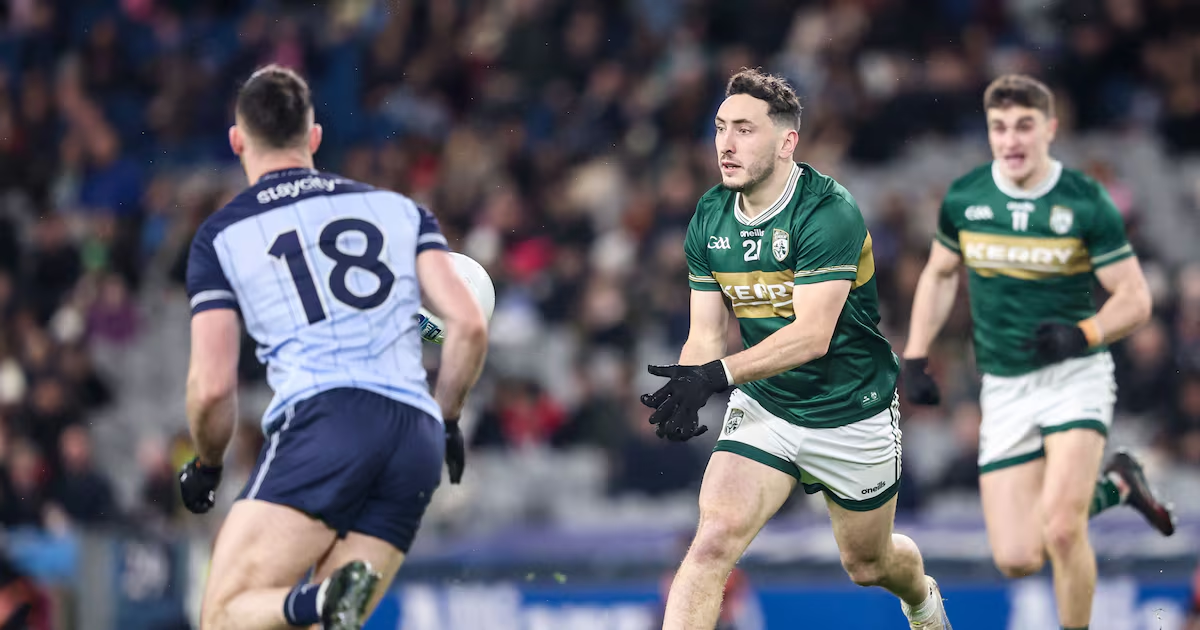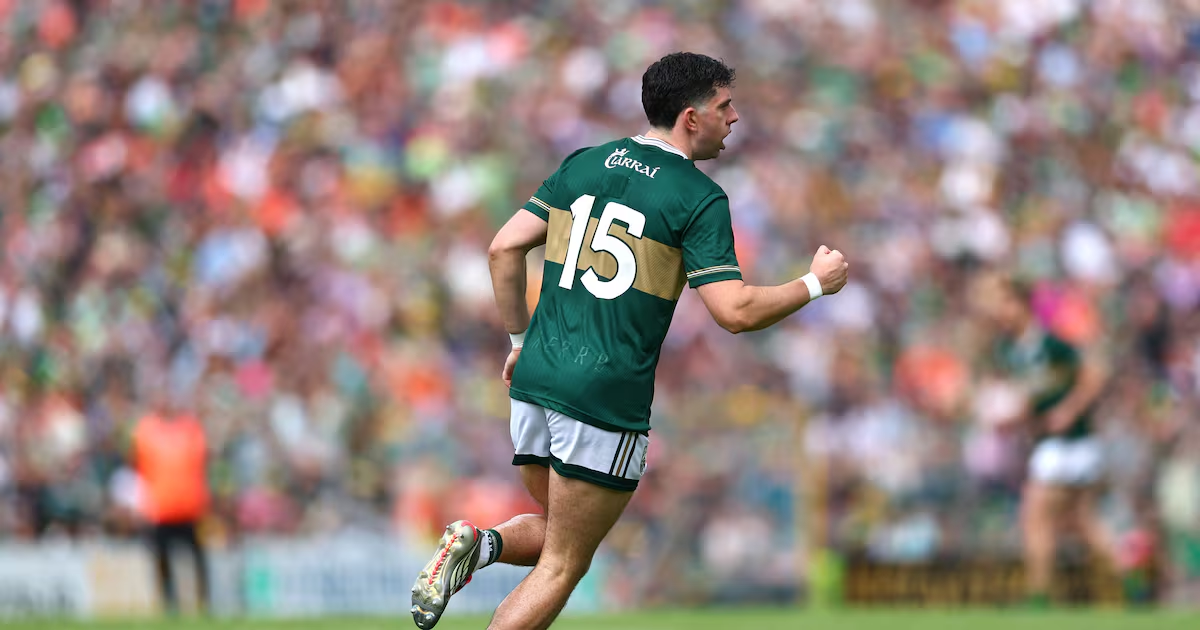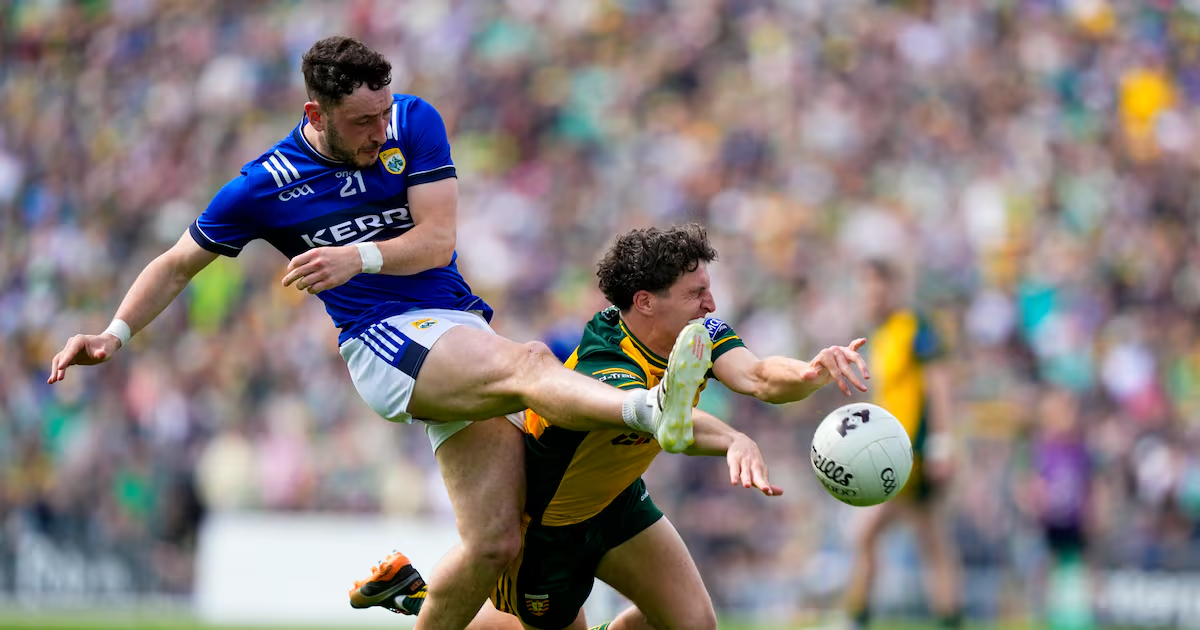
After more than a decade of unprecedented success shaped by some all-time greats of the game, the slump for Dublin was always going to be difficult. However, not lifting a Leinster title in back-to-back years would not have been expected. The latest defeat emphasised the decline, as they were outclassed by Westmeath in the Leinster final.The downturn has as much to do with their failure to adapt to the new rules of the game as it has to do with departing legends. Last year, Dublin kicked just 25 two-pointers in 14 league and championship outings – yet developing this new part of the game was seen as a key area for improvement going into the new season.However, only Armagh and Monaghan have scored fewer two-pointers in Division One this year, as Dublin were relegated. Their Leinster final defeat featured just two successful kicks from beyond the arc: Cormac Costello’s free to tie the game at the end of normal time and Seán Guiden’s left-footed effort while Dublin trailed by seven points late in extra-time. In both cases, the deficit meant that a two-pointer was really the only option to get back in the game. Meanwhile, Westmeath managed three two-pointers and stuck two goals, making their scores count for more than Dublin’s.Overall, Dublin’s average two-pointers per game is up this season from 1.8 to 2.2, but these are hardly outstanding numbers. Last year, Monaghan hit more than four two-pointers per game in the championship, with Rory Beggan’s booming free-kicks boosting the average.Another team that benefit massively from brilliant individual contributions are All-Ireland champions Kerry. Since the scoring arc was brought into football, Seán O’Shea and David Clifford have scored 56 two-pointers for Kerry combined. Dublin have only scored 47 as a team in that time. That’s partly down to the recent injury record of Dublin’s biggest individual talent, Con O’Callaghan, whose fitness remains one of the keys to unlocking things up front. Con O'Callaghan has played only five games this season: when he is missing, Dublin lack an attacking centrepiece. Photograph: James Crombie/INPHO With nine scores outside the arc, O’Callaghan and Costello lead the county in two-pointers, despite the former’s unfortunate run of knocks. When O’Callaghan is missing, Dublin lack an attacking centrepiece. While Clifford and O’Shea (28 two-pointers each) get the majority of Kerry’s scores from outside the arc, Dublin have to share that responsibility between Costello (nine), Paddy Small (six), Seán Bugler (six) and Ciarán Kilkenny (three).O’Callaghan is still the third-highest scorer for the county since the start of 2025, notching 2-57, with only Costello (2-71) and Bugler (2-63) outscoring him. With no sign of his return in the Leinster final, O’Callaghan has played only five games this season, with the last two appearances being short-lived.Dublin have also struggled for goals under the new rules, with much of their scoring coming through one-point attempts inside the arc. Since the beginning of the 2025 league season, they have scored just 22 goals in 24 games. For comparison, Kerry have scored 46 in that period.Kerry's Seán O’Shea in action during the Division One final defeat to Donegal in March. Photograph: James Crombie/INPHO Again, no one player has taken the lead on goalscoring for the Dubs, with the highest individual tally – just two – being shared by O’Callaghan, Bugler, Costello, Small, Niall Scully, Luke Breathnach and Lorcan O’Dell.Goals and two-pointers being a problem area for Dublin points back to the old style of play under Jim Gavin, which prioritised holding the ball until the correct shot option was open. That worked wonders in the 2010s, but it’s a whole new ball game these days. Some risk-taking has to be accepted if Dublin want to get back to the top table.Louth's Sam Mulroy shot 20 two-pointers last year. Photograph: Grace Halton/INPHO This Sunday’s opponents, Louth, have had the opposite trajectory to Dublin thanks to the new rules, clinching a first Leinster title in 68 years in 2025. They took full advantage of the arc, thanks in large part to one central man, Sam Mulroy, who alone shot 20 two-pointers last year, just five off Dublin’s 2025 total.Louth have scored 69 two-pointers since the introduction of the rule, equating to three every match. That’s 22 more than Dublin have managed, even with an extra game for the capital’s side. Dublin did hammer their neighbours just a few weeks ago in the Leinster semi-finals, with Louth putting on a terrible display in front of the posts in O’Moore Park. Their round one All-Ireland clash at a Croke Park could be a different story. The Wee County have nowhere to go but up this Sunday, and there could still be ghosts in Croker for the Dubs after that Westmeath defeat.
Dublin’s high-percentage shooting philosophy is haunting them in two-point era
Kerry’s David Clifford and Seán O’Shea have scored nine more two-pointers together than Dubs since start of 2025
785 words~4 min read