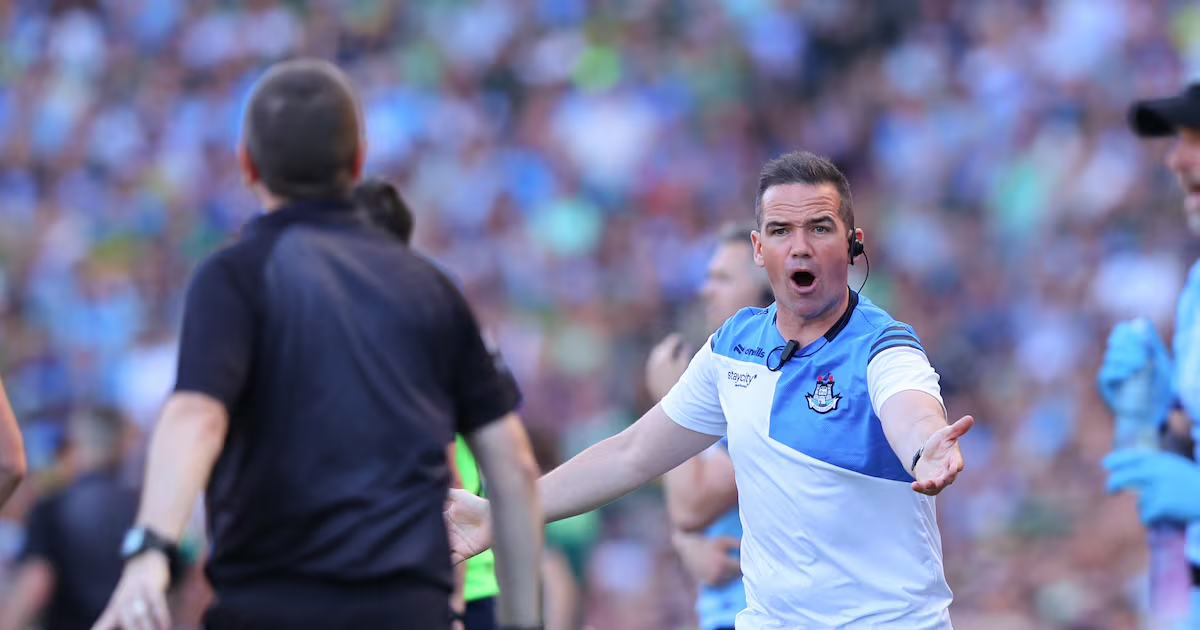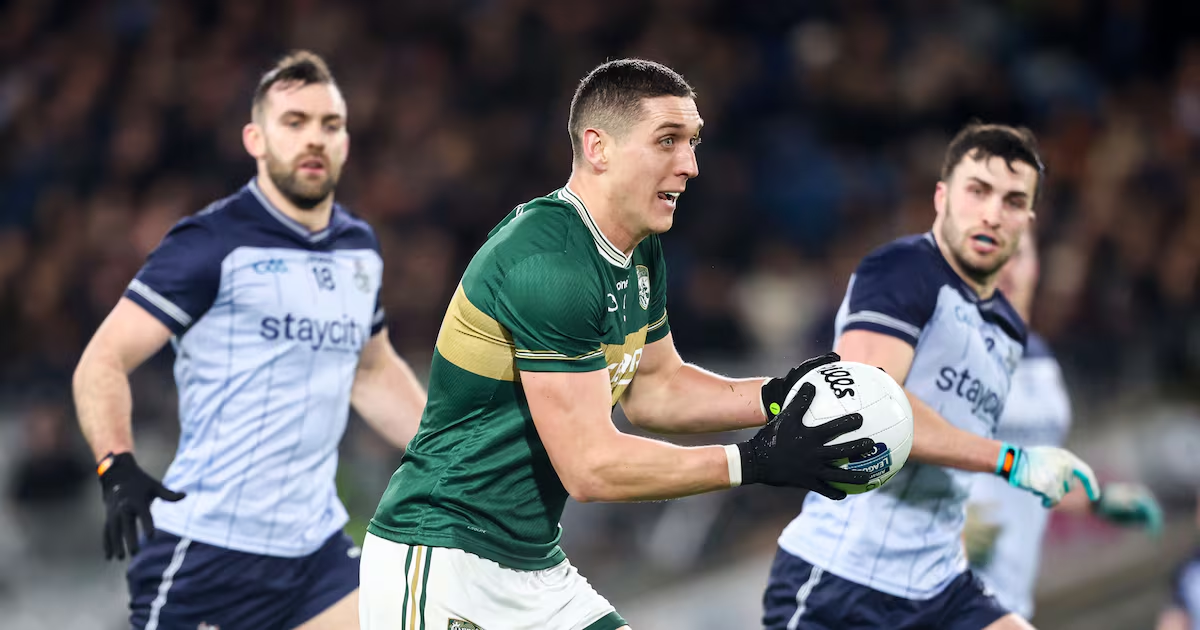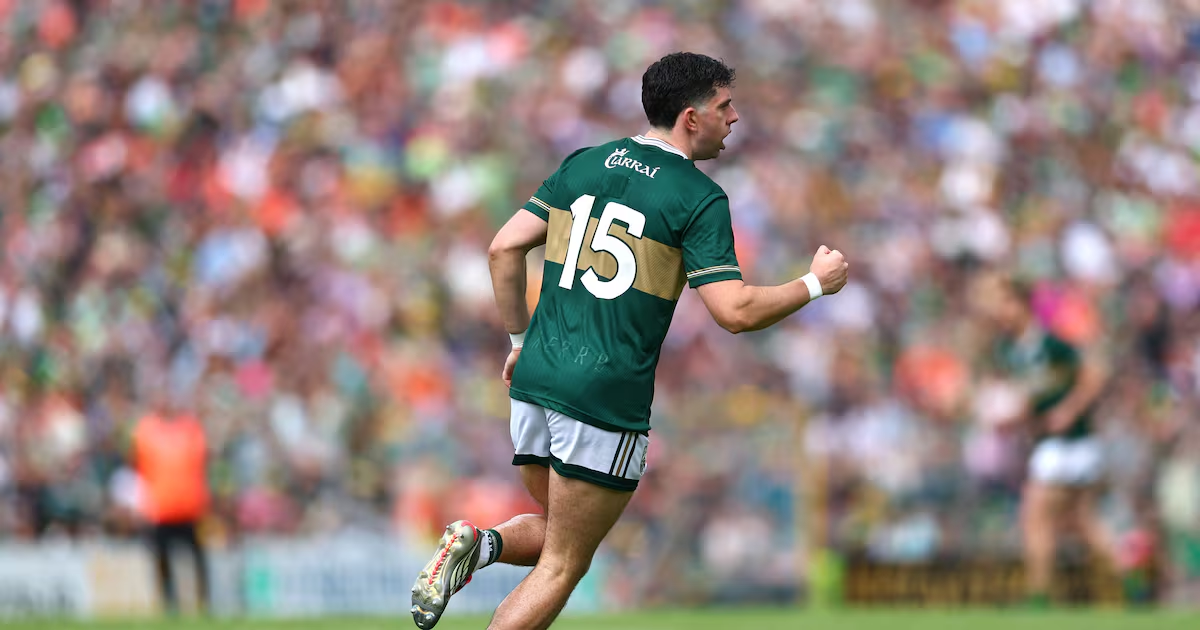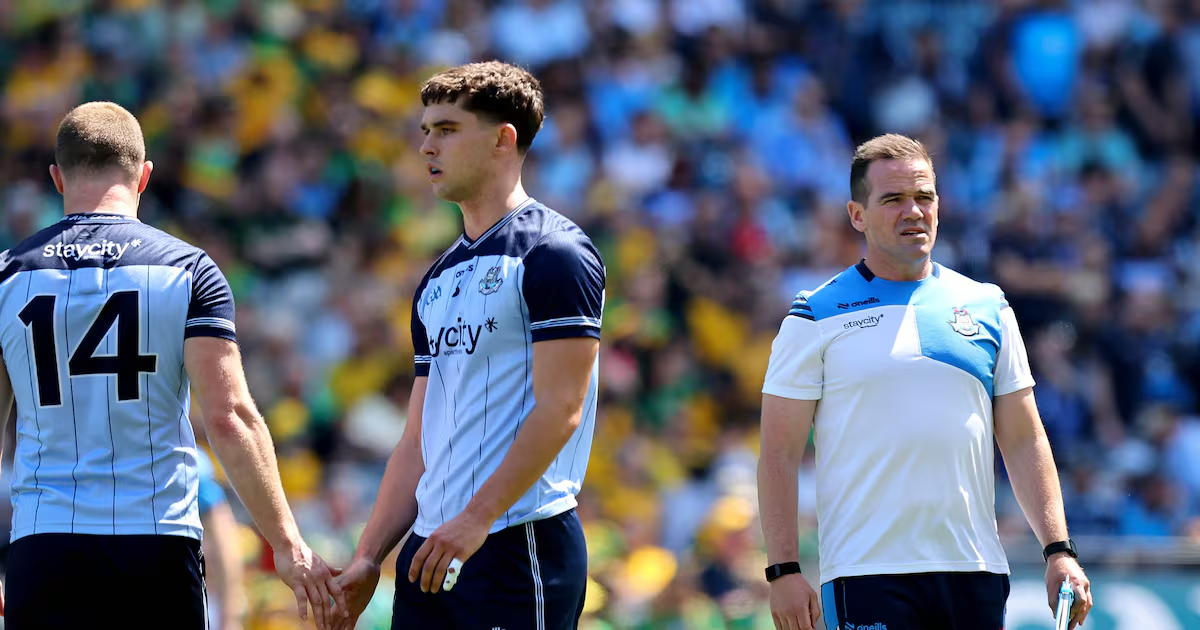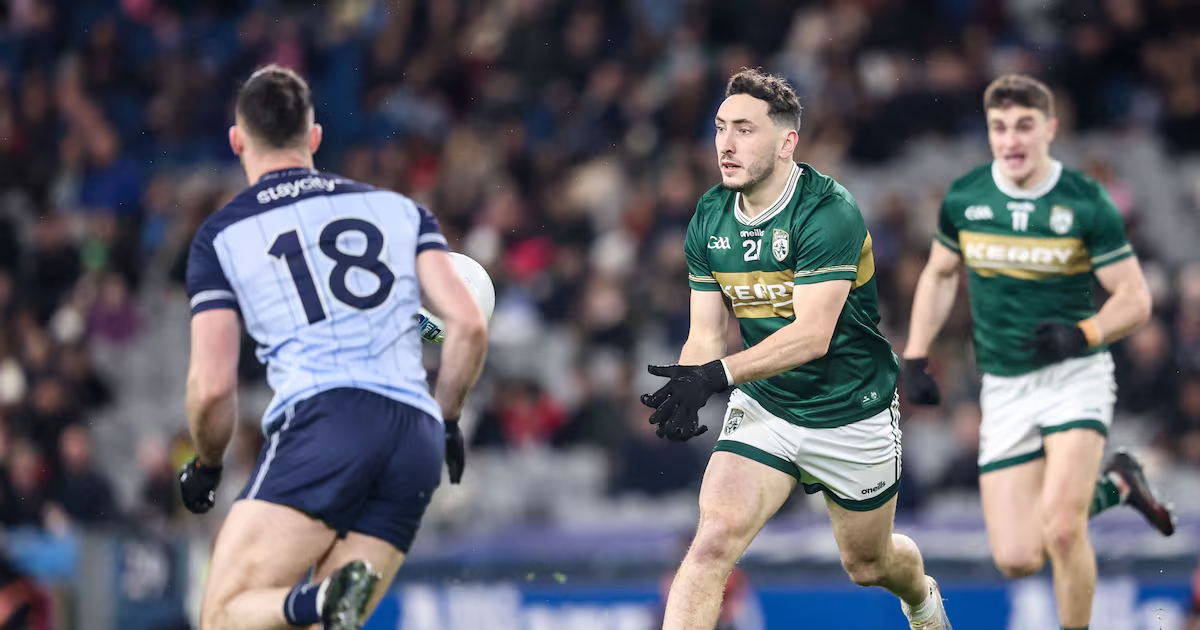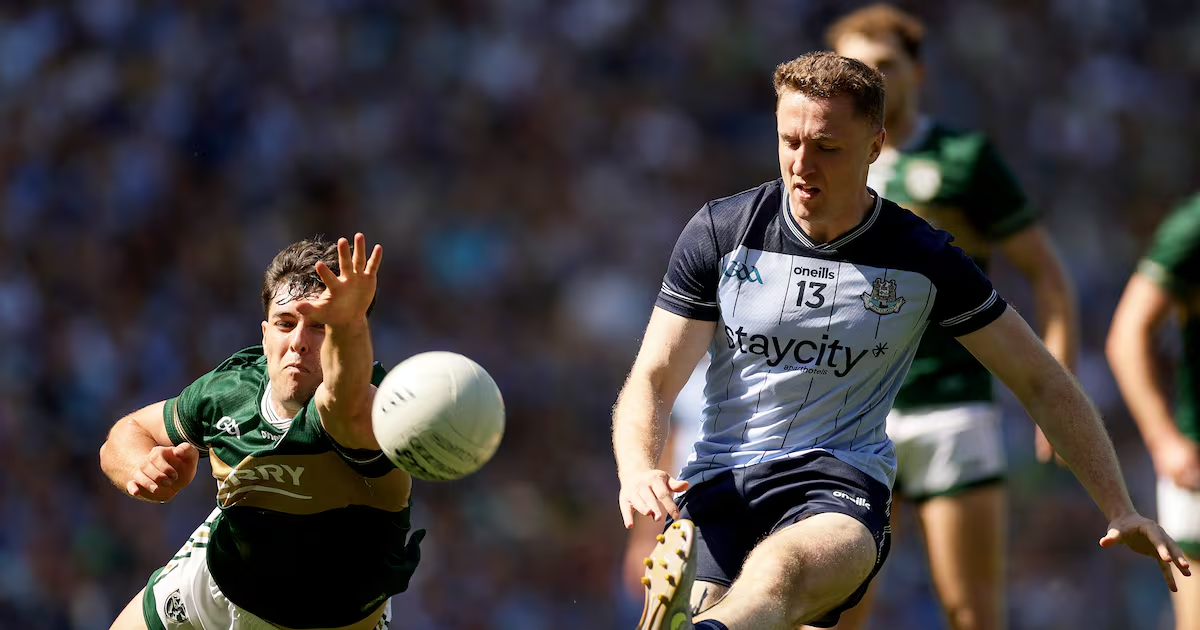
Dublin got a lot right in their approach to the semi-final encounter with Kerry, but still came up short with that bit of luck that Jack O’Connor spoke about after. Ger Brennan would have had a number of KPIs they would have chased heading into the game, and it is probably fair to say they achieved a lot of them. 1. David Byrne did an excellent job on David Clifford, who was restricted to 1-5, a scoring return which would be man of the match territory for most, but not Clifford. Byrne kept him under tight reigns and commanded that usual “Clifford zone”, not allowing him in behind the defence with the frequency he usually does. The outcome of the game could have been different if the brilliant Byrne block down in the 40th minute on Clifford had finished in the back of the net, but Shane Murphy spoiled Con O’Callaghan on the breakaway attack. 2. Dylan Geaney was kept ineffective throughout, with his two meaningful contributions coming from a short kickout won and his two-point effort that dropped short resulting in a goal. 3. Dublin managed to win 11/30 (37%) of Shane Murphy’s kickouts and also won 15/21 (71%) of their own, meaning the edged the kickout battle overall. 4. Dublin had two strong streaks on Shane Murphy’s kickout, winning five in a row just before and after half time, returning 0-4. However, a similar streak of four between the 57th and 66th minute returned no score. While Dublin won the possession battle on the kickouts, they didn’t punish accordingly on the scoreboard. 5. Dublin won the turnover battle too, and then managed to win the shot count 34 to 27. How the kickout battle went in the All-Ireland SFC semi-final between Kerry and Dublin. The problem with Kerry, as Mayo are likely to find out, is they have so many threats and will play the game that is presented to them by the opposition. Their game IQ is really impressive. When Kerry won their penalty, it was interesting to note that Sean O’Shea was holding the ball, allowing all the panic and disruption to diffuse before handing it over to David Clifford, who scored on the rebound. This psychological aspect of penalties and the attention towards them has been particularly evident in the World Cup. Brian Howard talking with Sean O’Shea before penalty - David Clifford would eventually take the kick. O’Shea was immense throughout the game and his game awareness in possession and his ability to manipulate space across the full width of the attacking 45m zone was evident. He won two advanced marks, converting one when it was brought back for the free in the 15th minute, and brought another out for a superb two-pointer in the 52nd minute. We saw four advanced marks in the game. Eoin Kennedy and Brian Ó Beaglaoich made the other two, but there is a difference in recognised full-back line men venturing into these attacking zones and the Kenmare man. Neither Kennedy nor Ó Beaglaoich converted. The 15th minute score came at the end of a possession that lasted almost three minutes, where Paudie Clifford got his hands on ball seven times, O’Shea handled it five times and David Clifford handled it five times - but most importantly he manipulated the space inside for O’Shea (see image below). The Kenmare man was involved in a lot of the good attacking play on display from Kerry, but he was given considerable freedom to help shape attacks. Sean O'Shea's two advanced marks in the game were crucial. O’Shea again showed leadership as the clock ticked towards the 35th minute to land a brilliant score to level proceedings, as he worked with David Clifford to expose the space left in behind the Fossa man. Again this space manipulation and understanding is key to everything Kerry do. Sean O'Shea's score before the first-half hooter was a perfect example of how Kerry can create space. After last years All-Ireland final, the freedom afforded to Paudie Clifford was seen as a mistake by Donegal, but it is very difficult to get hands on him when he is in form. He managed 69 possessions in the game on Sunday and Dublin’s structure allowed this, but the movement around him was extremely impressive and coordinated. The manipulation of the space to empty David’s typical corner, and the channels created alongside this, was exploited expertly by Paudie. He was also a pivotal cog around the kickout as he won two at the back of the landing zone and also was the second receiver off the shoulder on another two in the first half, after presenting short first. One of the kickouts won at the back of the break resulted in the O’Shea two pointer, referenced above.Paudie Clifford possessions during the Kerry v Dublin All-Ireland SFC semi-final - the retreat in the final quarter helped create space. When Dublin did look to push out a bit further on Paudie he retreated out to the zone between the attacking 65m line and the new halfway line, the buffer zone, knowing that it was stretching Dublin inside when they were chasing the game that bit more in the final quarter. The maps above show his adjustment in positioning across that final quarter; he was also back twice getting possession back inside his own 13m line in this period too. Dropping deeper allowed Paudie Clifford to show his kicking range, after his movement helped create that space inside. What is an acceptable score to concede off David Clifford? 1-5 is a good day’s work for David Byrne, considering the goal came off a penalty rebound, one point was right at the death and another came in the 63rd minute after he was turned over as Dublin men converged on him, but Mark O’Shea recovered immediately and offloaded. It is important to note, as mentioned above, in terms of space manipulation the impact of his positioning on the performances of O’Shea and brother Paudie Clifford - a clear understanding of the impact of the collective. David Clifford's movement, and the attention he commands, helps to create space for others. The Kerry defence must also get praise for the pressure exerted on the Dublin attack. There was a lot of pressure on Dublin shots, despite them often being in good shooting locations. Dublin’s accuracy of 18 scores from 34 attempts will gnaw at them, just 52%. There were differences between the Kerry and Dublin defence. Kerry showed their respect of Niall Scully, as they didn’t allow him the time on the ball that was afforded at the other end to Paudie. He didn’t have a dedicated marker but Kerry released players out to him to restrict his game influence, which was still meaningful despite the attention he received. Kerry made a point of paying respect to Niall Scully, understanding his influence on Dublin. Evan Comerford’s quick long kickouts to his right side to Lee Gannon (7th min), Alex Gavin (20th min) and Ciarán Kilkenny (60th min) were all strong attacking kickouts, yet returned no score, despite going over so many Kerry bodies and leaving a Dublin attack facing the goal. Two were rushed in possession. The time difference in possession between Dublin’s attacking plays were considerably shorter than Kerry’s, as Kerry exerted more composed ball control. Kerry retreat on 7th minute kickout showing the necessary defensive scramble. As Andy Moran said in his post-match interview, everyone expects Kerry to win the final, but with Mayo there is always hope when they bring madness. Kerry are unlikely to have as much ball control in the final but that doesn’t mean that the damage will be any less as they’ll attack based on the gaps that are afforded to them by Mayo. Possession positions by some of Kerry's key forwards - Paudie Clifford, Sean O'Shea and David Clifford. Paul O’Brien is a performance analyst with The Performance Process
Dublin asked the right questions, but Kerry’s game intelligence helped them find all the answers
Ger Brennan’s gameplan worked very well in many respects, but it is extremely difficult to shut down all of Kerry’s threats
1,321 words~6 min read