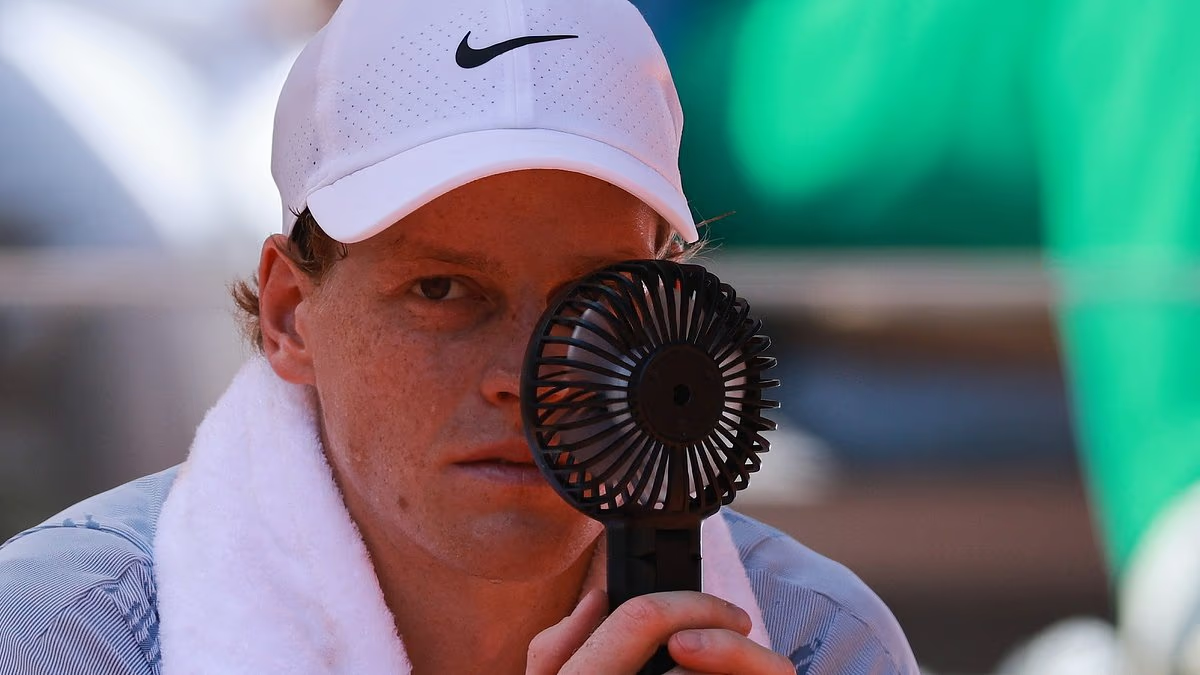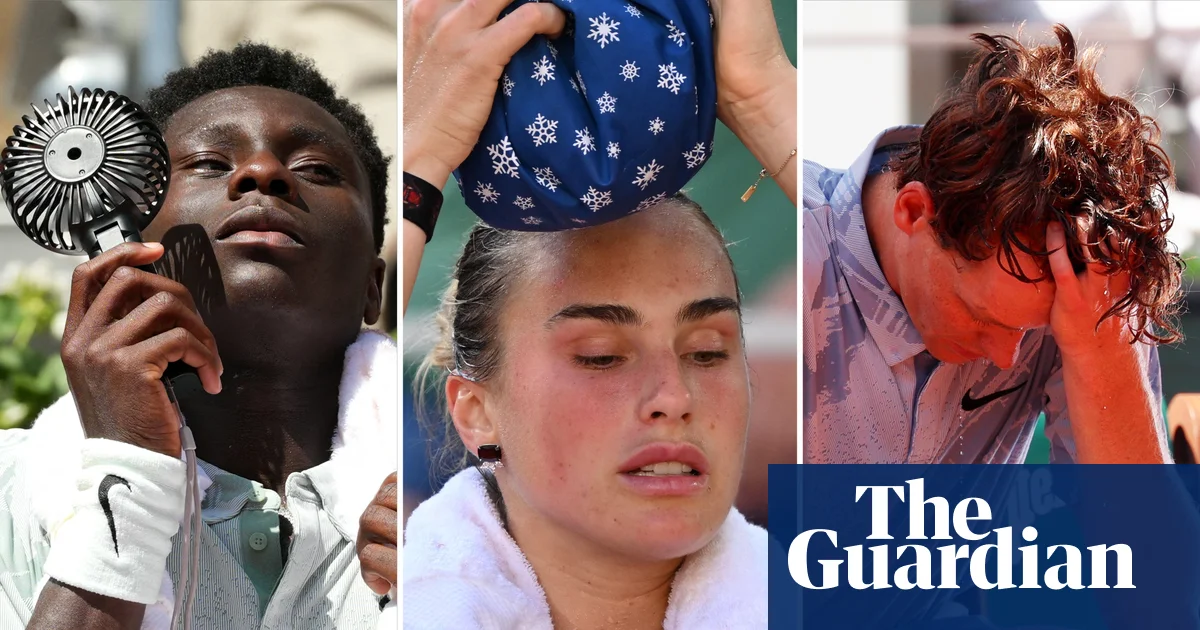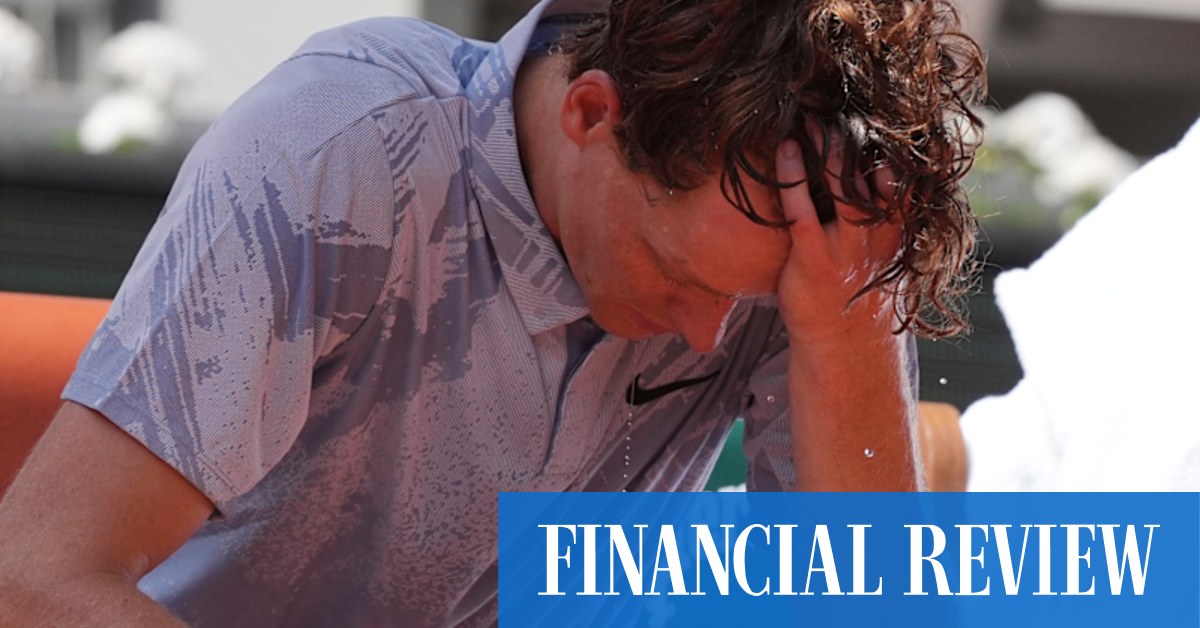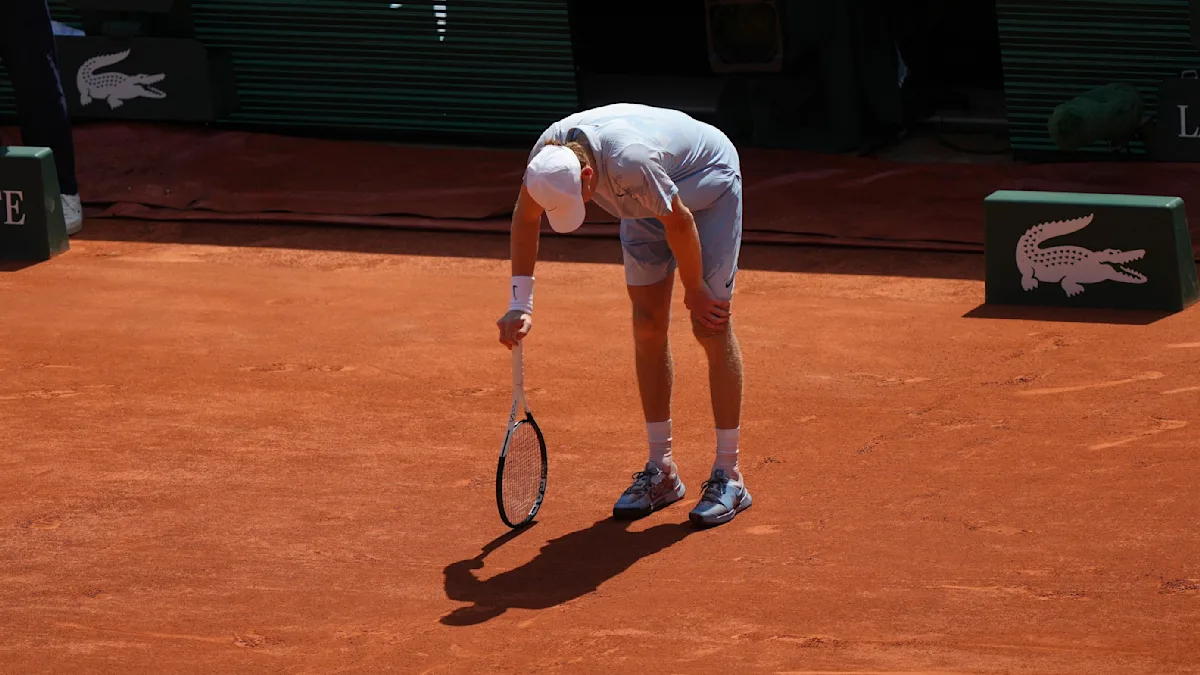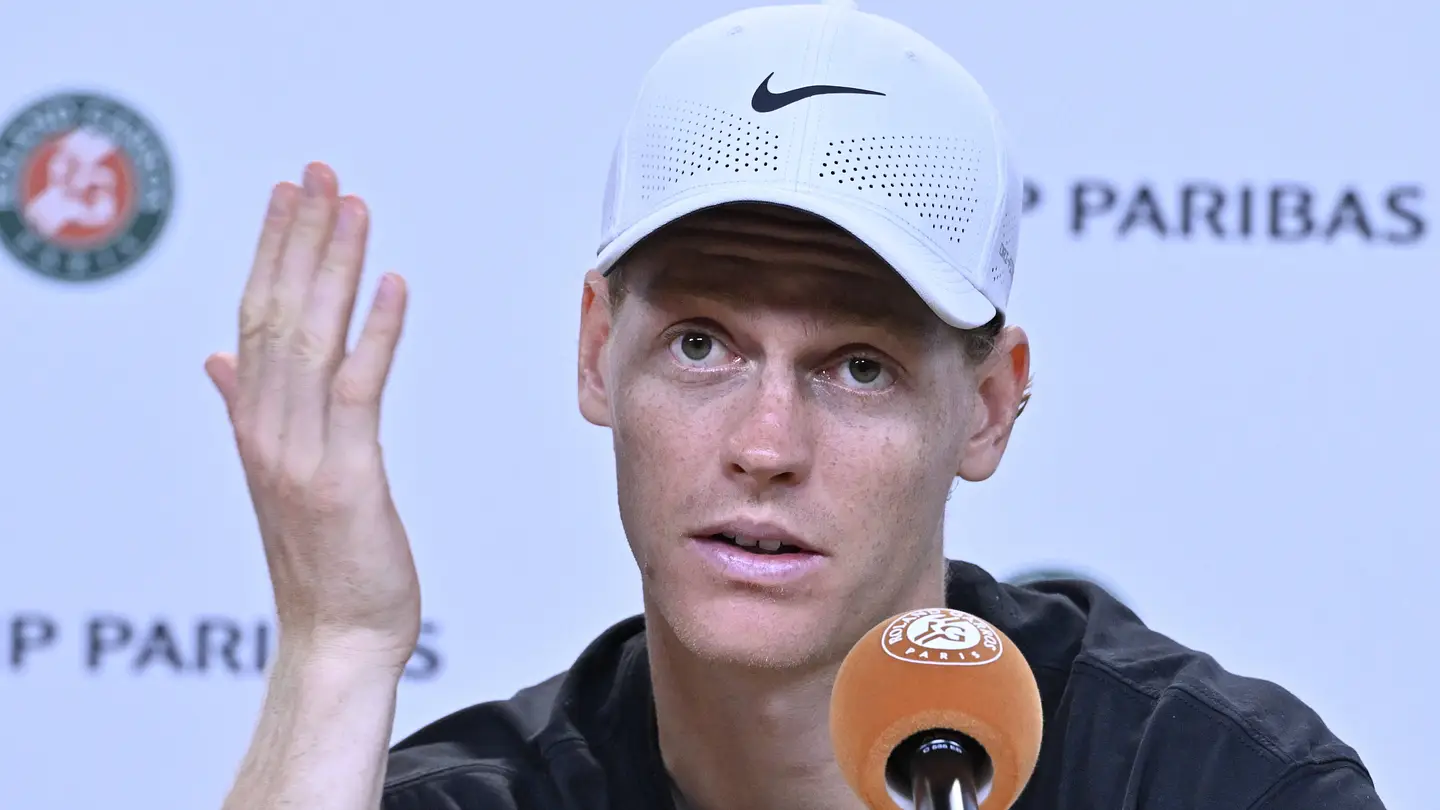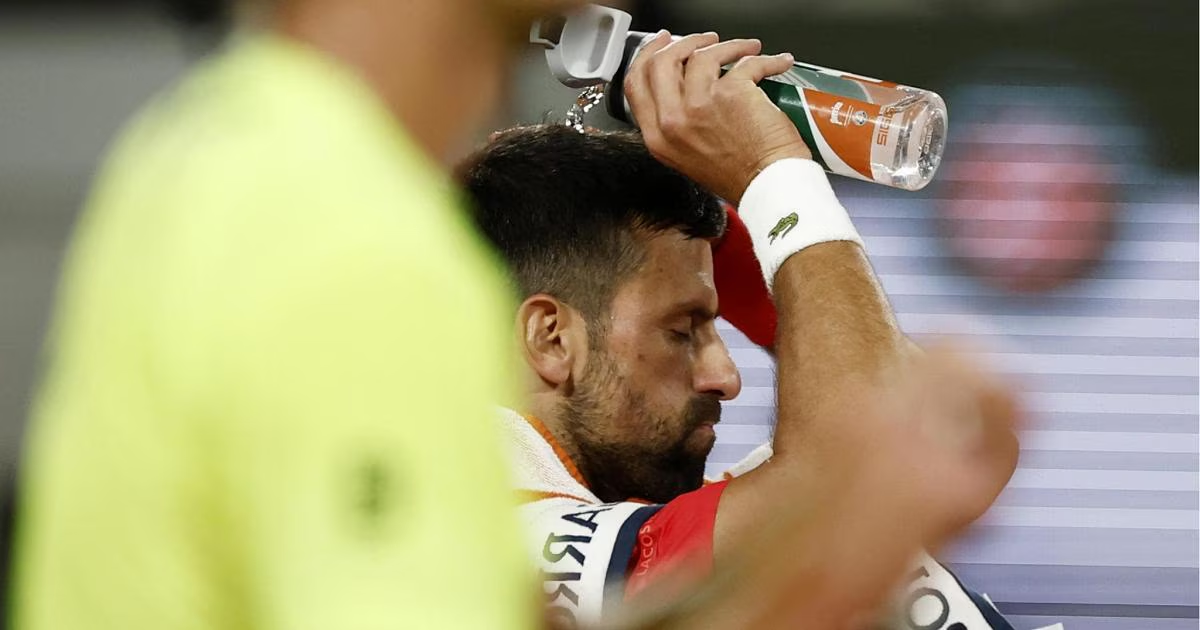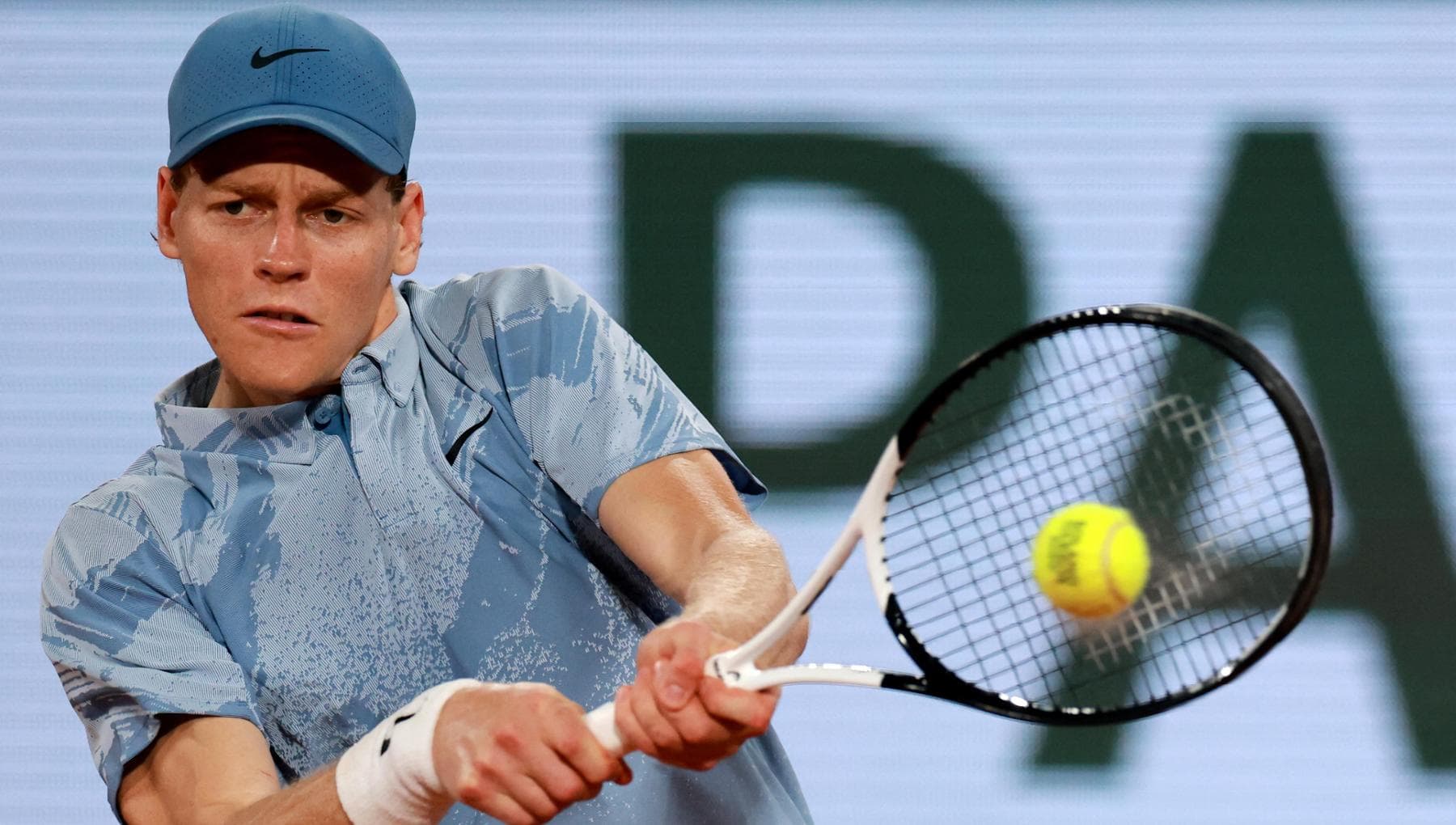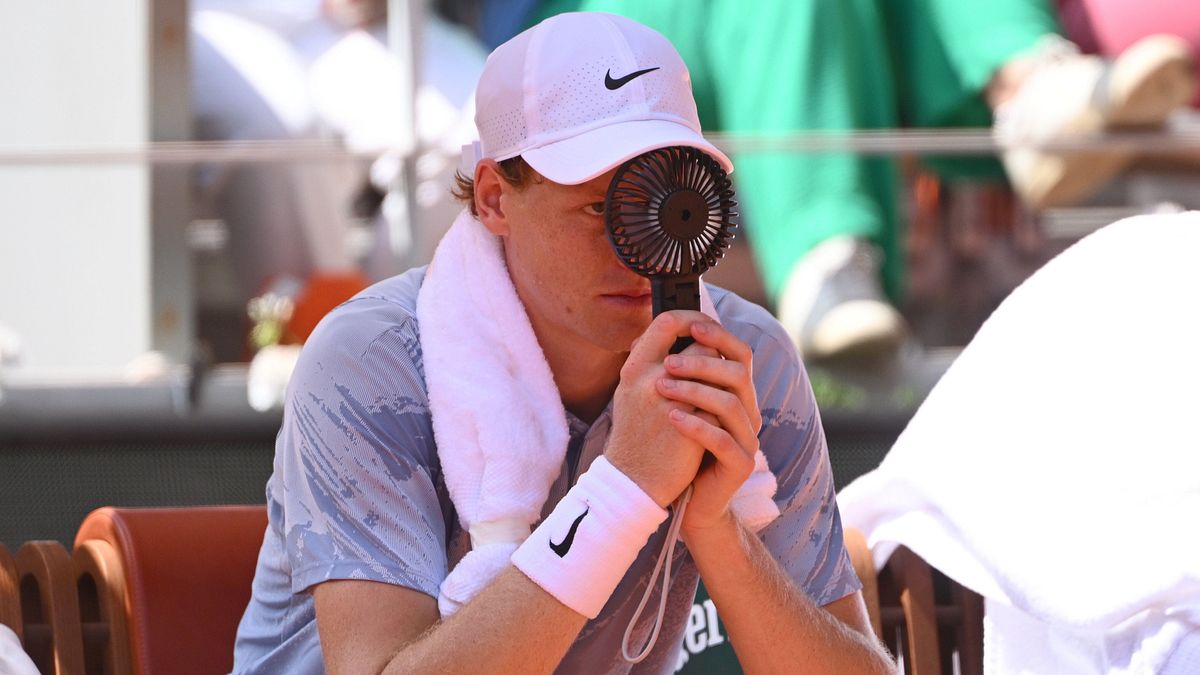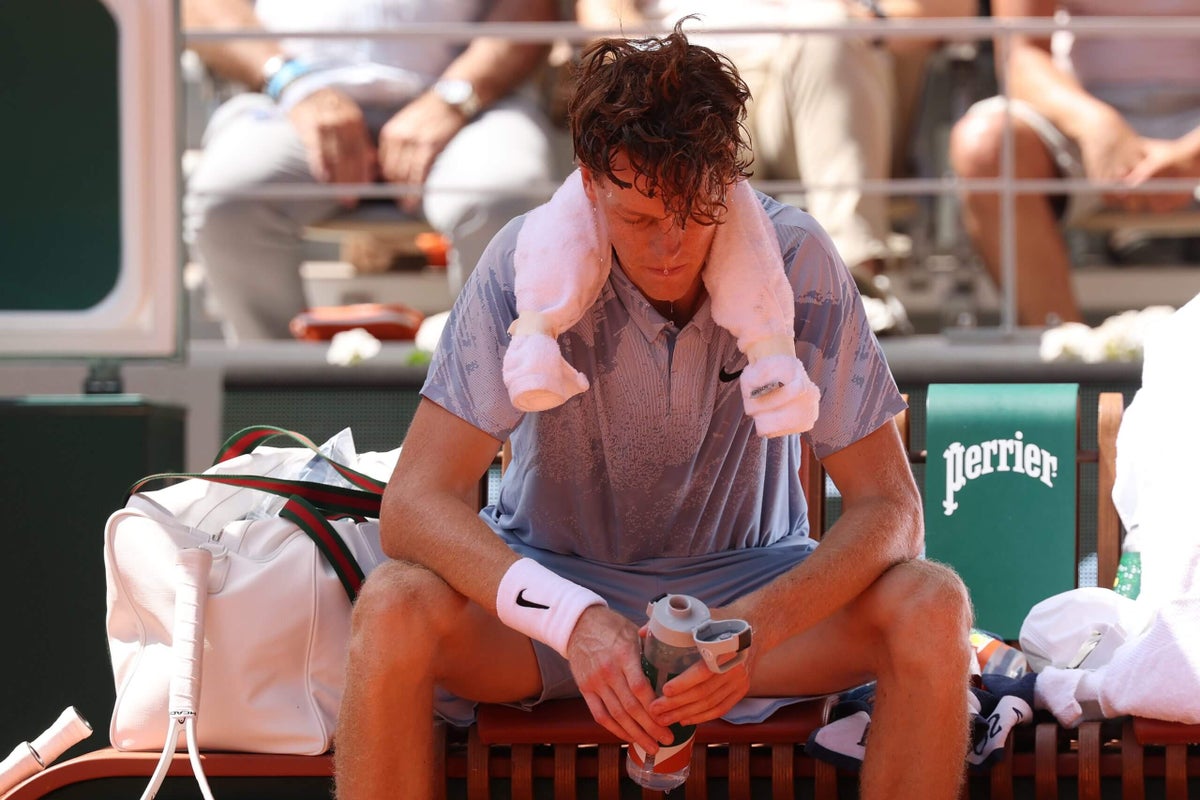
PARIS — Since his first years as a top player, Jannik Sinner has long had one major weakness. The hotter it is, the more vulnerable he becomes.It nearly toppled him at January’s Australian Open, before Novak Djokovic did the job instead. On Thursday, with temperatures climbing toward the 90s at Roland Garros, Sinner could not endure.In the second round of the French Open, the world No. 1 fell victim to Juan Manuel Cerúndolo of Argentina, the world No. 56. He grew dizzy and cramps began to run up his legs when he was just four points from the third round.Slowly, and then all at once, Sinner, who said in a news conference that he woke up not feeling very well, started going backwards. The end of what looked like a challenging but routine day at the office slipped further and further away, as the discomfort that began when he led 6-3, 6-2, 5-2 turned him into a stiff and meek version of himself.Sinner, the dominant force in men’s tennis, on a 30-match winning streak, struggled to put the ball in the court. He watched balls he would normally run down and crush for a winner pass him by. He crouched in the back of the court or he stood on the baseline, hands on hips, wondering how this recurring nightmare was unfolding with his first French Open and career Grand Slam waiting for him down a path that might never be so clear again.For Sinner, this was more than just the loss of a tennis match. In his news conference, he pushed back against the idea that the heat had claimed him. A rough morning can happen during the slog of 15-day Grand Slam tournament. Cramps can come from myriad sources — nerves, conditioning, psychology. Feeling low energy, as Sinner said he did, in any kind of heat, is not a good place to be.“It was warm but not crazy warm,” he said, about an hour after leaving the court during his post-match news conference. He wasn’t wrong. Temperatures were around 90 degrees, which is not, but not sufficient to engage the French Open’s heat rule alone, which a spokesperson for the French Tennis Federation said was not in effect.The rule is based on the Wet Bulb Globe Temperature (WBGT), which accounts for humidity, sun and wind among other factors. If it reaches 86 degrees or higher, there can be 10-minute breaks inserted between the second and third sets for women’s matches and between the third and fourth sets for men’s matches. If it hits 90 degrees, outdoor matches are suspended. Unlike at the Australian Open, there is no provision that the roofs on Court Philippe-Chatrier and Court Suzanne-Lenglen must close.Once again, on one of the biggest stages in the sport, Sinner had been exposed as an all-time great with a glaring weakness, even when exacerbated by the draining qualities of an illness. And tennis, a sport that this week in Paris has seemed at best unready and at worst unserious to meet the challenges of an increasingly hot planet and an ever more physical sport, does not appear to be coming to the rescue.Sinner has trained in hot weather to try to build up his reserves. He did it ahead of the often-scorching conditions of the BNP Paribas Open at Indian Wells, Calif., and won the title there in March on a baking hot day against Daniil Medvedev.Paris, though, is not the California desert. In normal temperatures for this tournament, Sinner is plenty fit. He played some of the best tennis of his life in hour six of the French Open final last year, the epic five-set battle with Carlos Alcaraz.Alcaraz staged a wild comeback from down a service break and three match points in the fourth set, but it wasn’t because Sinner ran out of gas. And when he appeared to have done so, early in the fifth set, Sinner instead staged a rousing comeback of his own that Alcaraz could only stymie by playing tennis from another universe in its 12th game, and then in the 10-point tiebreak.This year, with Alcaraz on the sidelines until at least Wimbledon with a wrist injury, Sinner looked like he would cruise toward the finals weekend. He’d barely lost any sets in three months before he met Sinner.But a heat wave descended on Paris last weekend. Sinner played his opening match at night Tuesday, when he eased past French wild card Clément Tabur.Thursday afternoon, Sinner started at noon on Court Philippe-Chatrier. He was nearly done by 2 p.m., before the hottest part of the day in Paris, which is the second half of the afternoon.Sinner had played a little more than two hours when the cramps and discomfort set in. He said this time was a little different than previous instances. A little different to January’s Australian Open when he was on the brink of a certain defeat to Elliot Spizzirri of the U.S. To last year’s Shanghai Masters, when he retired with full-body cramps against Tallon Griekspoor. And to the 2025 Australian Open against Holger Rune, when another pause — not for heat, but for a broken net — gave him time to gather himself and cool down.Jannik Sinner lost in five sets to Argentina’s Juan Manuel Cerúndolo at the French Open. (Matthew Stockman / Getty Images)With Sinner’s loss, Novak Djokovic, the 24-time Grand Slam champion and a three-time Roland Garros winner, became the favorite. Djokovic survived his own battle with the heat Wednesday, during a nearly four-hour duel with Valentin Royer, a hometown favorite.No fan of high temperatures himself, Djokovic faces another two-opponent match Friday, when he meets the sun and No. 28 seed João Fonseca. Djokovic wanted to finish his match against Royer in three sets. He ended up needing four. Afterward, sitting still and bug-eyed, he spoke in a news conference of how extreme the conditions had felt, regardless of what the tournament’s heat metrics said.“When you play a three-and-a-half hour match on clay, it’s long and very exhausting,” he said. “Physically spent quite a bit of energy today on a very hot day. Very challenging conditions.”He will get no argument from Sinner, who might be able to take comfort in the sport’s memories of Djokovic when he was first starting out. He too could crumble in difficult conditions the way Sinner is prone to now.And regardless of what the scientific meter might say, the conditions for the first five days of the tournament have been seriously hot and seriously hard. They have also exposed a lack of preparedness for unseasonably hot conditions on the part of both players and the tournament, at a time when global temperatures are rising and tennis has become more physical than ever.There is little shade on the grounds, and none on the outer courts. Players have complained about a lack of ice, about water in the courtside refrigerators not being as cold as they are used to.At the U.S. Open and the Australian Open, there are cold air hoses by the player benches so they can air-condition themselves during changeover. Off the courts, air-conditioned areas where players spend time are limited and cramped, especially during the crowded first week of the tournament, before most of the field has been eliminated.Between games and sets of his five-set win Thursday on Court Suzanne-Lenglen, 17-year-old Moïse Kouame, who figures to be a bright star of the sport as it moves into an ever hotter world, tried to cool himself with a plastic, handheld fan that anyone might pick up at a local pharmacy.The red clay does not do anyone any favors, radiating heat up and helping to cook players from every direction, something that is physically impossible on the grass courts of Wimbledon. The past five days, Roland Garros has turned into a clay oven — at a time when those players have not factored that into their preparation. Nor have the tournament staff, ball kids and fans who staff and attend the 15-day event, queueing for field courts in the full glare and spending hours in intense sun with little relief, if they want to keep a seat.This makes a heat wave in Paris a special sort of nightmare. By the time the U.S. Open rolls around, they have acclimated to the heat of the summer. Djokovic, for instance often trains in the middle of the day in Croatia and Athens. The Cincinnati Open, a combined ATP and WTA 1000 event ahead of the fourth Grand Slam of the year, is one of the hottest on the circuit.Most top players come to Paris having been in Madrid and Rome, before those cities begin to bake not just in the day, but under hot summer nights. Rome can often be wet or cool. There is no buildup into conditions like those at Roland Garros, and that lack of readiness has created some frightening scenes. They have mostly occurred in the men’s draw, because matches are longer on average, but players on the men’s and women’s side have been afflicted by the intensity of the heat.No. 15 seed Casper Ruud wandered around Court Simonne-Mathieu “like a zombie,” he said, in the first-round win over Roman Safiullin of Russia. Ahead 2-1 in sets, he sacrificed the fourth in hopes that he might find some energy in the fifth.Casper Ruud was one of many players to find the heat in Paris challenging over the first five days. (Dan Isitene / Getty Images)The gamble paid off. His opponent, Safiullin, was carrying an injury of his own.On Wednesday, Jakub Menšík collapsed, cramping on Court 14 after he won a fifth-set tiebreak over Mariano Navone of Argentina. Minutes passed before anyone arrived on the court to provide assistance, before Menšík walked off of his own accord before being taken to the locker room in a wheelchair.In a news conference, he said he began to feel sick at the beginning of the fourth set, to the point that he could no longer stomach fluids or electrolytes. He stopped drinking so he could continue playing. That left him dehydrated at the end and writhing uncontrollably in the dirt.“I was pretty prepared for the match and these conditions,” he said in a news conference a few hours later. “The ending says it all.”Whatever provisions there might be for extreme heat in the tournament, for plenty of players, they don’t appear to be working.For Sinner, it all added up to missing a golden opportunity to match Alcaraz in winning all four Grand Slam titles during his career, a rare achievement in the sport. He arrived in Paris having won five consecutive tournaments, but this is the one he wanted most.“He was deserving to win this match,” Cerúndolo said on court when it was over. “I don’t know what was happening.”Of course he did. Everyone did. Especially Sinner.
Jannik Sinner might have a heat problem, but tennis has a bigger one
As tennis gets ever more physical and matches grow longer, its relationship with heat will grow more complex — and sometimes concerning.
1,803 words~8 min read