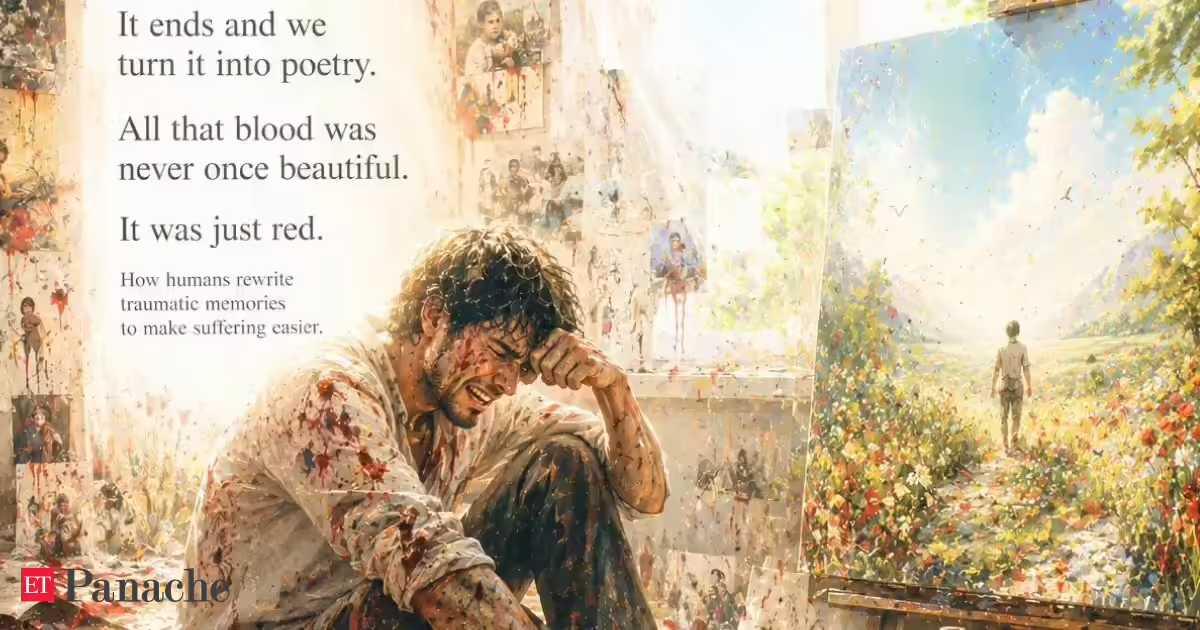
Philosophy often begins with uncomfortable thoughts. Some ideas stay with people not because they offer hope, but because they force them to look at reality without decoration. One phrase that has spread online for years does exactly that. The line, “Nothing ever ends poetically. It ends and we turn it into poetry. All that blood was never once beautiful. It was just red,” by poet and writer Kait Rokowski, delves into conversations around heartbreak, trauma, memory, and the way people romanticize pain after it is over.The lesson is simple on the surface, but many readers say it hits hard because it removes the dramatic beauty people often attach to suffering. Instead of presenting pain as something artistic or meaningful in the moment, it argues that humans create meaning afterward in order to survive what happened.Why this lesson resonates onlineKait Rokowski first became widely known through spoken word poetry, indie literary spaces, and online platforms such as Tumblr and Instagram during the early 2010s. Her work stood out because it mixed ordinary life with emotional honesty. Rather than using distant or overly polished language, she often wrote about depression, loneliness, domestic routines, relationships, and emotional exhaustion in a way that felt familiar to many readers.The quote about poetry and blood eventually became one of her most shared lines online. It appears regularly on Goodreads pages, repost accounts, short videos, and discussion threads because people connect it to breakups, grief, violence, betrayal, and even personal growth. Many readers interpret the line as a reminder that human beings often rewrite painful experiences into stories that feel easier to carry later.The second part of the quote especially stays with readers: “All that blood was never once beautiful. It was just red.” It rejects the idea that suffering itself is noble or aesthetically pleasing. The pain may later inspire art, reflection, or wisdom, but during the actual moment, pain is simply painful.The philosophical idea The quote also connects strongly with larger philosophical ideas about human existence and meaning. Philosophy, which comes from the Greek phrase meaning “love of wisdom,” is built around difficult questions about life, morality, truth, reality, and human purpose. Instead of accepting things as they appear, philosophy asks people to examine why they believe certain ideas in the first place.This quote fits into that tradition because it questions the stories humans tell themselves. People naturally search for meaning after tragedy. They try to turn endings into lessons, memories into narratives, and suffering into something understandable. In some ways, that process helps people heal. But Rokowski’s words suggest there is also danger in making pain appear beautiful after the fact.Philosophers have long discussed this tension between reality and interpretation. Some questions philosophy asks include whether human beings see the world objectively, whether morality is created or discovered, and whether meaning exists naturally or is built by people themselves. The quote reflects that same uncertainty.Understanding philosophy beyond textbooksA lot of people hear the word philosophy and think only about old books or classroom discussions. But philosophy is present in ordinary life more often than many realize. Anyone who has questioned whether life has purpose, wondered why people suffer, or struggled to understand right and wrong has already entered philosophical thinking in some form.Philosophy is generally divided into several major branches. Ethics focuses on morality and how people should live. Metaphysics looks at existence and reality itself. Epistemology studies knowledge and how humans know what is true. Logic deals with reasoning and arguments. Political philosophy explores justice, society, and power.What makes philosophy different from science is that many philosophical questions cannot be answered through experiments alone. A laboratory can measure blood pressure or brain activity, but it cannot fully answer whether grief changes a person for the better or whether beauty exists independently from human opinion. These questions require interpretation, reasoning, and reflection.That is one reason quotes like Rokowski’s continue to spread. They are not scientific statements. They are emotional and philosophical observations that people test against their own experiences.Kait Rokowski’s writing style and influenceRokowski’s work has often focused on emotional survival. Her poetry discusses mental health, identity, womanhood, memory, and emotional fatigue without trying to make everything sound inspirational. Many readers connected with her writing because it felt direct and personal instead of distant or academic.One of her best-known spoken word pieces, “A Good Day,” describes everyday actions like doing laundry or making phone calls as victories during depression. Another widely discussed work, “How to Cure a Feminist,” uses satire and sharp commentary to discuss control and misogyny. Across her writing, there is a pattern of stripping emotional experiences down to their rawest form.That same style is visible in the quote that continues to circulate today. It does not try to soften pain or transform it into instant wisdom. Instead, it points out how people later shape memories into stories they can emotionally survive.Why people still return to philosophical quotesIn recent years, short philosophical lines have become increasingly popular online because they offer quick emotional reflection in a fast-moving digital world. People save them, repost them, and attach personal experiences to them. Some are hopeful. Others are unsettling. But the ones that usually last are the ones that feel honest.Rokowski’s quote remains relevant because many people recognize themselves in it. Human beings often look back at difficult periods and search for meaning afterward. That process can create art, growth, and understanding. But the quote quietly reminds readers not to confuse suffering itself with beauty.In the end, philosophy does not always provide answers. Sometimes it only changes the way people look at their own lives. And perhaps that is why lines like this continue to travel across the internet years after they were first written. They force readers to sit with uncomfortable truths for a moment, even if only briefly.
Philosophy lesson for the day: 'Nothing ever ends poetically. It ends and we turn it into poetry. All that blood was never once beautiful. It was just red' - Why trauma and suffering are often romanticised by people
The philosophy lesson of the day revolves around a widely shared quote by poet Kait Rokowski that challenges the way people perceive pain and memory. The line suggests that painful experiences are not poetic or beautiful in themselves, but are later reshaped by human memory into something meaningful so they can be emotionally processed. It highlights how people often romanticize heartbreak, trauma, and loss after the fact, even though, in reality, suffering is raw and unembellished in the moment.
TL;DRAI
Poet Kait Rokowski's quote argues humans retrofit poetry onto suffering only after it ends — pain in the moment is just pain. It engages philosophy's core question: narrative is a survival tool, not evidence that suffering holds inherent beauty.
965 words~4 min read