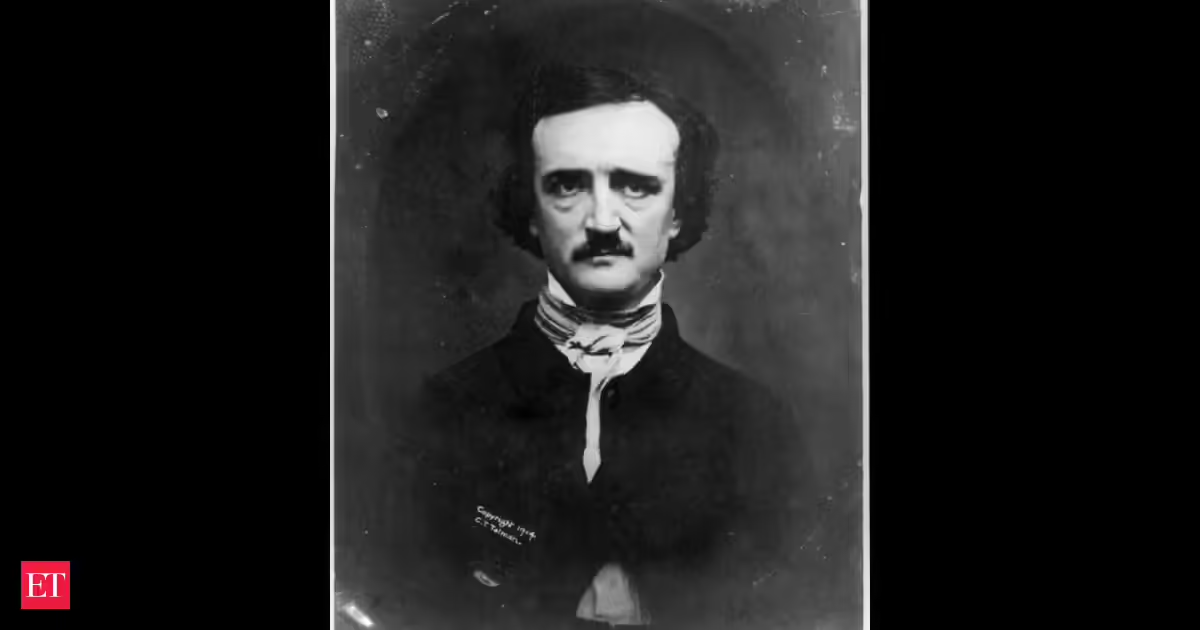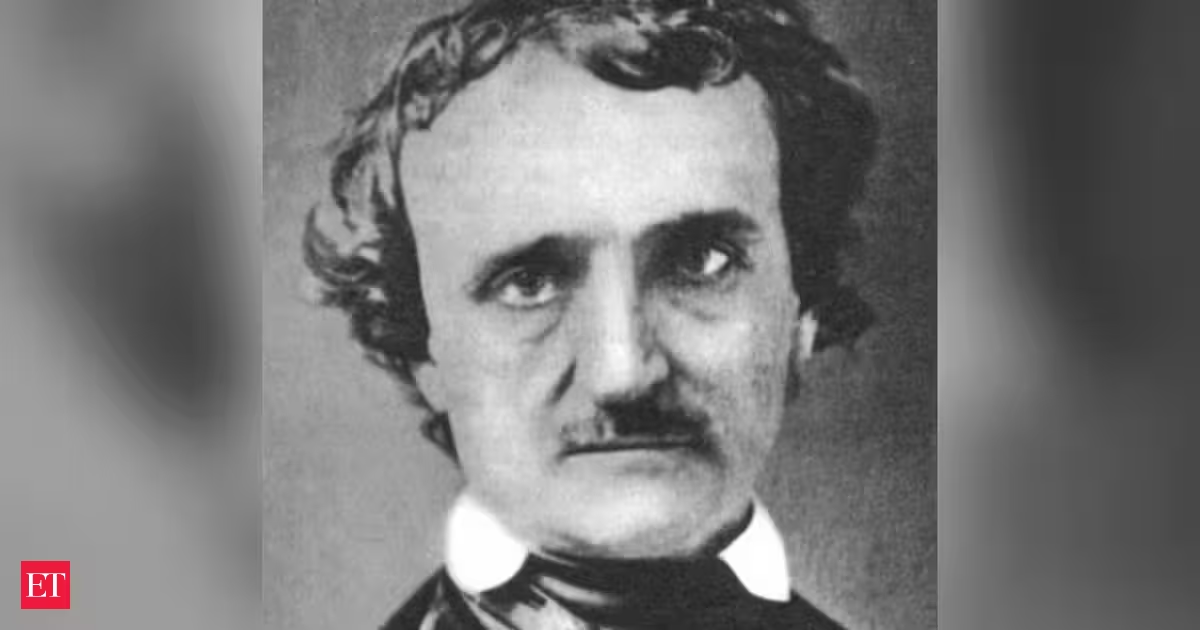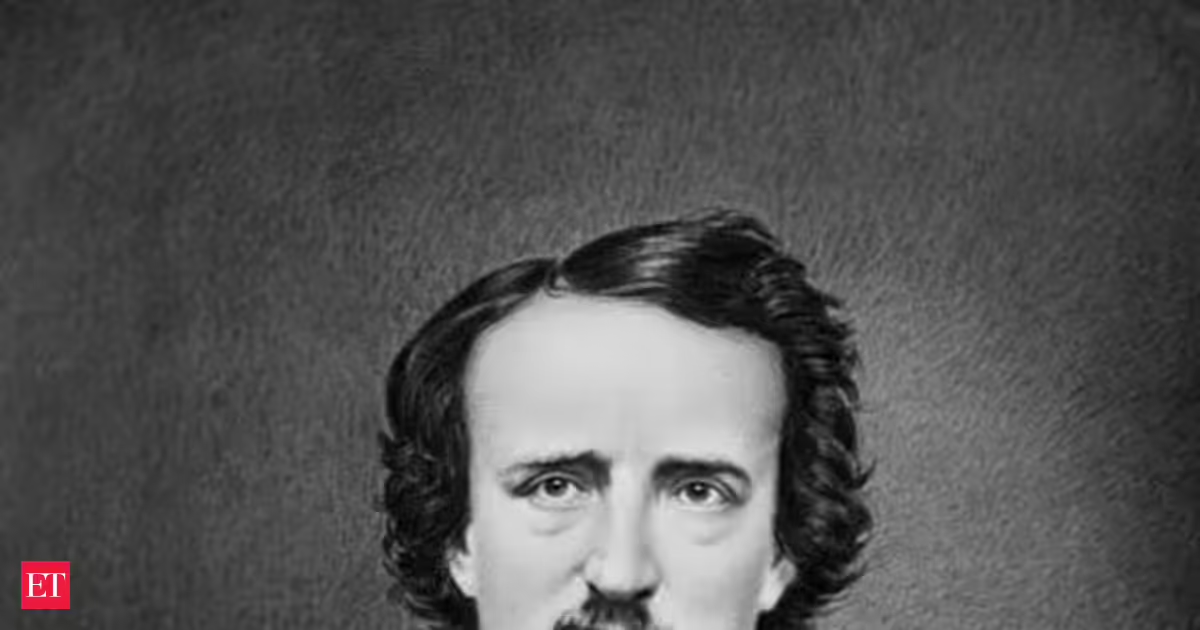
Why do tragic love stories stay with people longer than happy endings? Why do people still cry over Jack and Rose in Titanic, mourn the doomed romance of Romeo and Juliet, or feel haunted by the obsessive love between Catherine and Heathcliff in Wuthering Heights after first reading or watching them?Just as Antarctica preserves Earth’s deepest ice beneath its frozen surface, tragedy often preserves human emotion beneath layers of sorrow, silence, and memory. Love cut short by death, distance, or fate often feels eternal precisely because it never had the chance to fade into ordinary life. And the result is intense and long as the pain remains unfinished, and that incompleteness lingers in the human mind.Writers and artists have explored this emotional paradox for centuries. From Shakespeare’s star-crossed lovers to the icy separation of Jack and Rose aboard the Titanic, stories built around grief and irreversible loss often leave deeper emotional scars than stories with perfect endings.Few writers understood that darker side of human emotion more intensely than Edgar Allan Poe did.Quote of the Day by Edgar Allan Poe: “The death of a beautiful woman is, unquestionably, the most poetical topic in the world.”The quote is widely associated with Edgar Allan Poe and his literary philosophy about beauty, grief, and emotional intensity in poetry. As explained by Fellow Dust Magazine, Poe believed tragic loss, especially when narrated by a grieving lover, created one of the deepest emotional experiences possible in literature.Also Read: Quote of the Day by Marcus Aurelius: ‘It never ceases to amaze me: we all love ourselves more than other people, but care more...’ a stoic lesson on self-worth, insecurity, and why we seek validation from othersWhat the quote is actually suggestingAt first glance, the quote can sound disturbing or overly dramatic. Poe was not celebrating death itself. Instead, he was trying to explain why grief, longing, and irreversible loss often create strong emotional power in art and poetry.According to Poe’s philosophy, beauty becomes even more emotionally intense when it is lost forever. The sorrow of someone mourning a loved one creates vulnerability, emotion, memory, and longing, all elements that deeply affect readers.As explained by the outlet, Poe argued in The Philosophy of Composition that the “death of a beautiful woman” becomes especially poetic when told through the voice of a bereaved lover. The emotional suffering of the narrator creates empathy and emotional connection.This idea appears in The Raven, where the narrator mourns Lenore, the woman he loved deeply. His grief slowly pushes him toward fear, obsession, and psychological collapse.The quote also reflects another truth about human emotion. People often connect most deeply with stories about loss because grief reveals how much someone truly loved, valued, or depended on another person.Edgar Allan Poe: The thinker behind the ideaEdgar Allan Poe is remembered today as one of America’s greatest literary figures and one of the pioneers of psychological horror and mystery writing.Beyond being a poet and storyteller, Poe was also a critic and literary theorist who carefully analyzed how writing could emotionally affect readers. He developed detailed ideas about literary structure, emotional impact, and the artistic purpose behind poetry.His works frequently explored darkness, fear, sorrow, loneliness, death, and the fragile human mind. Stories and poems such as "The Raven" became famous not just for their gothic atmosphere but also for their emotional depth and haunting psychological themes.Poe believed writing should create a deliberate emotional effect. In The Philosophy of Composition, he argued that every part of a literary work should contribute to a unified emotional experience for the reader.His fascination with beauty and tragedy became central to his legacy and continues to influence literature, cinema, and modern horror storytelling today.Edgar Allan Poe’s philosophy behind the quotePoe’s philosophy was deeply tied to emotional intensity and artistic perfection. He believed poetry was not simply about telling a story; it was about creating a carefully controlled emotional reaction.Fellowdustmag further explains that Poe considered “Beauty” the highest purpose of poetry. But his idea of beauty was not limited to happiness or pleasant imagery. For him, beauty also included emotional depth, sorrow, mystery, and psychological impact.That is why themes of death and mourning appear repeatedly in his work. Poe saw grief as one of the most powerful human emotions because it strips away pretense and exposes genuine feeling.In The Raven, this philosophy becomes clear through the narrator’s obsession with Lenore after her death. His sadness transforms into fear and madness, showing how love and grief can overwhelm the human mind.Poe’s darker worldview helped shape what later became gothic literature and psychological horror. He explored not only external terror but also the emotional suffering that exists inside people themselves.Why this idea still matters todayEven in modern times, audiences continue to connect strongly with stories built around heartbreak, loss, and emotional vulnerability. From films and music to novels and social media storytelling, tragic emotions often leave a lasting impact because they feel deeply human.Poe’s quote still resonates because grief remains universal. Almost everyone experiences loss, heartbreak, longing, or emotional absence at some point in life. The idea also reflects how people remember others after they are gone. Loss often makes memories more powerful, emotions more intense, and relationships more meaningful in hindsight.At the same time, modern readers may interpret Poe’s words differently than audiences in his era. Today, many people focus less on romanticizing tragedy and more on understanding the psychological effects of grief, loneliness, and emotional trauma.Still, Poe’s central insight remains relevant: some of the most powerful art comes from emotions people struggle hardest to explain.
Quote of the Day by Edgar Allan Poe: ‘The death of a beautiful woman is...’ - Why heartbreak often inspires humanity’s most influential stories and the gothic philosophy behind grief, beauty, and human emotion
Quote of the Day by Edgar Allan Poe suggests tragic love stories leave a lasting impact. Poe believed the death of a beautiful woman was the most poetic topic. He argued that irreversible loss and grief create intense emotional power in art. This idea explains why audiences connect with stories of heartbreak and loss.
921 words~4 min read