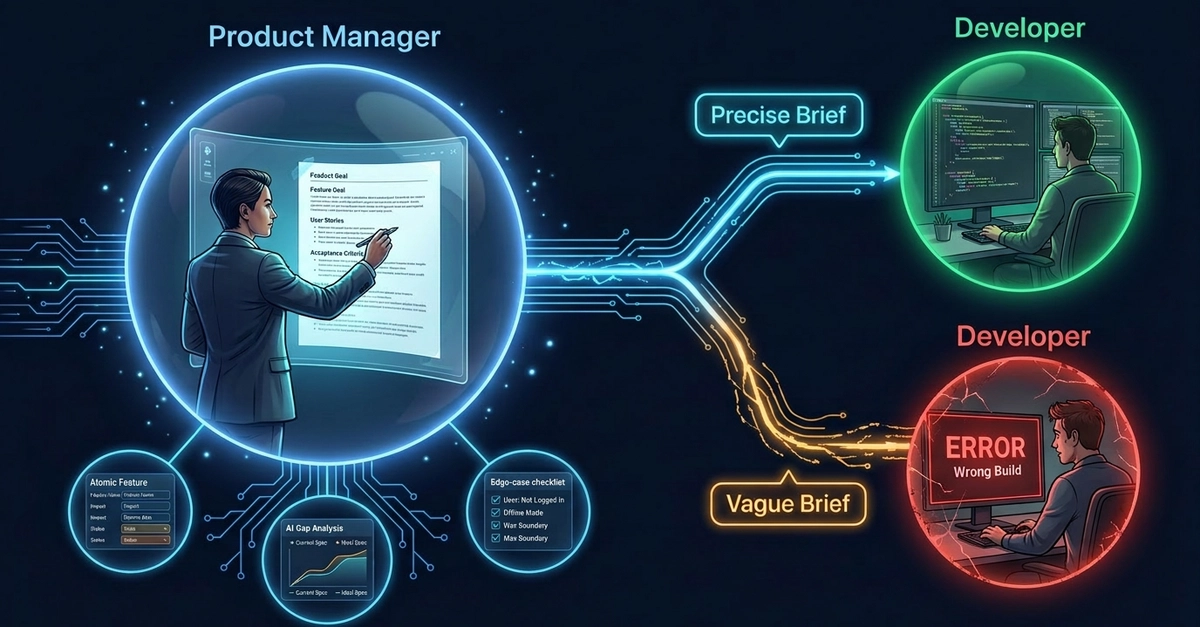
The dev team is moving fast. Requirements come in, developers build quickly, and then the demo happens.
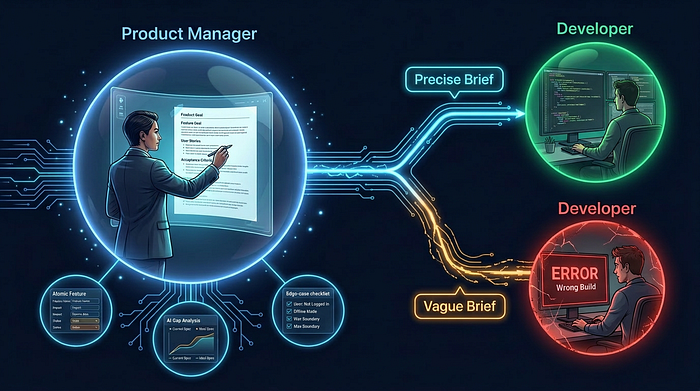
The outcome isn't what was wanted. The brief was technically correct but the result was wrong. The team assumed shared context that was never written down. Nobody asks for specifications now; you just prompt the AI and go. And that's exactly the problem. Every org I've spoken with that has rolled out AI coding tools has had some version of this moment.
Vibe coding built the wrong thing fast.
The error happened upstream in the brief. Vibe coding didn't create that problem; it made the same old problem arrive faster.
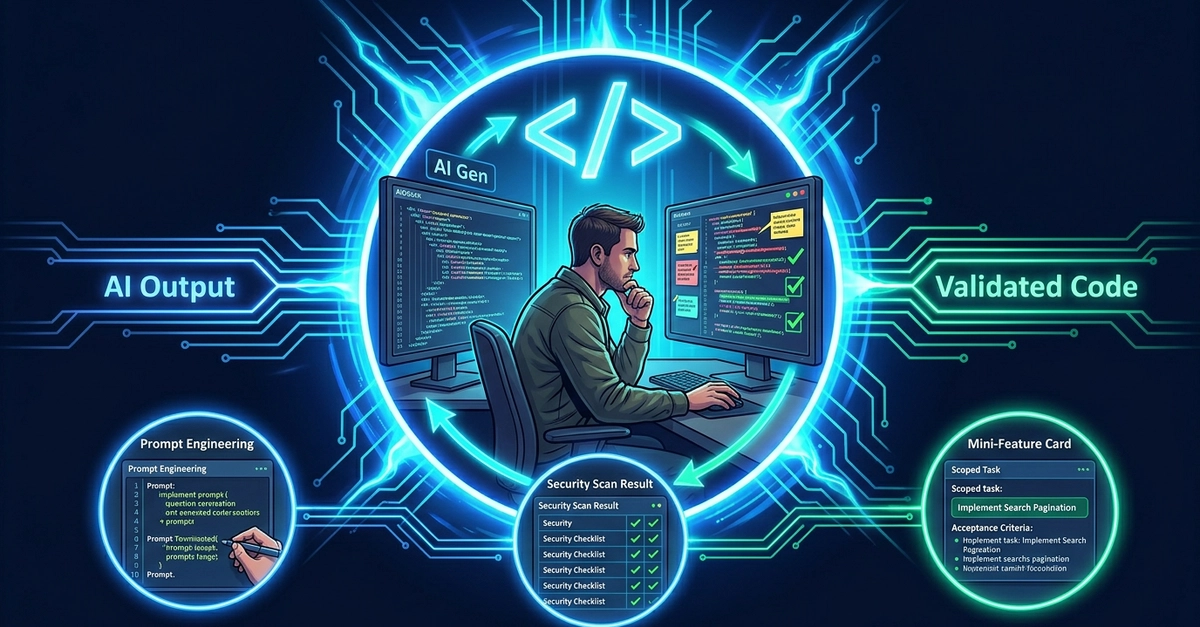
This is Post 2 in the Vibe Thinking series ↗. Post 1 covered the developer layer ↗ - what changes, what doesn't, and why the review burden goes up when output volume triples. This post is about what happens upstream of that: what the developer receives before they open the AI agent.