Six months after the AI-generated prototype ships to production, the engineer who wrote zero of it is on call at 3 AM trying to understand it.
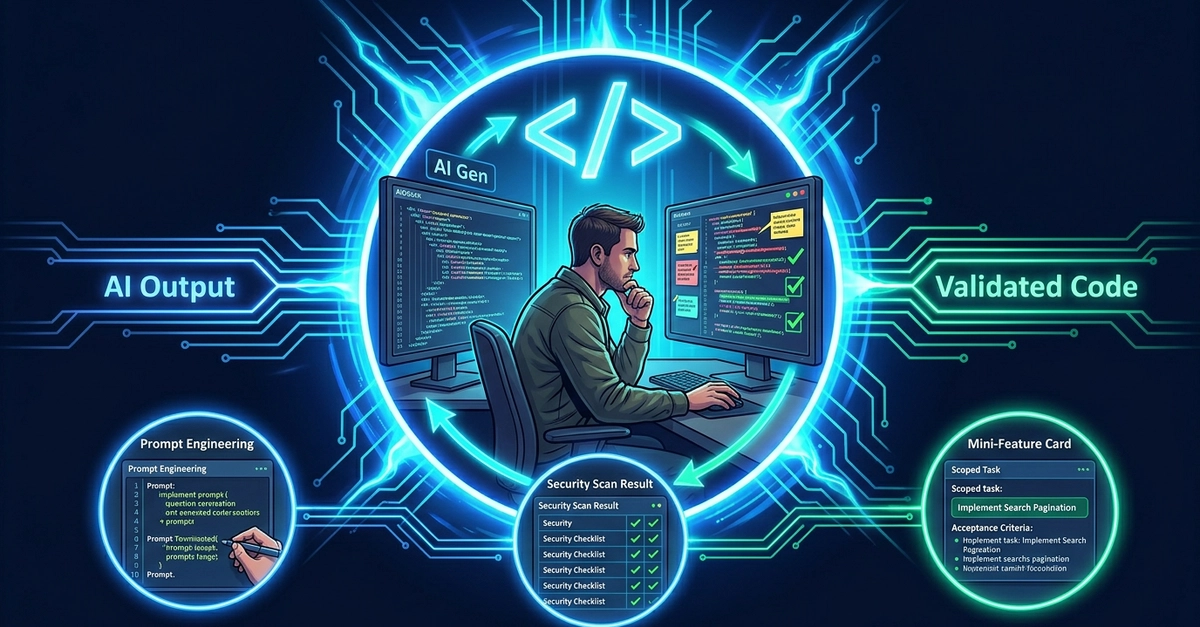
Vibe coding is real and it works for what it is. You can describe a goal in plain English and get working software in an hour that would have taken a week to build manually. The demos look incredible. The prototypes are impressive. The problem is that software does not live in the demo. It lives in production, where it degrades, gets extended by new requirements, fails in edge cases that the original prompt never described, and eventually gets handed to an engineer who has to understand what it does and why. The industry right now is extremely good at generating vibe code and almost completely unprepared for the part that comes after.
What vibe coding actually is
Andrej Karpathy coined the term in early 2025 and the internet ran with it. The core idea is simple: instead of writing code manually, you describe what you want in natural language. The model handles the implementation.
You review the output, refine the prompt, iterate quickly, and end up with a working product without touching the actual syntax.