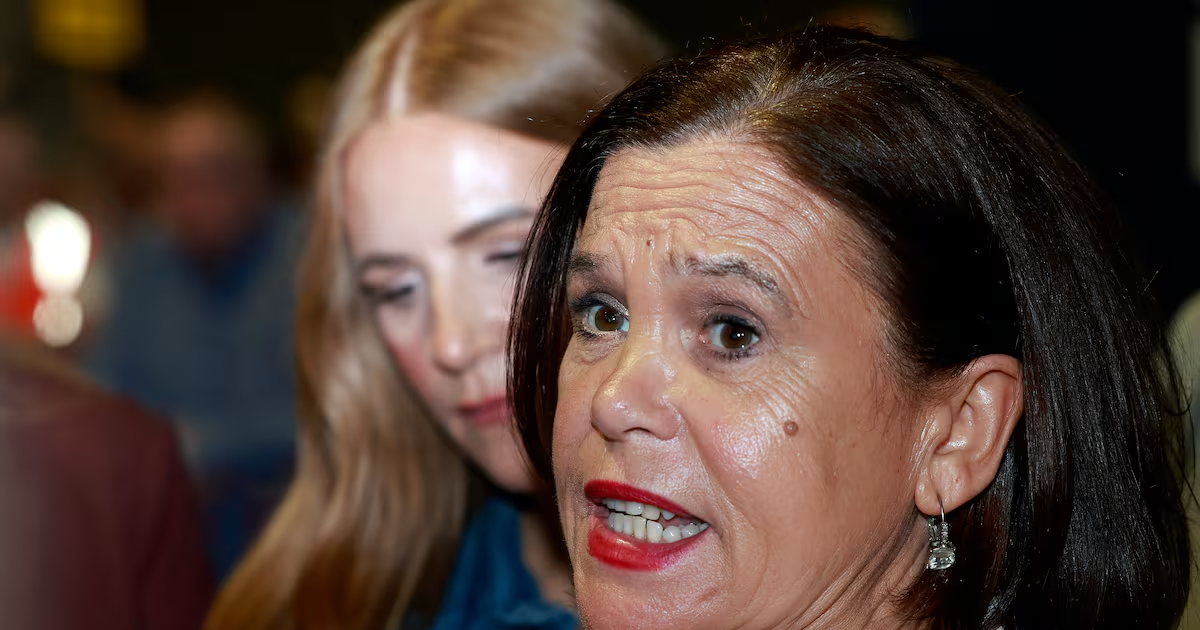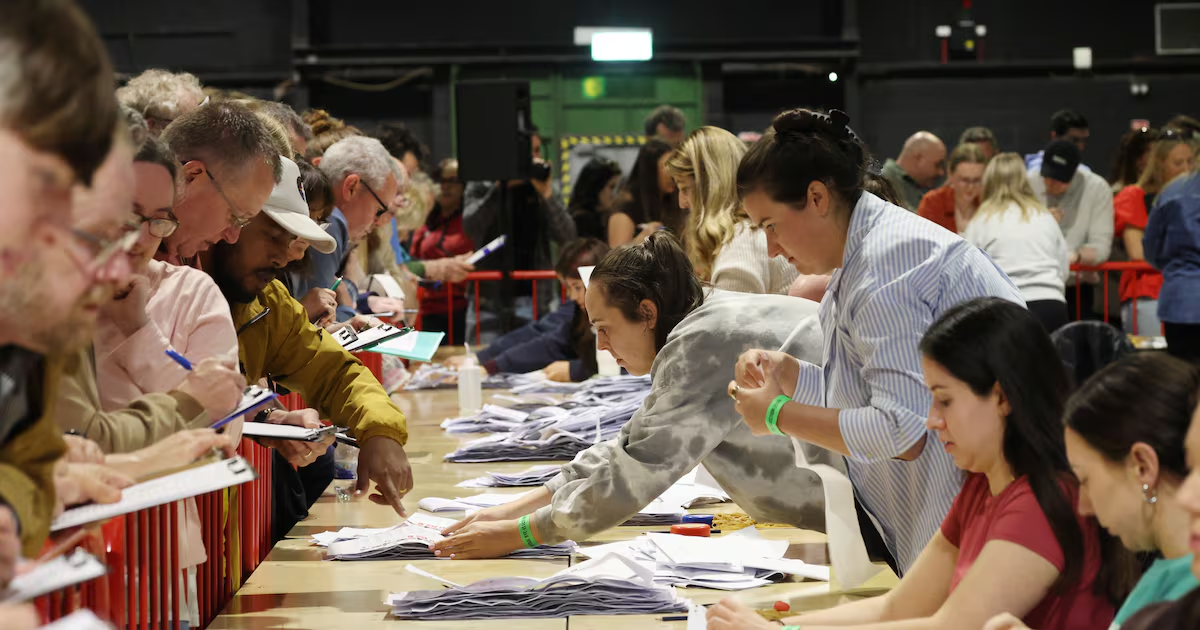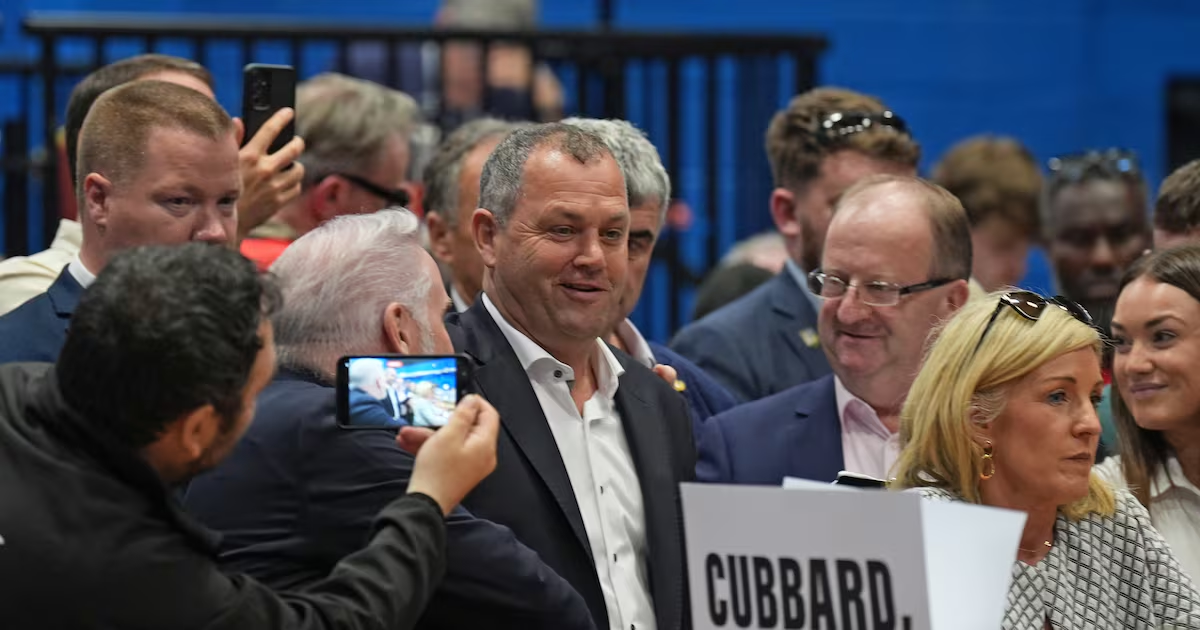
Though the Social Democrats and Fine Gael took home the prizes at last weekend’s byelections, there were significant increases in support for parties and candidates on the right and far right. The results suggest for the first time, perhaps since the Progressive Democrats in the mid-1980s, the emergence of a significant electoral force to the right of Fine Gael and Fianna Fáil.And while it is always necessary to be cautious when turning byelection results into general-election predictions, it is likely this emerging force will remain strong in the two byelection constituencies – and will grow elsewhere too.There are very significant differences in the political pitch and appeal of the parties and candidates on the right in the two constituencies.In Galway West, Noel Thomas, formerly a Fianna Fáil councillor and now a member of Independent Ireland, stood for the new party, which already has four TDs and 24 councillors around the State, as well as a seat in the European Parliament through Ciaran Mullooly. The party adopts a tougher line on migration and sought to identify strongly with the recent fuel protests and blockades. Thomas himself was perhaps the perfect candidate for this emerging identity. During a local controversy in 2023 over plans to convert a hotel into accommodation for asylum seekers, he declared “the inn is full” and said Ireland should not accept any more refugees. Thomas left Fianna Fáil and later joined Independent Ireland. He was prominent on the recent fuel protests in Galway.Thomas didn’t take a seat last weekend, but he came close. He doubled the percentage of the vote he had won at the 2024 general election and increased the number of votes he won to over 10,000. A performance like that would guarantee him a seat at the next election, possibly on the first count. “He’ll take a seat at the next election,” says Independent Ireland TD Ken O’Flynn and it’s hard to argue with that.O’Flynn downplays the importance of the party’s stance on migration and says Thomas’s popularity is based on “knocking on doors and asking how he can help with people’s problems … It’s about the work he has done.”Canvass reports suggest migration didn’t feature much on the doors. In a pre-election poll for The Irish Times and TG4 in the constituency, just 2 per cent said the biggest issue was “migration/refugees/asylum seekers”. [ The Monk does a bunk as true-blue Daniel Ennis elevated to the DáilOpens in new window ]Galway voters were more concerned at the cost of living, and the fuel protests were a symbol of frustration – and the appetite for anger at the Government. Two thirds of voters said their choice of candidate in the election would be influenced by the protests.In Dublin Central, the picture is different. The appetite among voters was not met by overtly anti-migration campaigner and local councillor Malachy Steenson and by the former criminal Gerry Hutch, who talked about interning and deporting migrants during the campaign.There was no seat, but between them, the two right-wing populists won more than 20 per cent of the vote – again, easily enough for one of them to win a seat in the next election if they sustain that support level. But there is little doubt they are tapping the same pool of anti-establishment, frustrated voters; Steenson – as he did in the last election – transferred to Hutch at a rate of more than 50 per cent when he was eliminated.Anti-migration sentiment in Dublin – with its large foreign-born population – is much stronger than Galway, but still a minority fixation: just 12 per cent of respondents to a pre-election poll said it was the most important issue. However, DCU political scientist Eoin O’Malley expects that concerns over migration will continue to be a live political issue.“Independents had long been a vehicle for disaffected Fianna Fáilers,” he says. [ A party that cannot get a tenth of the vote in Dublin or Galway retains power. This is dangerousOpens in new window ]“This looks like a phenomenon that should continue as long as Fianna Fáil refuses to engage openly with the issue of immigration. We can now see that explicitly anti-immigrant candidates and parties will pick up seats in constituencies in both urban and rural Ireland.”Why did neither Thomas nor Steenson/Hutch win a seat, or challenge more strongly? The evidence suggests an interesting answer. It seems that although a tough line on migration will win a candidate votes, it will also lose a candidate votes when it comes to transfers from other candidates, most of whom occupy more centrist or centre-left positions. Hutch couldn’t buy a transfer from a range of candidates in Dublin Central. It was the same dynamic that stopped him from winning a seat in the 2024 general election. In Galway, Thomas suffered less from this factor, showing an ability to get some transfers across the board – possibly because he is nearer the political mainstream. But when it came to the final decisive distribution of votes – those of Labour’s Helen Ogbu – they went overwhelmingly to Fine Gael’s Sean Kyne ahead of Thomas. Given the choice between supporting Opposition or Government, the centre-left Ogbu forewent the opportunity to give the Government a bloody nose and voted Fine Gael. Populist right-wing candidates can tap new sources of electoral support – but they risk shutting themselves off from a lot of voters if they do.
What byelection results say about the rise of hardline anti-migrant parties and candidates
Galway West and Dublin Central votes suggest emergence of significant electoral force to the right of Fine Gael and Fianna Fáil
899 words~4 min read