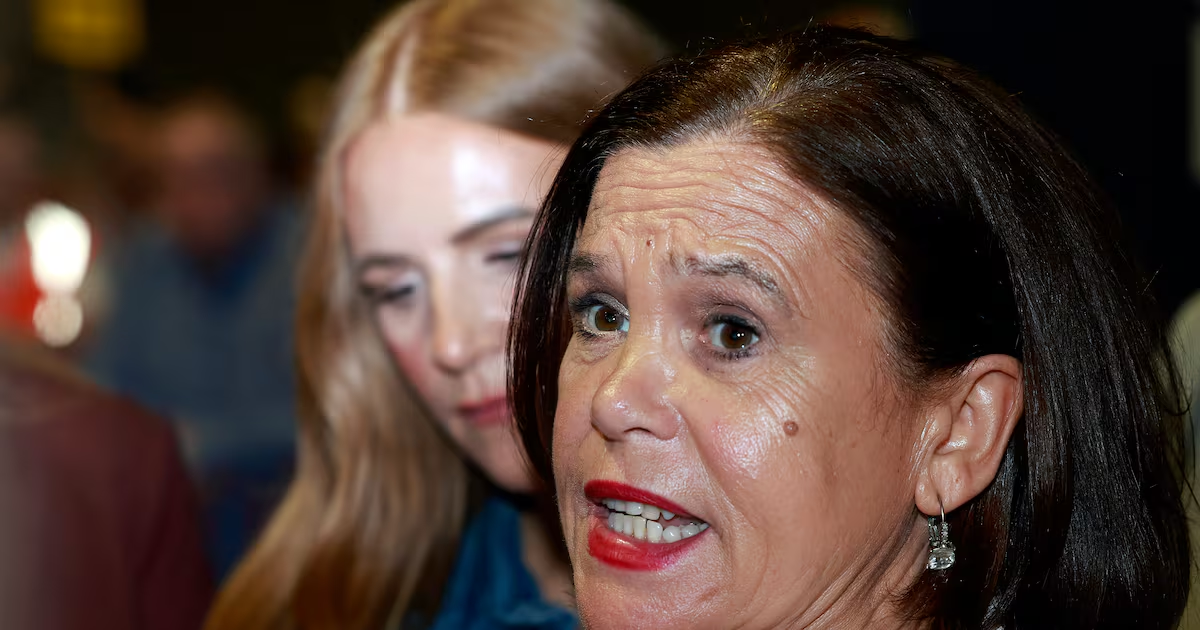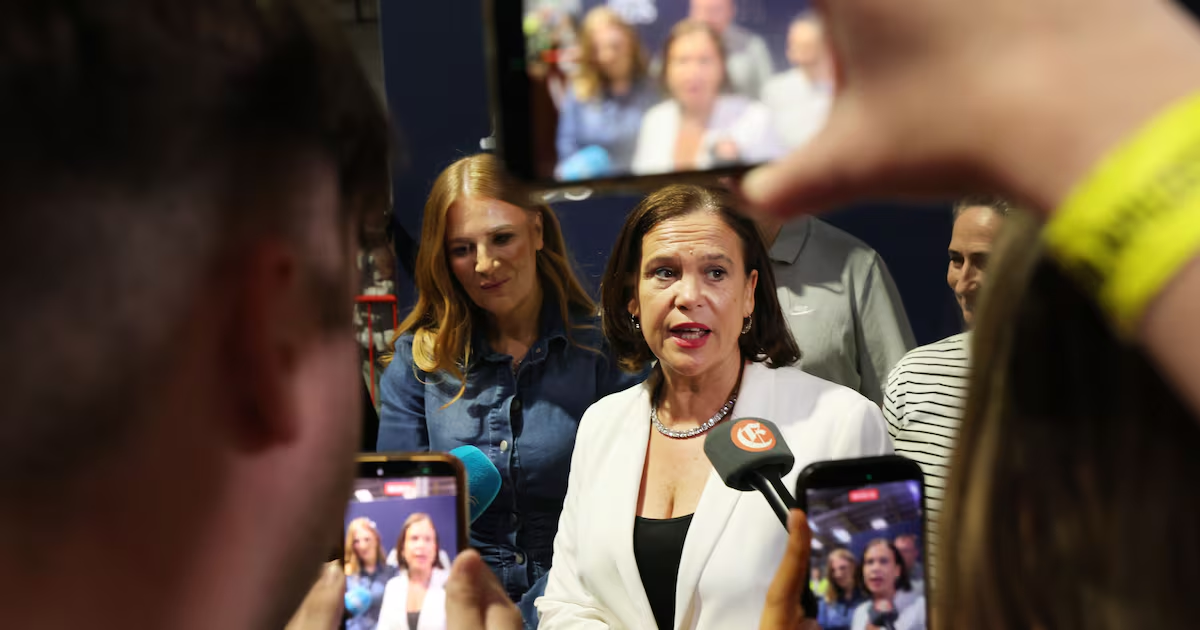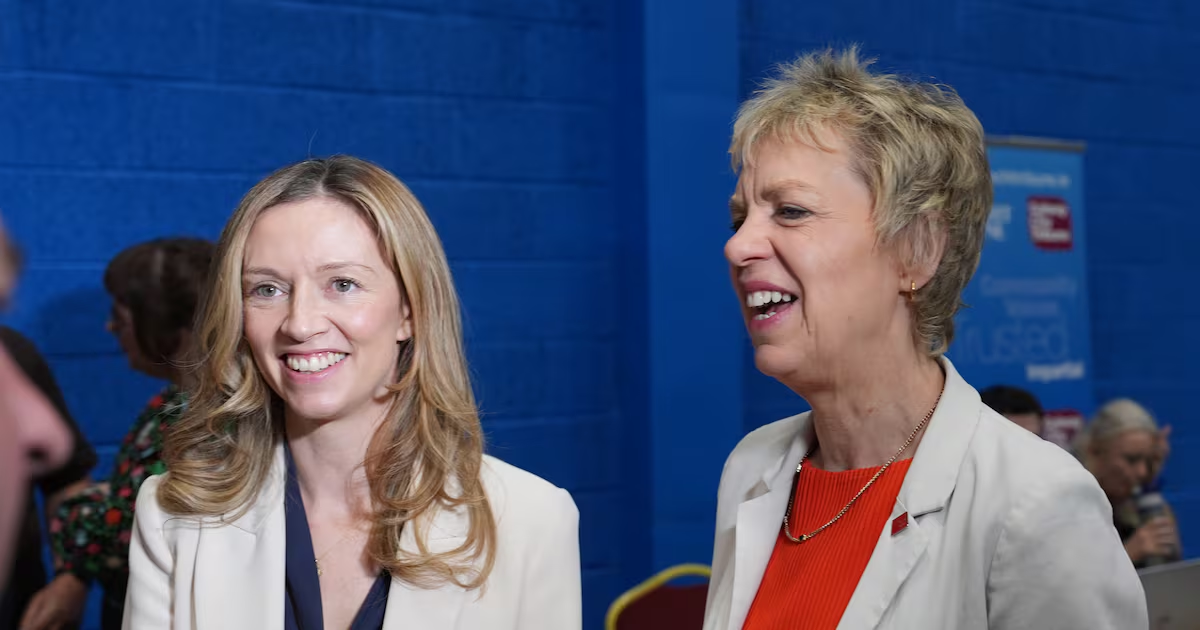
The fragmentation of traditional politics has been a feature of most western democracies in recent years. Across the European Union new parties of the far right and the hard left have been eating into the support of the mainstream parties that dominated the political system for so long.Amid all this upheaval Ireland is actually a beacon of stability, with the two parties that have led the government of the State since its foundation still in office. True, they are now sharing power rather than alternating in government as they used to do, but in a world of rapid upheaval their resilience is notable.When the writs for Dublin Central and Galway West were moved in April, few people gave either of the Government parties any chance of winning, particularly given the dismal record of successive governments in byelections. Yet lo and behold, Fine Gael, which has been in office since 2011, defied conventional wisdom and won Galway West to take the seat vacated by Catherine Connolly. There were a number of factors involved, including the fact that Sean Kyne had previously been a TD and was widely known to the voters. However, this could well have been a serious liability if the Government was remotely as unpopular as its opponents claim.“Our TDs and canvassers were pleasantly surprised by the welcome they got on the doorsteps in both constituencies,” said one Fine Gael adviser. “It was such a contrast to the abuse they get on social media and the unremitting criticism of the mainstream media. That in itself was an important lesson for our TDs and a huge boost to party morale.”The impressive performance of Independent Ireland’s Noel Thomas in Galway showed the potential of a right-wing movement, although it should be noted that as a previous long-serving Fianna Fáil councillor he already had a large support base.A striking feature of the result in both constituencies was that half the votes of the eliminated Fianna Fáil candidates transferred to Fine Gael. It is evidence that the centre ground in Irish politics, which narrowly saw off the Sinn Féin surge in 2020 and did so more comfortably in 2024, is capable of responding to threats from either left or right. In fact the two-pronged assault on the system from the extremes has the potential to strengthen the centre.The poor showing of Fianna Fáil in both byelections was the worrying feature of the Government performance. There were local reasons for this and neither constituency was ideal for the party but there are certainly lessons to be learned if it is to retain its position as the biggest party in the Dáil.One of them is that the focus on personalities has hollowed out the once famed organisation in many constituencies. When Bertie Ahern was the leading Fianna Fáil candidate the entire organisation revolved around him and the party won more than 40 per cent of the vote. Last weekend it was down to 4 per cent.[ Fintan O'Toole: A party that cannot get a tenth of the vote in Dublin or Galway retains power. This is dangerousOpens in new window ]The lesson for Fianna Fáil is that it needs to have constituency organisations independent of the sitting TD. All parties have seen a decline in membership in recent decades, with many successful candidates relying on their personal following to campaign for them.The benefits of an active organisation were showcased by Fine Gael in Galway. Fine Gael branches are still strong in the constituency and they came out strongly in support of Kyne to ensure he was able to join Hildergard Naughten in the Dáil. Sinn Féin as the main Opposition party had a deeply disappointing outcome. Given it has Dáil seats in both constituencies the party should have been able to do much better, particularly in Mary Lou McDonald’s bailiwick of Dublin Central. The party’s problem is that it is now facing intense competition from left and right among voters who are hostile to the Government. Opinion polls have shown that a sizeable chunk of Sinn Féin support comes from people who are not just anti-British and anti-EU but are, unsurprisingly, hostile to immigration. Independent Ireland and other right-wing factions are now eating into this support base and the heady days when Sinn Féin was polling 35 per cent plus are unlikely to return. There is also a significant chunk of middle-of-the-road voters who continue to regard Sinn Féin as toxic, regardless of the party’s policies.[ Kathy Sheridan: In an age of misinformation and provocation, here’s who stood by the people in recent byelectionsOpens in new window ]This is something to which the “soft left” parties need to pay attention. The Social Democrats won Dublin Central because they got preferences from the centre parties as well as the left. If they continue to tag along as a Sinn Féin support group in the Dáil and outside it that might not be the case in future. The healthy performance of Labour’s Helen Ogbu in Galway West should give that party the confidence to start putting some distance between itself and Sinn Féin. There is a yearning among a significant chunk of the electorate for an antigovernment force that is neither right wing nor in the pocket of Sinn Féin. Ogbu has shown Labour the way forward.
Here is something the ‘soft left’ parties need to pay attention to
Dublin Central and Galway West byelections show centre ground in Irish politics is capable of responding to threats from either left or right
880 words~4 min read