Amazon Web Services has quietly done something the networking world has debated for years: it ripped out the standard playbook for connecting servers inside data centers and replaced it with something built on quasi-random math. The new architecture, called Randomized Network Graph, is now the default infrastructure handling the majority of AWS workloads.
The result, according to a research paper co-authored by AWS engineers, is cost savings between 9% and 45% compared to traditional fat-tree designs, with equal or better performance across different traffic patterns.
How RNG actually works
RNG uses quasi-random graphs to create a “flat” network where data can take many different paths between any two points, replacing the traditional hierarchical fat-tree topology.
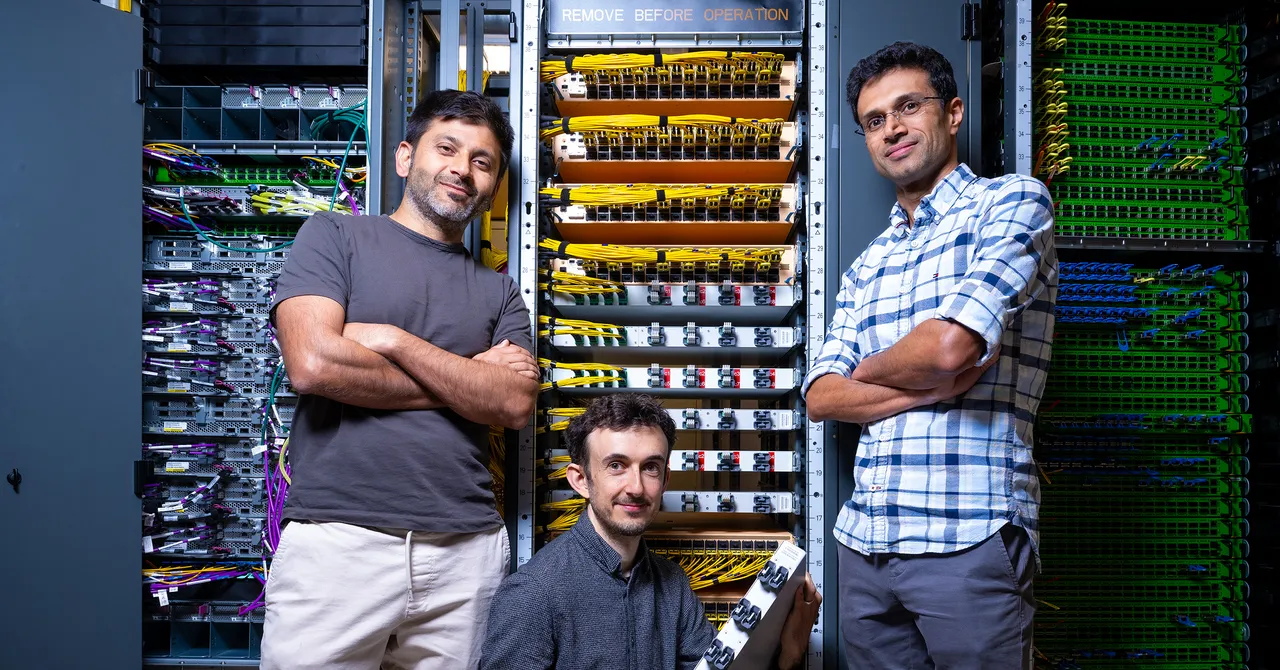
The architecture relies on two key innovations. First, a custom distributed routing protocol called Spraypoint that figures out how to spread traffic efficiently across this randomized mesh. Second, passive optical devices called ShuffleBoxes that handle the physical connections without the power-hungry electronics that traditional switches require.