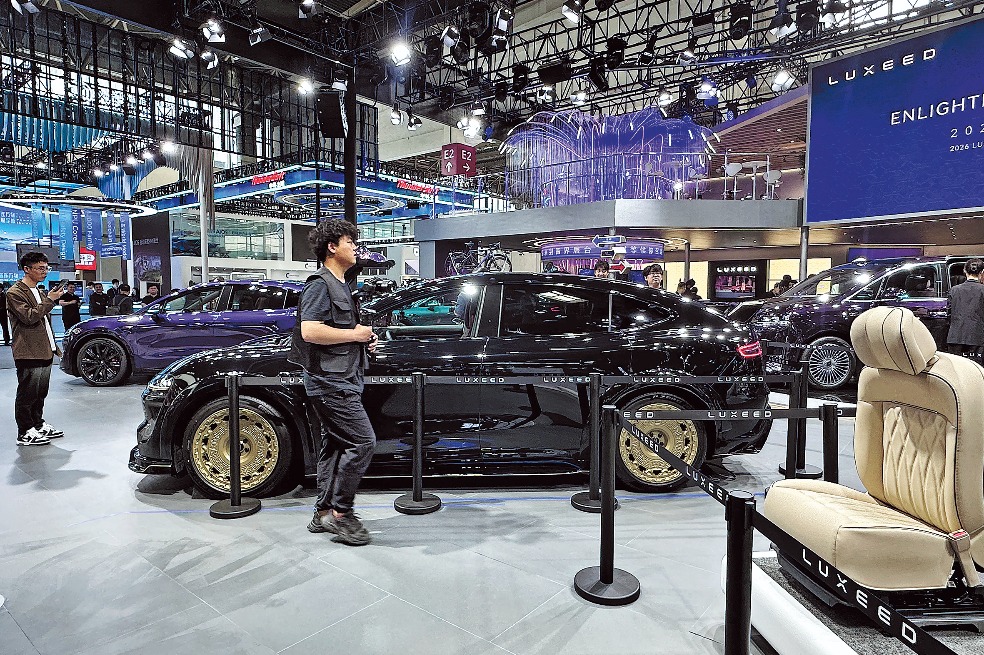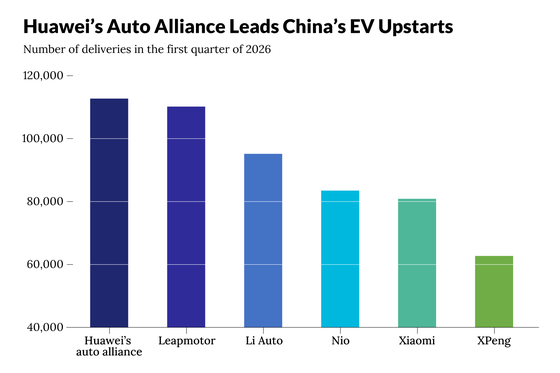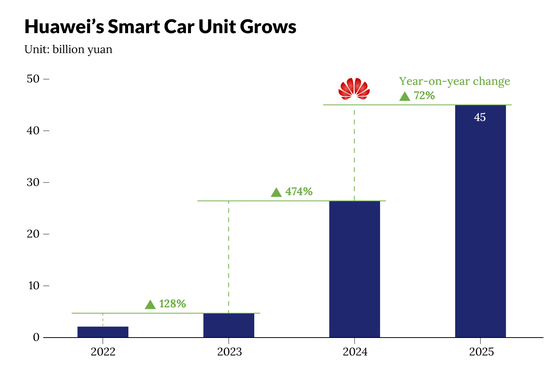
1. Chinese carmakers initially feared Huawei as a rival, but now many worry they cannot compete without its technology. At an April 23 launch event, Huawei’s smart car unit introduced new systems including the Qiankun ADS 5 autonomous driving system and the HarmonySpace 6 smart cockpit, with executives from 18 carmakers attending. [para. 1][para. 2][para. 3][para. 4]2. Amid the rapid transition to smart EVs, Huawei and battery giant CATL have become the industry’s two “super suppliers.” Huawei is positioning itself as an indispensable provider of intelligent driving and in-vehicle software, but many automakers fear over-dependence could erode their control over product and sales strategy. [para. 4][para. 5][para. 6][para. 7]3. Huawei’s edge stems from deep technological investment, brand power, and hands-on partnership models. The company plans to invest 18 billion yuan ($2.6 billion) in smart driving research in 2026, exceeding the combined spending of other major Chinese suppliers. [para. 9][para. 11]4. Huawei offers three cooperation models: a deep “full-stack” model involving product definition, R&D, and marketing; partial adoption of Huawei systems; and conventional supplier relationships. The Harmony Intelligent Mobility Alliance, under the full-stack model, spans five brands including Aito, Luxeed, and Stelato. [para. 12][para. 13][para. 14]5. A turning point was the 2021 launch of the Aito brand with Seres. Aito models became commercial hits, helping Seres more than double revenue in 2022 and return to profitability in 2024. [para. 22][para. 23]6. The intelligent automotive solutions unit became Huawei’s fastest-growing business, generating 45 billion yuan in 2025, up 72% year-on-year. [para. 21]7. State-owned legacy automakers under pressure from competition are increasingly leaning on Huawei’s decade-long investment in automotive intelligence. Dongfeng and GAC showcased new EV models co-developed with Huawei at the Beijing auto show in April. [para. 25][para. 26]8. Huawei expects 93 models to adopt its Qiankun driving system by end of 2026 and is accelerating Level 3 autonomous driving deployment. Arcfox received a Level 3 permit in December, and Aistaland’s GT7 with Qiankun ADS 5 received a road-test permit from Guangzhou. [para. 28][para. 29][para. 30][para. 31]9. Some automakers are seeking alternatives to reduce reliance on Huawei. Li Auto and XPeng are working toward Level 4 autonomy. Joint ventures of global manufacturers tend to work with Momenta, which takes a more flexible approach to collaboration than Huawei. [para. 33][para. 34]10. Huawei’s position has constraints: its high-cost R&D pushes it toward premium segments, leaving room for lower-cost rivals like Horizon Robotics. U.S. sanctions limit the computing power of Huawei’s smart cockpit chips. Close ties with Huawei do not guarantee success, as seen with Changan’s Avatr struggling with sales. [para. 35][para. 36][para. 37]11. The balance of power could shift as industry consolidation accelerates, potentially allowing surviving carmakers to regain bargaining power. [para. 38]AI generated, for reference only
Analysis: Why China’s Carmakers Fear Falling Behind Without Huawei
Through partnerships with Chinese automakers, Huawei is evolving from a component provider into one of the most influential forces shaping the future of smart electric vehicles
453 words~2 min read