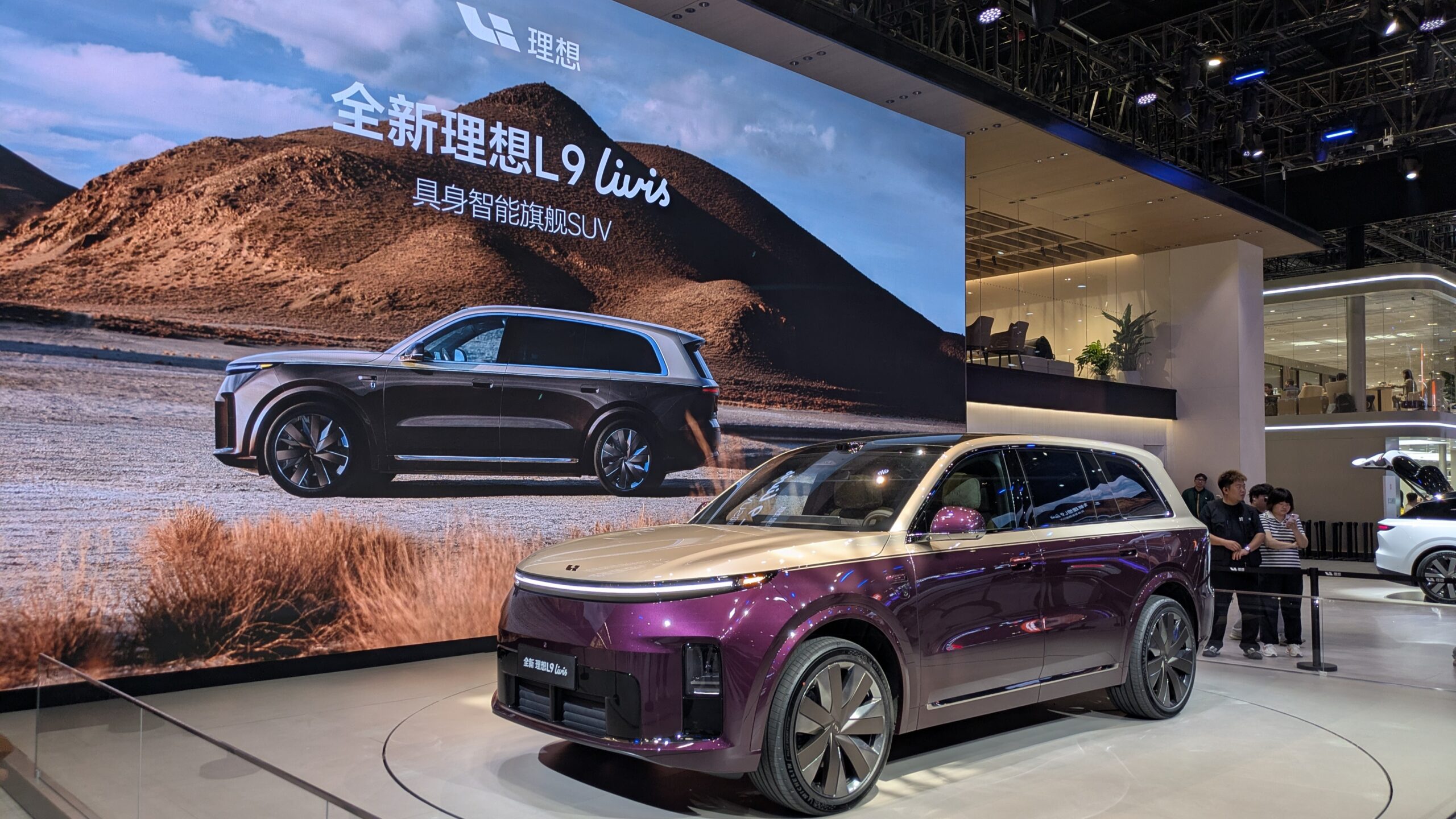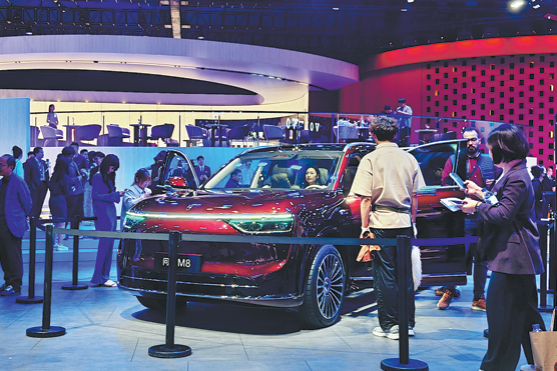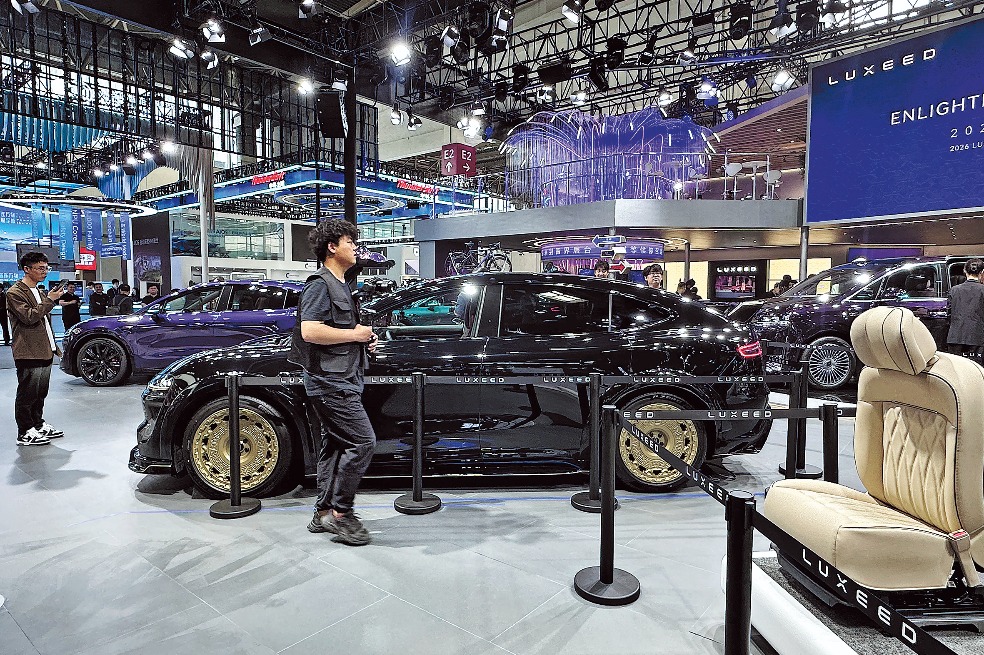
Luxeed, a joint brand of Chery and Huawei, showcases its models at Auto China 2026 in Beijing in late April. LI FUSHENG/CHINA DAILY
Rapid technological convergence and intensifying competition are making cars increasingly similar in China's new energy vehicle industry, raising questions about profitability and long-term differentiation in the world's largest auto market.
Speaking during a media briefing last week, Paul Gong, head of China Auto at UBS Global Research, said China's once-diverse EV landscape is beginning to converge around similar product designs, features and market strategies.
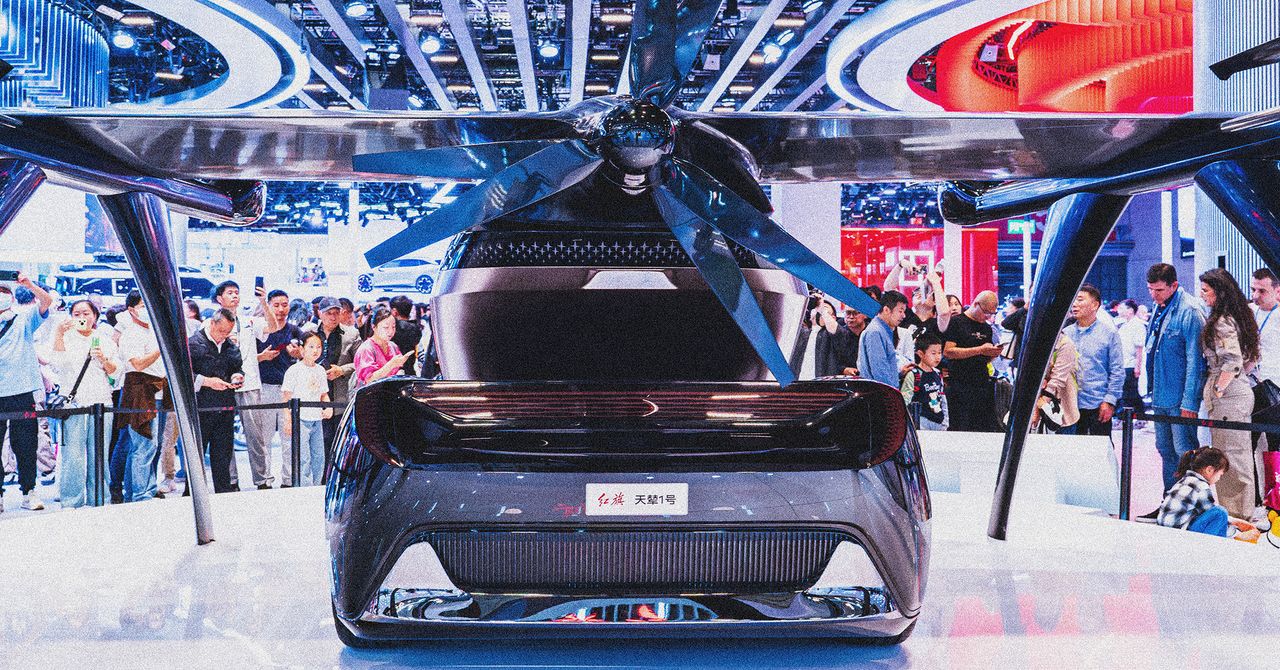
This was evidenced by the Beijing auto show, the largest of its kind this year. At the biennial event in April, over 1,450 cars were exhibited, of which 181 made their debuts. "It may have been the most homogeneous Beijing auto show we've seen in the past decade," Gong said.
Only a few years ago, Chinese NEV makers were pursuing sharply different technological approaches. Some companies focused on battery-swapping systems, others emphasized extended-range hybrid technology, and they competed aggressively around autonomous driving, vehicle software or performance-oriented NEV platforms.