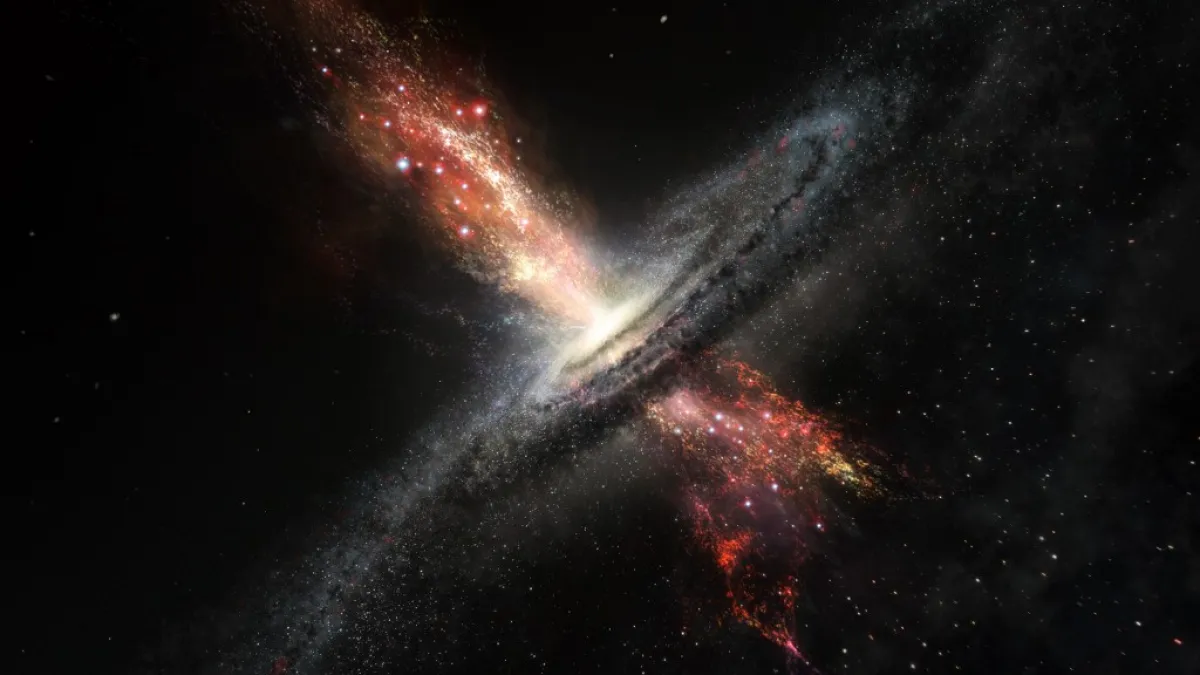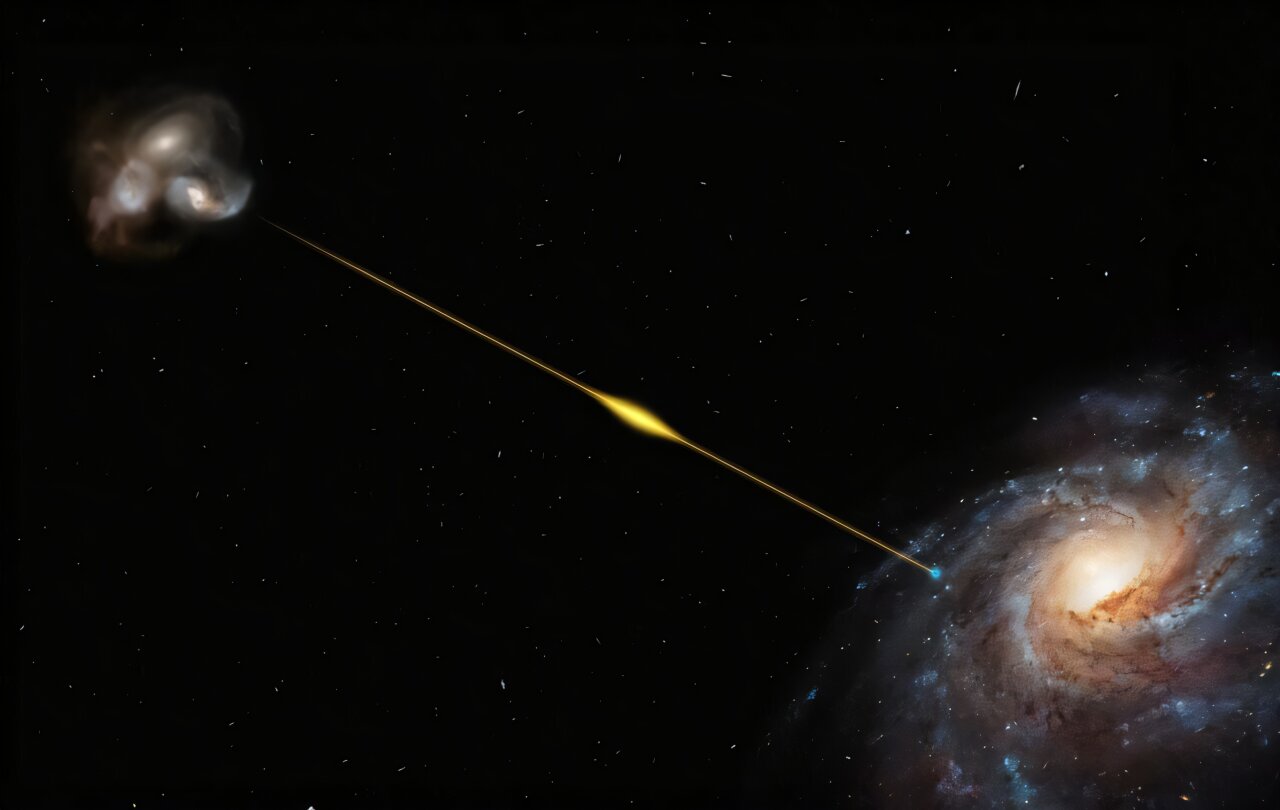
This artist's illustration represents a fast radio burst from a distant galaxy. Astrophysicists aren't sure where these bursts come from, but they can still make use of them. Through gravitational microlensing, they could help find elusive intermediate mass black holes. Credit: ESO/M. Kornmesser
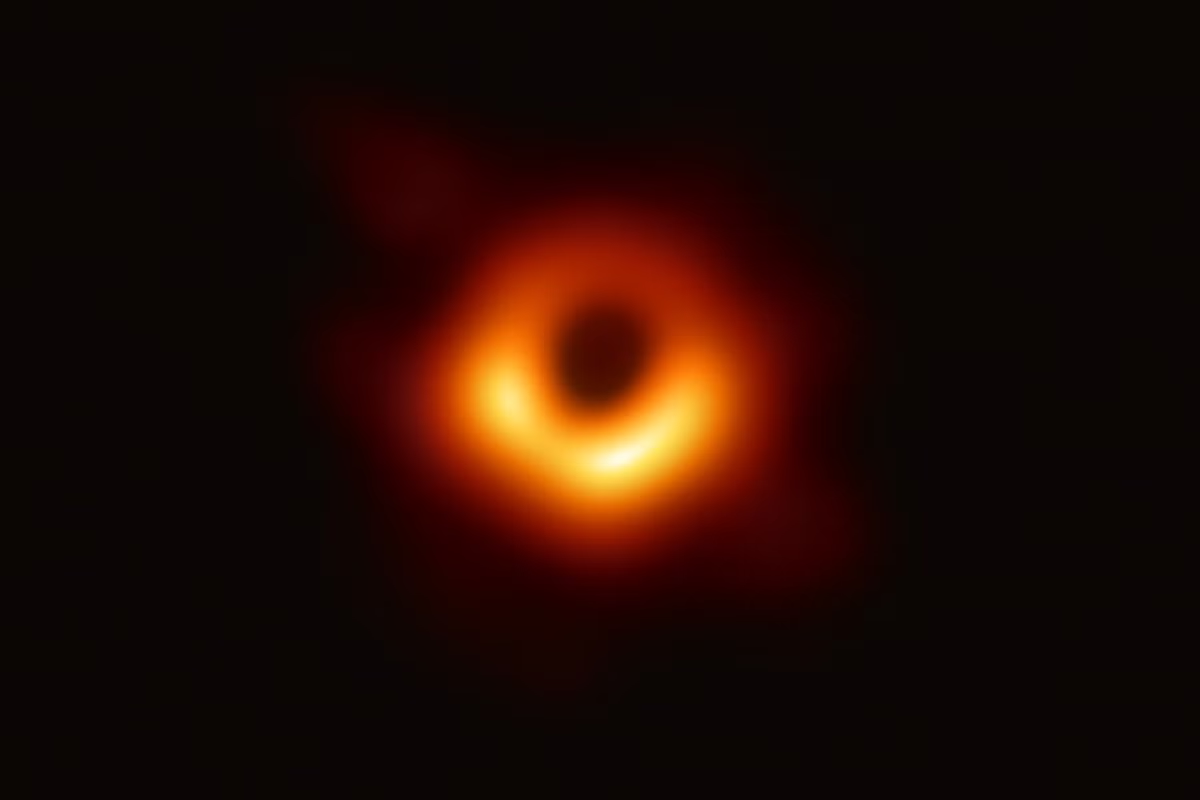
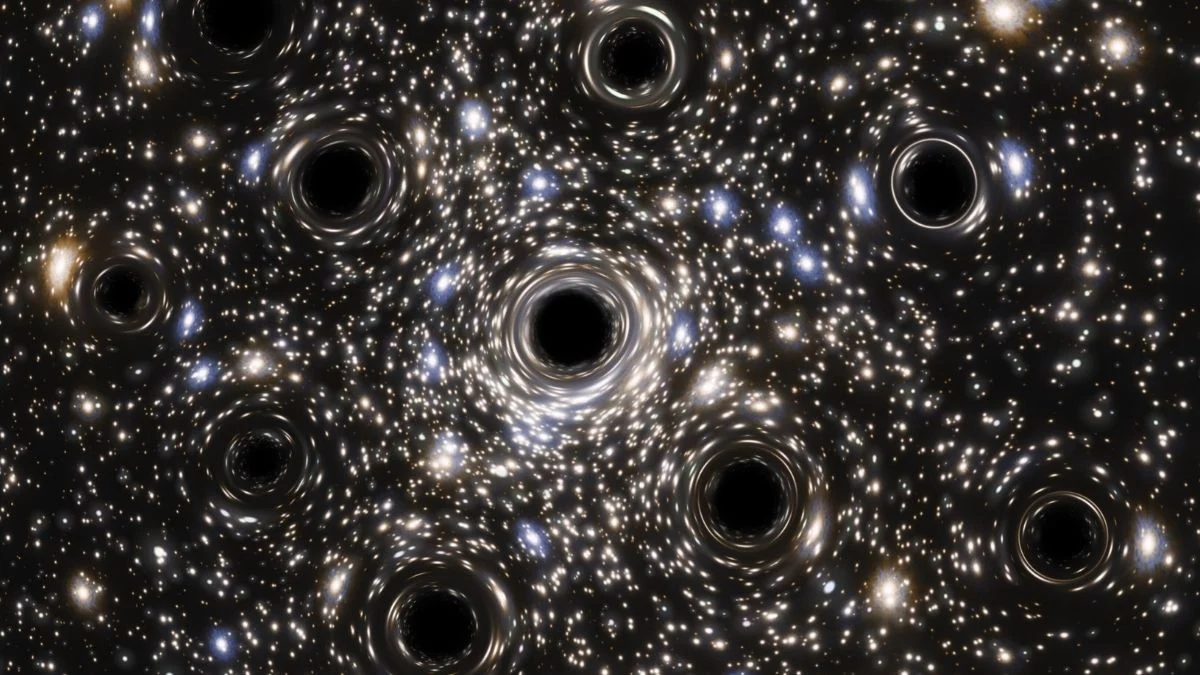
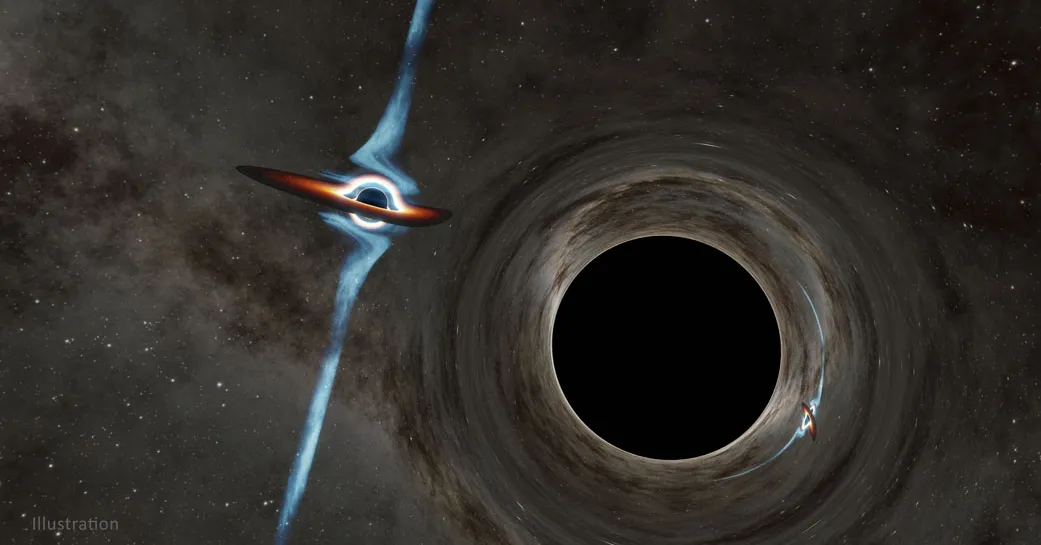
Astrophysicists think that black hole masses are hierarchical. The largest are supermassive black holes (SMBH) like the one at the center of the Milky Way and other galaxies. Stellar mass black holes are born of collapsing stars, and are smaller. The smallest of all are the theoretical primordial black holes, which only formed in the weird physics of the early universe.
Intermediate mass black holes (IMBH) are theorized to lie between stellar mass black holes and SMBH in the mass hierarchy. They have masses between 102 and 105 solar masses. The problem is, they've never been confirmed. Researchers found evidence of one in Omega Centauri in 2008, but subsequent research disputed that claim. As it stands now, the existence of IMBH is still unknown.
If they're out there, new research proposes a way to find them. It's titled "Evidence for Intermediate-Mass Black Holes From Microlensing Signatures in CHIME/FRB catalog 2," and the lead author is Huan Zhou from the School of Physics and Optoelectronic Engineering in Yangtze University, China. The research is available on the arXiv preprint server.