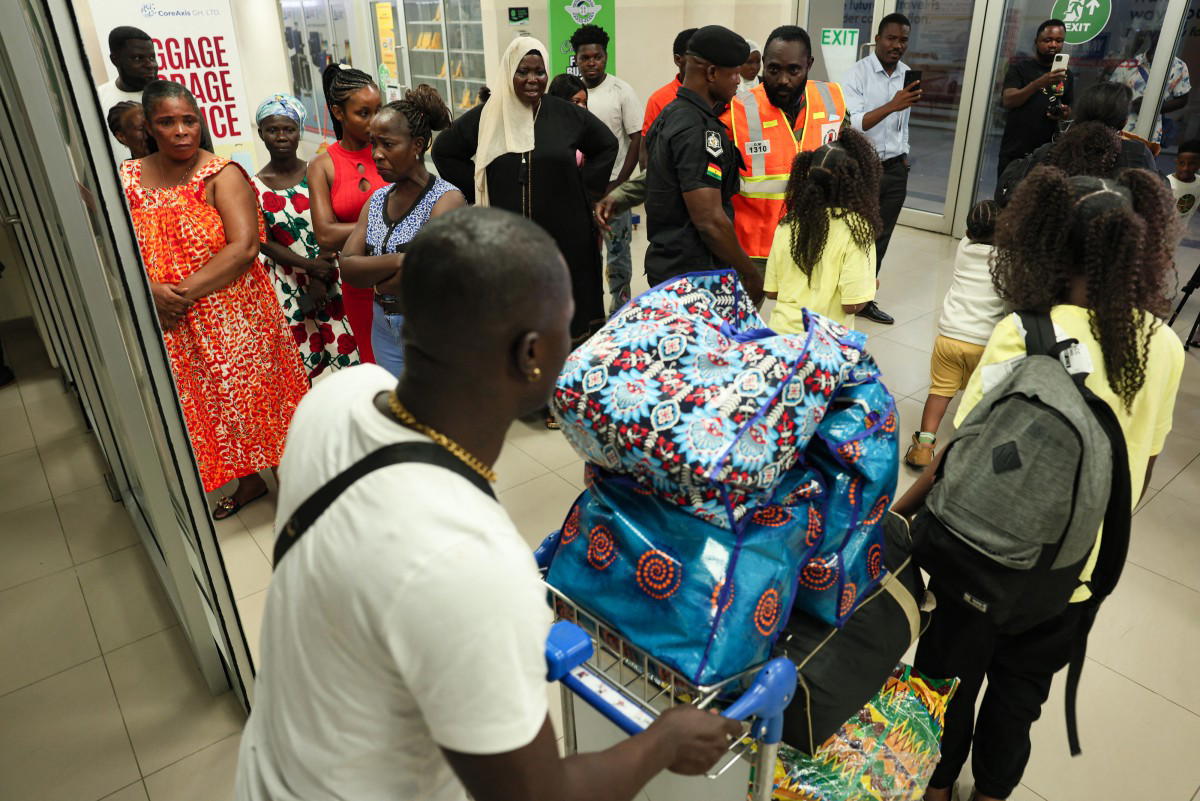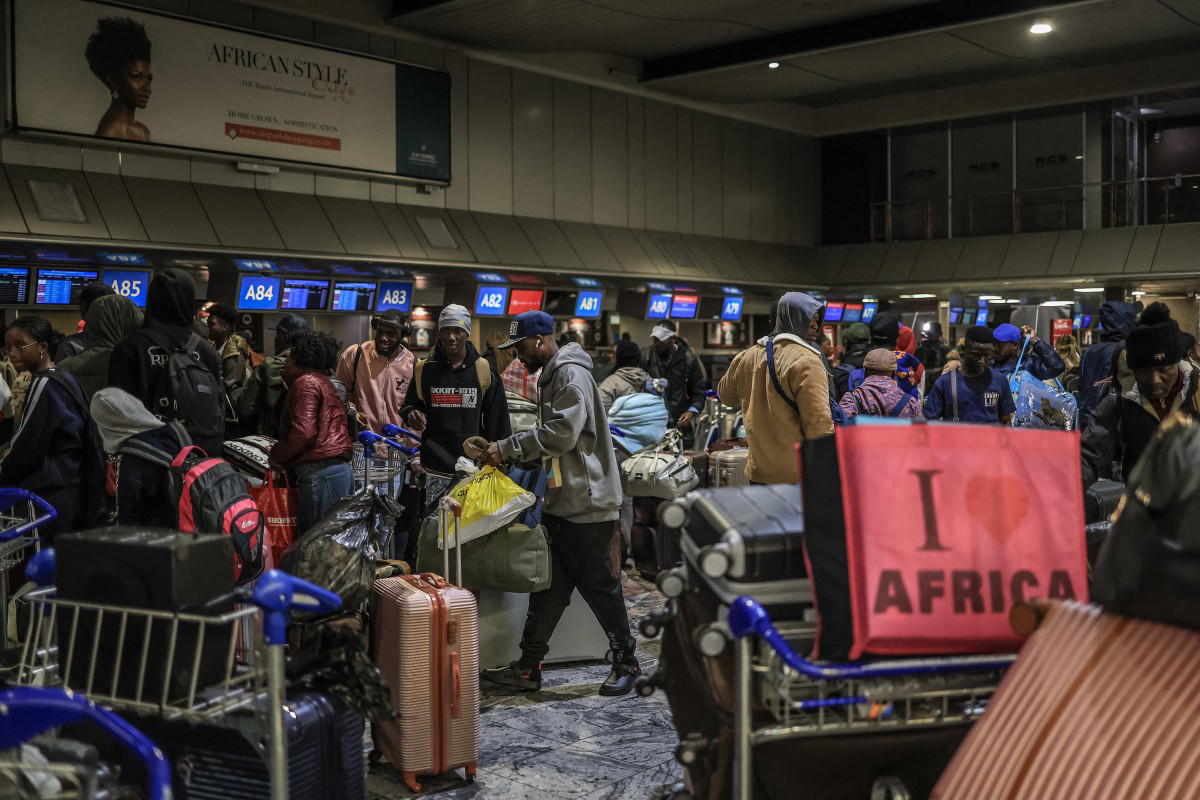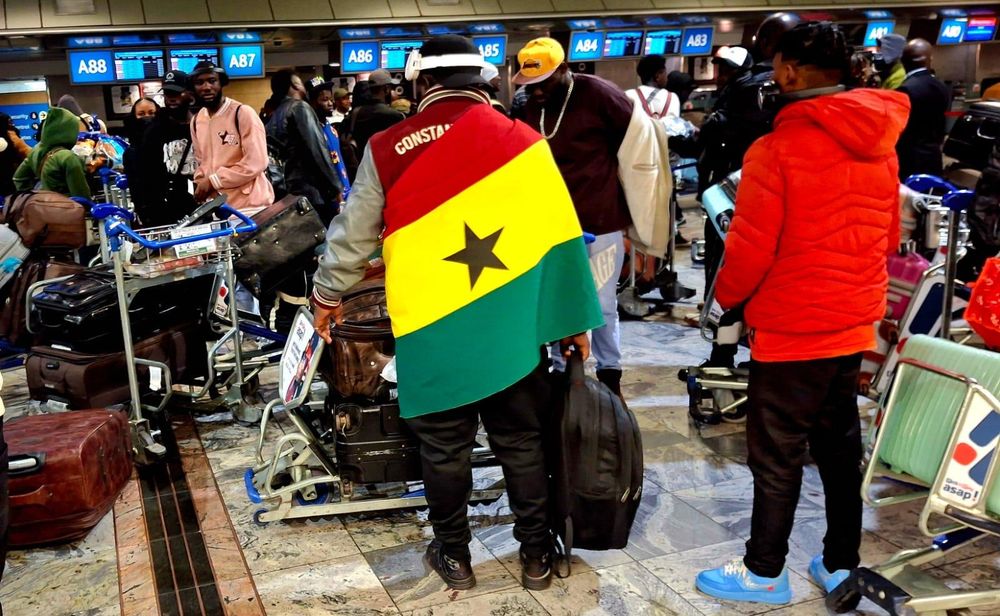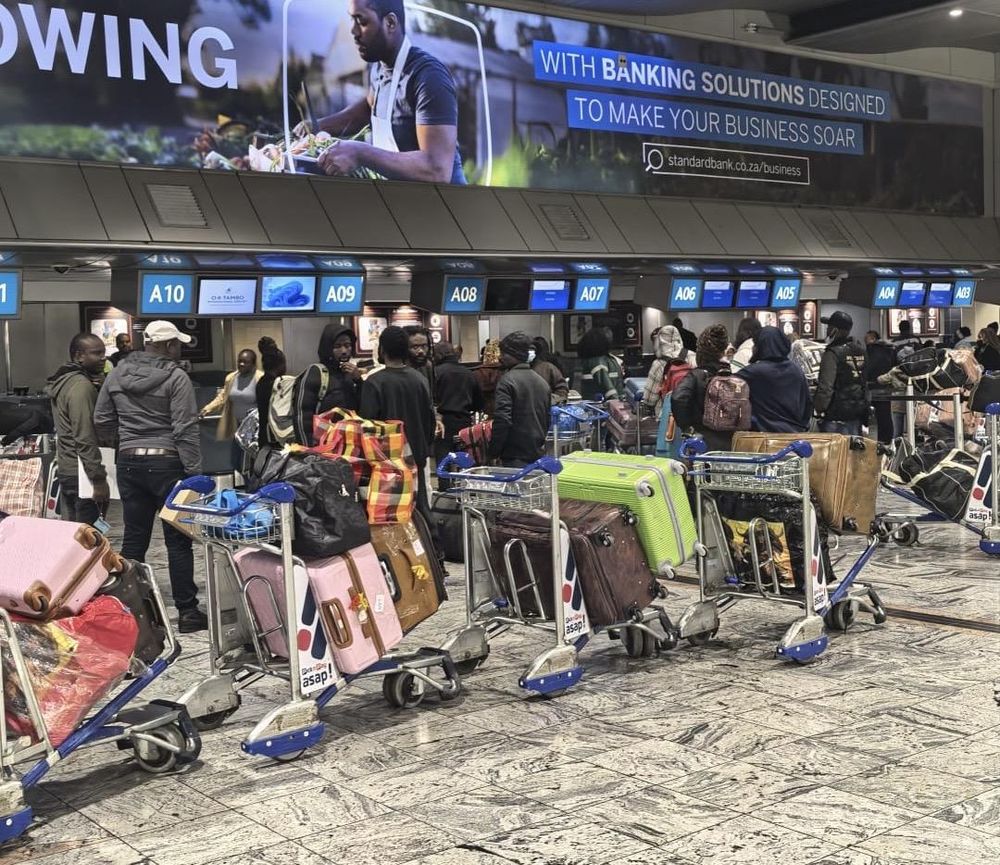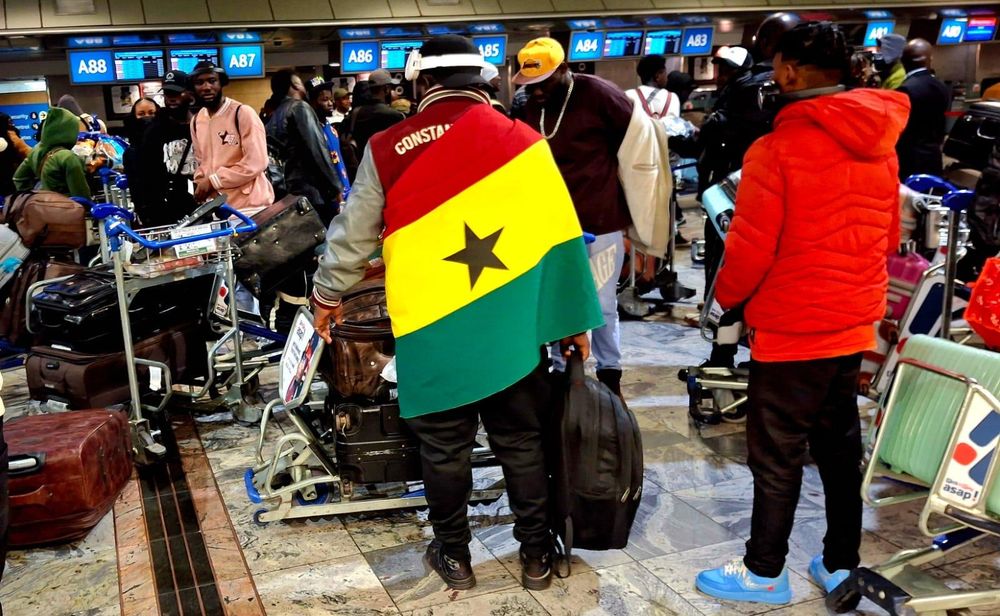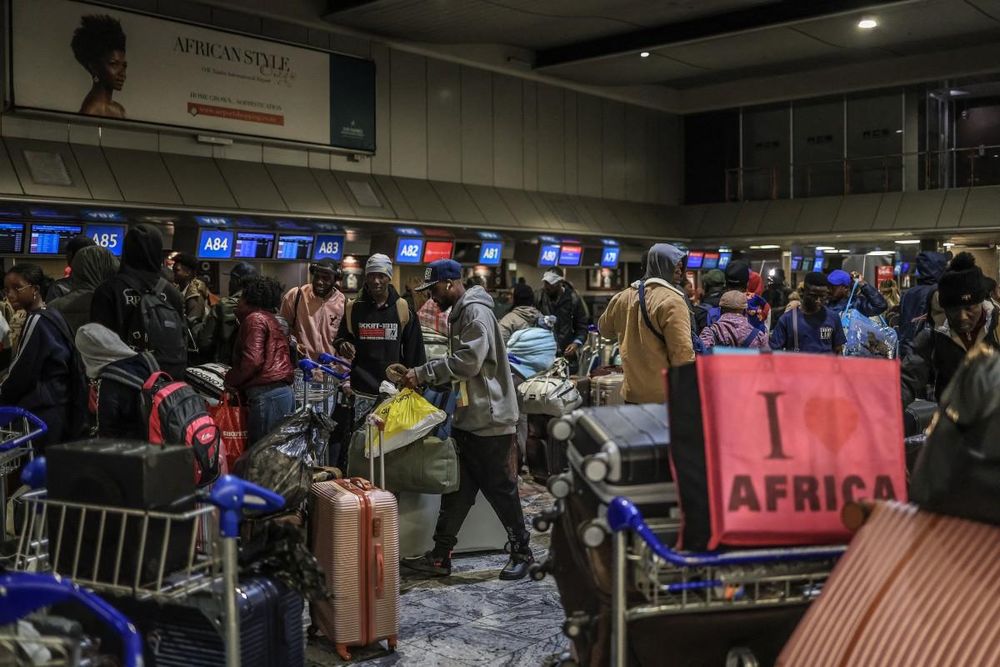
Ghanaian nationals stand at the check-in desk for an evacuation flight at OR Tambo International Airport this week.
This week, government ministers gathered before the country in yet another carefully managed press conference.
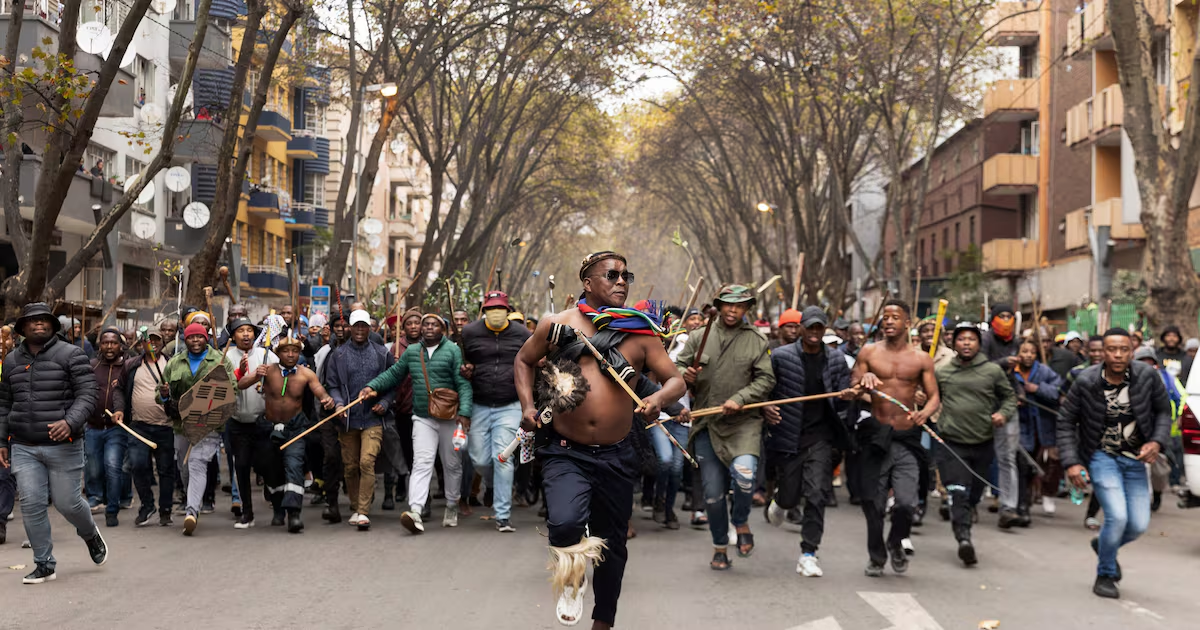
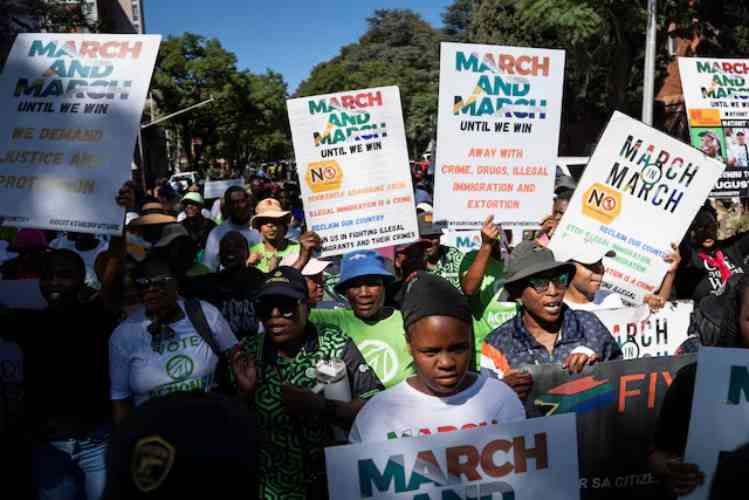
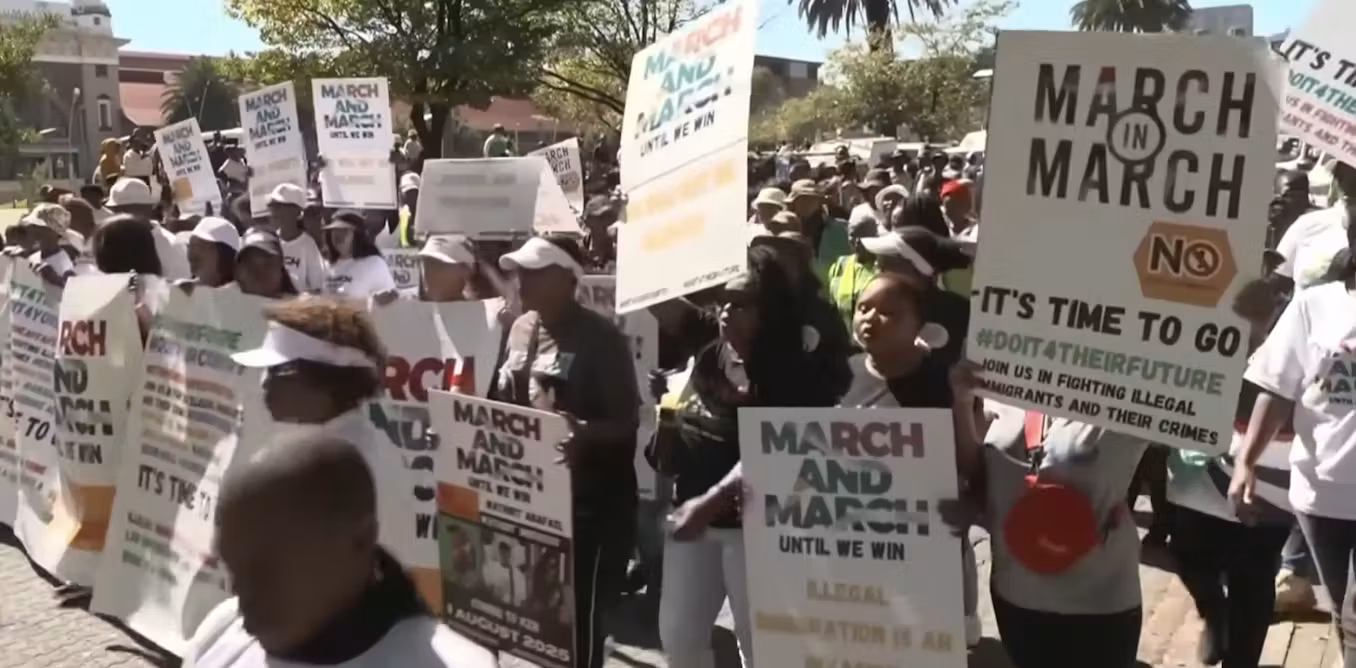
Meeting as a security and governance cluster, they attempted to reassure the public that the state does not support violence against foreign nationals and that the government merely seeks to ensure peaceful protest, lawful conduct and public order.
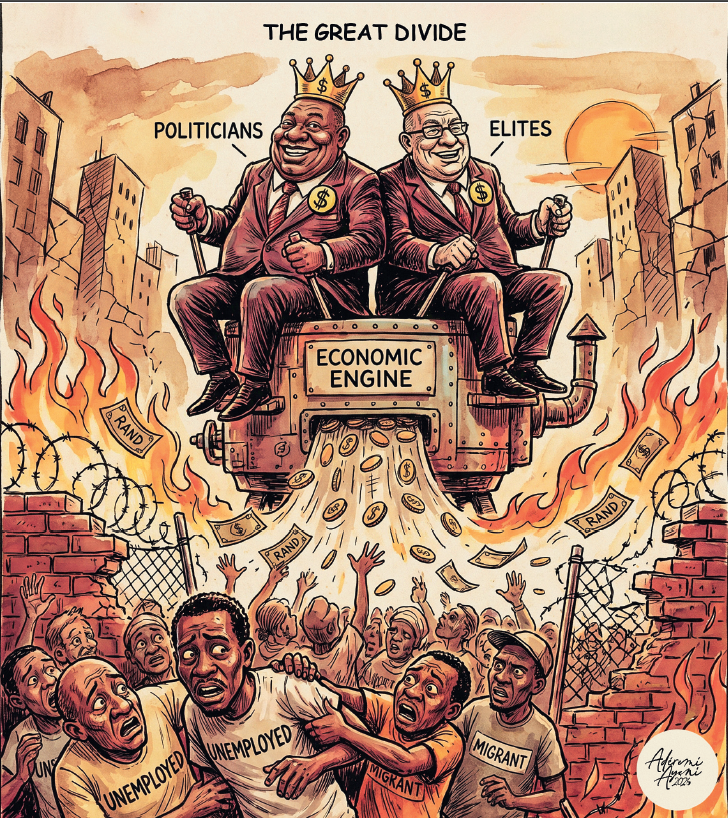
But the problem facing South Africa today is not simply whether the government formally condemns violence. The deeper problem is that many of the same political actors now expressing concern helped create the political atmosphere that made this moment possible.
For years, political leaders across the spectrum have increasingly relied on the language of fear, invasion, illegality and criminality when speaking about migrants, informal workers and poor Black Africans. Public frustration over unemployment, collapsing municipalities, crime and economic decline has repeatedly been redirected toward vulnerable outsiders rather than toward the systemic failures that produced the crisis in the first place.