view more
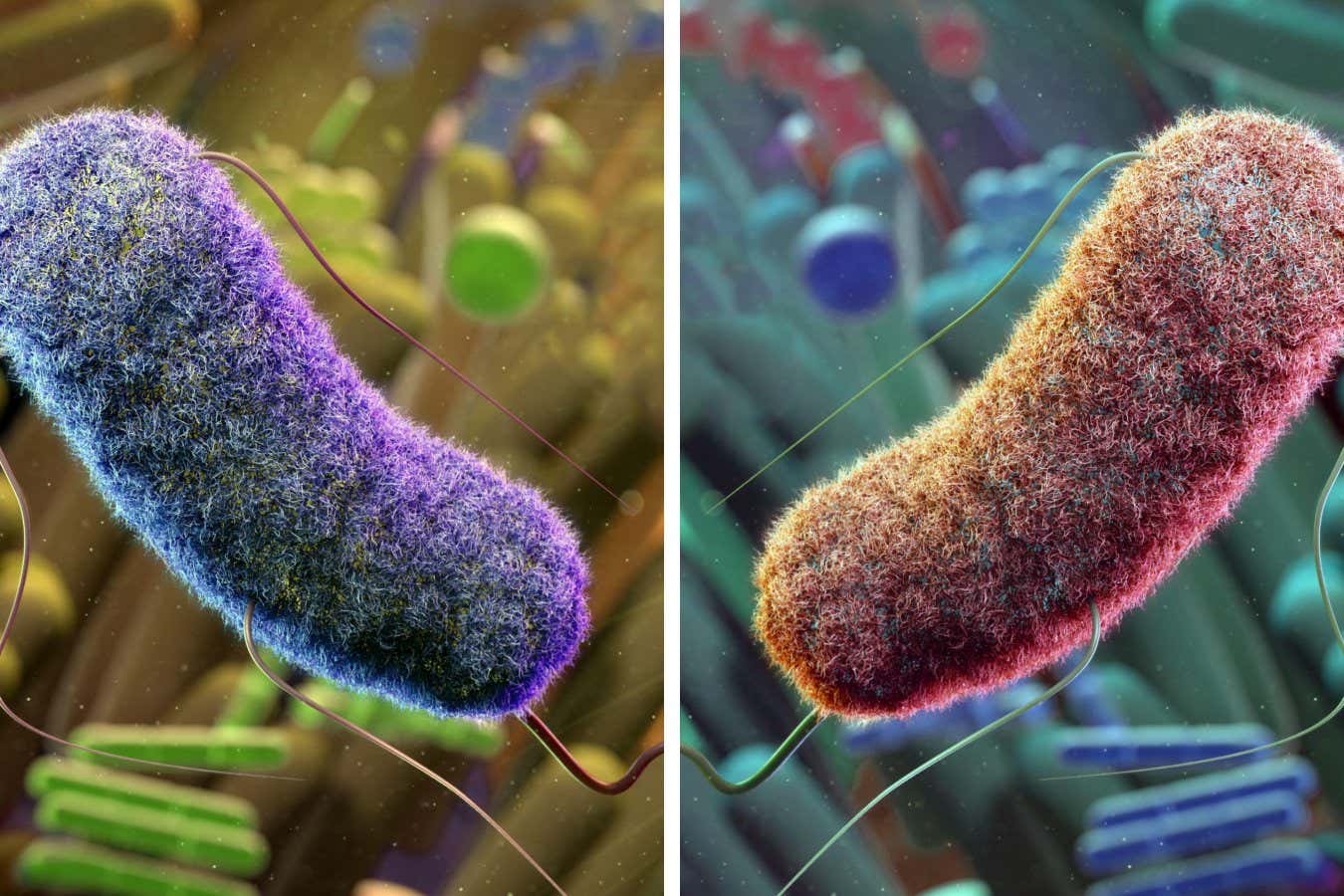
Researchers have discovered how acids on the surface of bacteria give these microscopic organisms their characteristic “rod” shape—by keeping an enzyme at bay that would otherwise turn the cylindrical cells into shape-shifting blobs.
The findings, published in Nature Microbiology, provide a new understanding of how bacteria control their growth and offer insights into the nature of Earth’s earliest life forms. The study also points to a strategy for overcoming antibiotic resistance by targeting wall teichoic acids, the enigmatic molecules that coat the surface of certain bacteria.
Bacteria occur in a range of shapes, with rod-shaped bacteria being by far the most common. The shape of bacteria is important medically since the cell wall—bacteria’s rigid exoskeleton—determines cell shape and is the target of frontline antibiotics.
“A bacterium’s shape dictates how it grows, how it divides, and how it interacts with its environment,” said Felix Barber, who led this research as a postdoc in NYU’s Department of Biology and is now an assistant professor at The Ohio State University. “Understanding the factors that give rise to the shape of bacteria are important because those same factors are also what we want to inhibit with antibiotics.”