Home
Storia in 1 fonti
Scientists determine how mysterious acids give bacteria their shape
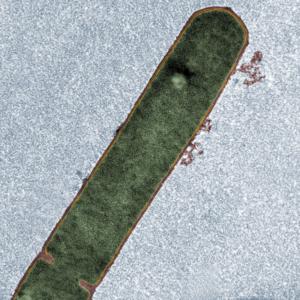
Researchers have discovered how acids on the surface of bacteria give these microscopic organisms their characteristic “rod” shape—by keeping an enzyme at bay that would otherwise turn the cylindrical cells into shape-shifting blobs. The findings, published in Nature Microbiology, provide a new understanding of how bacteria control their growth and offer insights into the nature of Earth’s earliest life forms. The study also points to a strategy for overcoming antibiotic resistance by targeting wall teichoic acids, the enigmatic molecules that coat the surface of certain bacteria.
Raccontata da eurekalert.org