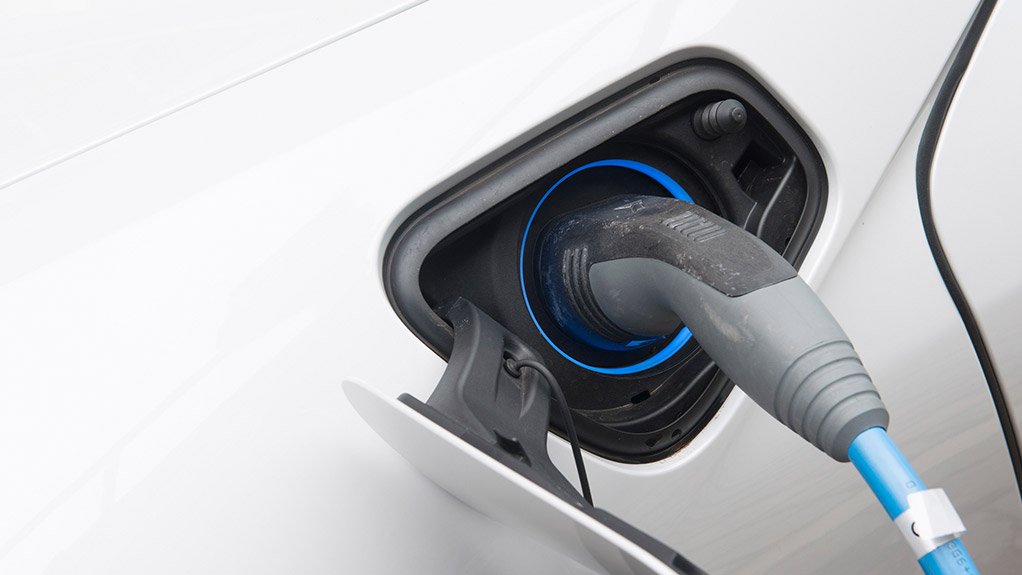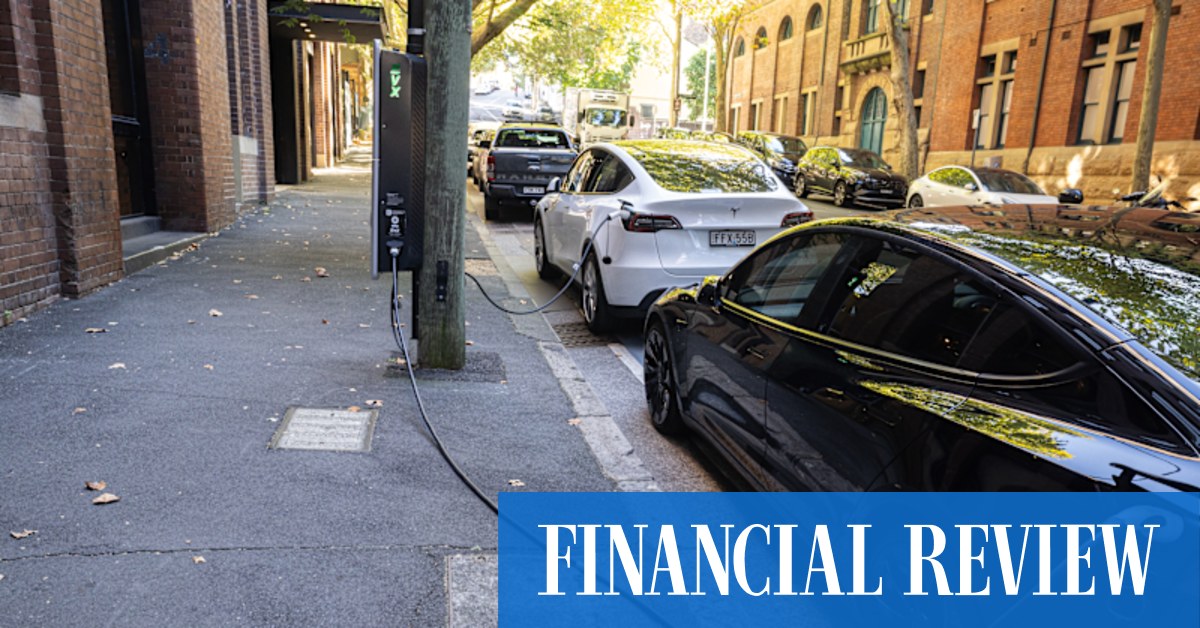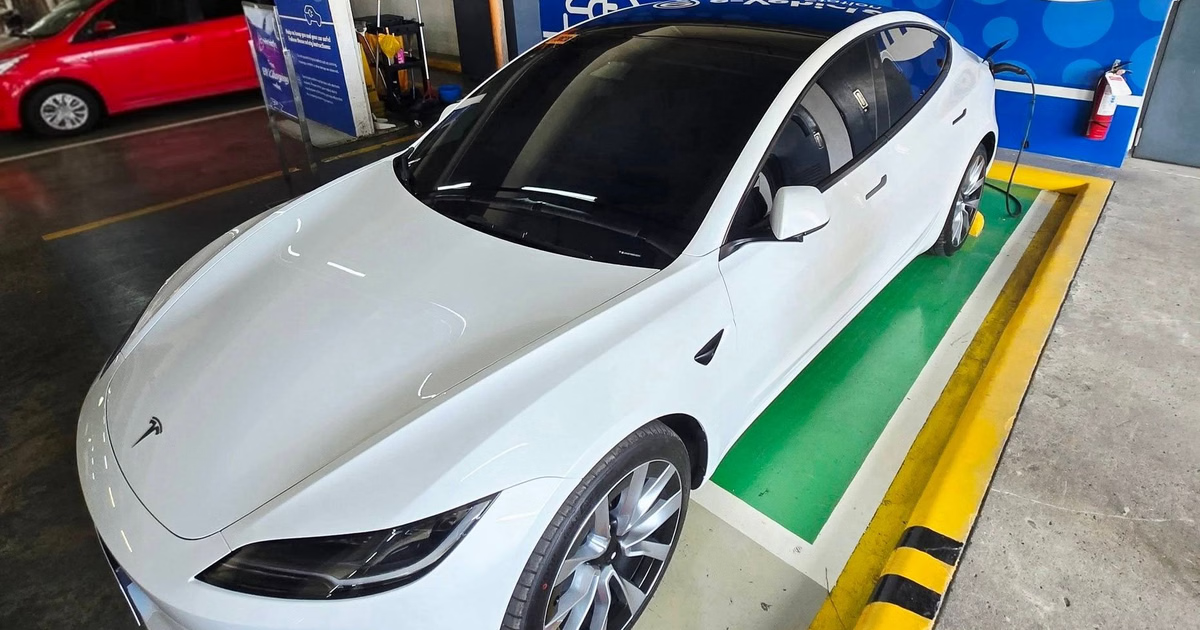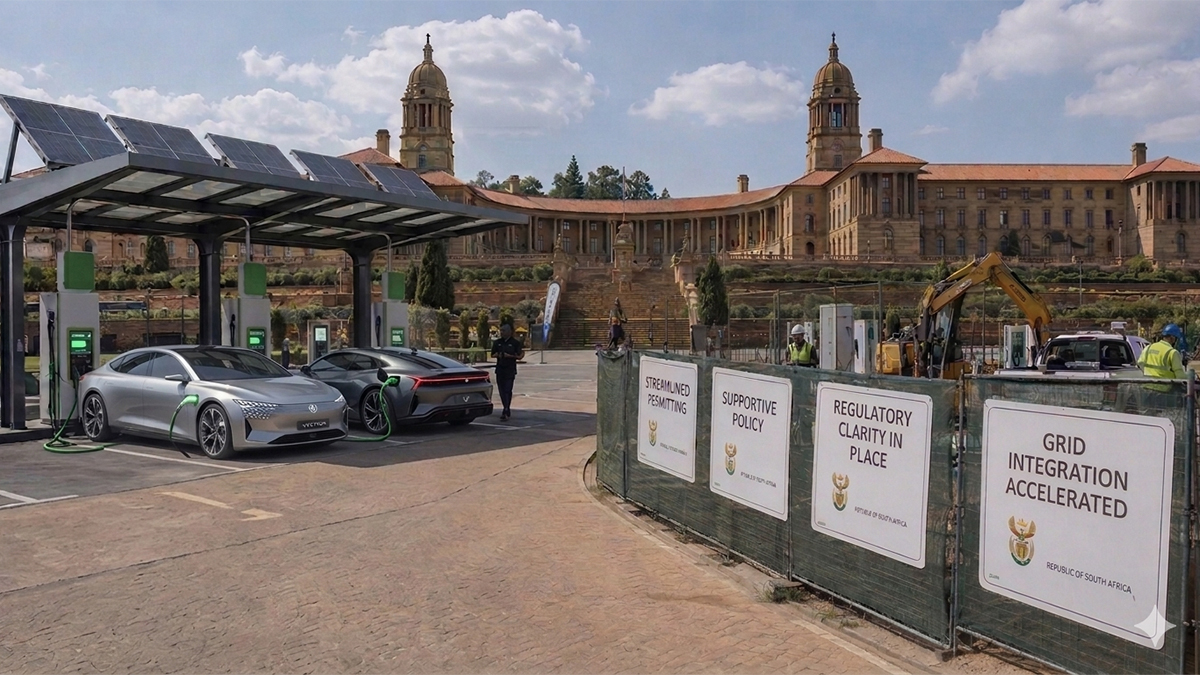
Experts say stronger government incentives and clearer policy frameworks are needed to accelerate EV charging. (Image created via Gemini) Regulatory uncertainty and lack of government funding are major obstacles to scaling South Africa’s charging network, says the electric vehicle (EV) charging infrastructure sector.While SA has made meaningful progress in building public charging infrastructure over the past few years, industry experts tell ITWeb that stronger government incentives and clearer policy frameworks are now critical if the country wants to accelerate EV adoption and remain competitive in the global transition to cleaner transport.They are calling for stronger government support to unlock private-sector investment.Ndia Magadagela, CEO and co-founder of EV fleet leasing firm Everlectric, points out that the biggest challenge facing the industry is the lack of an enabling environment that supports long-term infrastructure investment.“South Africa needs clearer and more supportive policy frameworks around EV infrastructure deployment, electricity wheeling, embedded generation and municipal energy partnerships within the sector.“Faster permitting and grid-connection processes would also help accelerate rollout. The key issue will ultimately be balance, because South Africa needs a framework that ensures proper coordination and standards on national roads, while still encouraging rapid private sector investment and innovation in charging infrastructure.”According to Magadagela, SA is seeing a steady increase in the number of EV chargers being deployed across SA. However, most charging infrastructure is still concentrated in the major urban centres, such as Johannesburg, Pretoria, Durban and Cape Town, where the majority of EV activity currently takes place. “While South Africa now has an estimated 500 to 600 public charging stations, much of the infrastructure remains concentrated in major metros and key national routes, leaving gaps in secondary cities and rural areas,” she states.“More charging infrastructure is needed in secondary cities, logistics corridors, industrial areas and township economies to support broader EV adoption. The rollout of EV infrastructure cannot be driven by one sector alone, and closer collaboration between municipalities, fleet operators, utilities and financiers is becoming increasingly important.” Charging infrastructure still requires significant upfront capital investment. “More innovative financing models, incentives and blended finance solutions are needed to help businesses, property owners and municipalities deploy chargers at scale,” she advises.Ndia Magadagela, CEO and co-founder of Everlectric. PlugShare estimates that SA currently has 549 public EV charging stations nationwide, with most infrastructure concentrated in Gauteng, KwaZulu-Natal and the Western Cape, particularly along major urban centres and national transport corridors.The country’s EV and new-energy vehicle (NEV) market also continues to grow steadily, with data from the National Association of Automobile Manufacturers of South Africa (NAAMSA) showing approximately 16 700 new energy vehicle units sold in SA during 2025. Adoption of EVs is increasingly being driven by economics rather than environmental concerns, as consumers and fleet operators look to reduce exposure to rising fuel prices and volatile energy costs.Although the local EV market remains relatively small compared to global leaders such as Europe and China, falling battery prices, improved vehicle availability, innovative financing models and expanding charging infrastructure are helping to accelerate adoption across passenger, logistics, courier and commercial fleet sectors, says NAAMSA.Joubert Roux, co-founder and director of Zero Carbon Charge, explains that charging infrastructure investment depends heavily on regulatory certainty and predictable approval processes.The deployment and rollout of EV charging infrastructure remains highly capital-intensive and the industry requires government support and the introduction of policies aimed at promoting the scaling of infrastructure, he notes. While SA’s EV charging infrastructure has improved significantly over the past few years, Roux adds, there are still major gaps in national coverage.He believes regulatory complexity continues to slow infrastructure deployment across the country.“One of the largest challenges remains the complexity and length of site approval and permitting processes in the rollout of infrastructure,” he stresses.“Infrastructure deployment along national routes involves multiple regulatory frameworks and stakeholders, including municipal approvals, environmental authorisations, transport authorities and road agencies. EV infrastructure rollout requires regulatory certainty, clear administrative processes and a policy environment that supports long-term private sector investment.”While EV adoption is growing steadily in the country, range anxiety and uncertainty around charging reliability remain key barriers. “Zero Carbon Charge believes the next phase of EV adoption in South Africa depends on infrastructure becoming more visible, more accessible and more reliable.”The company recently opened its first off-grid, solar-powered EV charging station in Wolmaransstad, North West. It plans to establish 120 additional stations across major highways, allowing EV owners to overcome SA’s electricity constraints by reducing dependence on unstable grid infrastructure.Charmaine Nkosi, impact and sustainability consultant at Siyakha Consulting, is of the view that major hurdles for SA’s EV infrastructure development include the instability of the country’s electricity grid, and the lack of funding and incentives.“South Africa’s efforts to develop its EV infrastructure are commendable, but significant work remains. Government must introduce policies that encourage EV adoption, such as tax breaks, and incentives for businesses to invest in charging stations. “Fast-changing technology should be prioritised to reduce wait times for vehicles. Overcoming grid challenges through renewable energy solutions and targeted investments will be crucial to the scaling of infrastructure.”By addressing these issues, SA can build a sustainable EV ecosystem that aligns with global trends and supports economic growth in the long run, comments Nkosi.Joubert Roux, co-founder and chairperson of Zero Carbon Charge. (Image Supplied) The automotive industry has over the years made several calls to urge government to hasten the NEV policy.Even though government has released frameworks like the NEV white paper, approved by Cabinet in 2023, and has revised the Automotive Production and Development Programme to formally include EVs, there’s still no fully detailed and finalised NEV policy.Government says the framework is advancing, with a primary focus on manufacturing incentives. However, experts complain there is limited detail on the rollout and support of charging infrastructure, and consumer-facing policies remain in their preliminary stages.Hiten Parmar, executive director of The Electric Mission, tells ITWeb that SA’s EV charging market has largely been built by the private sector and still lacks a dedicated national framework for zero-emission mobility.Since 2013, SA has seen a diversification of charge point operators – which is critically important for nationwide rollout and infrastructure reliability, he adds.According to Parmar, SA compares relatively well globally when measuring the ratio of EVs to public chargers, but policy uncertainty remains a major concern for investors.“South Africa critically requires a direct policy framework for zero-emission vehicles. As countries decarbonise transport, both government and industry need to be engaging on zero-emission vehicles, which essentially are battery electric or hydrogen fuel cell vehicles. South Africa’s primary automotive trading market, the European Union, has a statement of zero-emission vehicles by 2035.”He adds that while public perception often suggests the country lacks charging infrastructure, the bigger issue is creating policy certainty that supports long-term industry growth.“It is important for every market that public charging infrastructure development matches the growth of electric vehicle sales. As vehicle sales increase, it is critically important that charging infrastructure installations by global players and partnerships are put into the market.”Hiten Parmar, executive director of The Electric Mission.
Industry pushes for national EV charging framework
Regulatory uncertainty and lack of government funding are major obstacles to scaling SA’s electric vehicle charging network.
1,161 words~5 min read