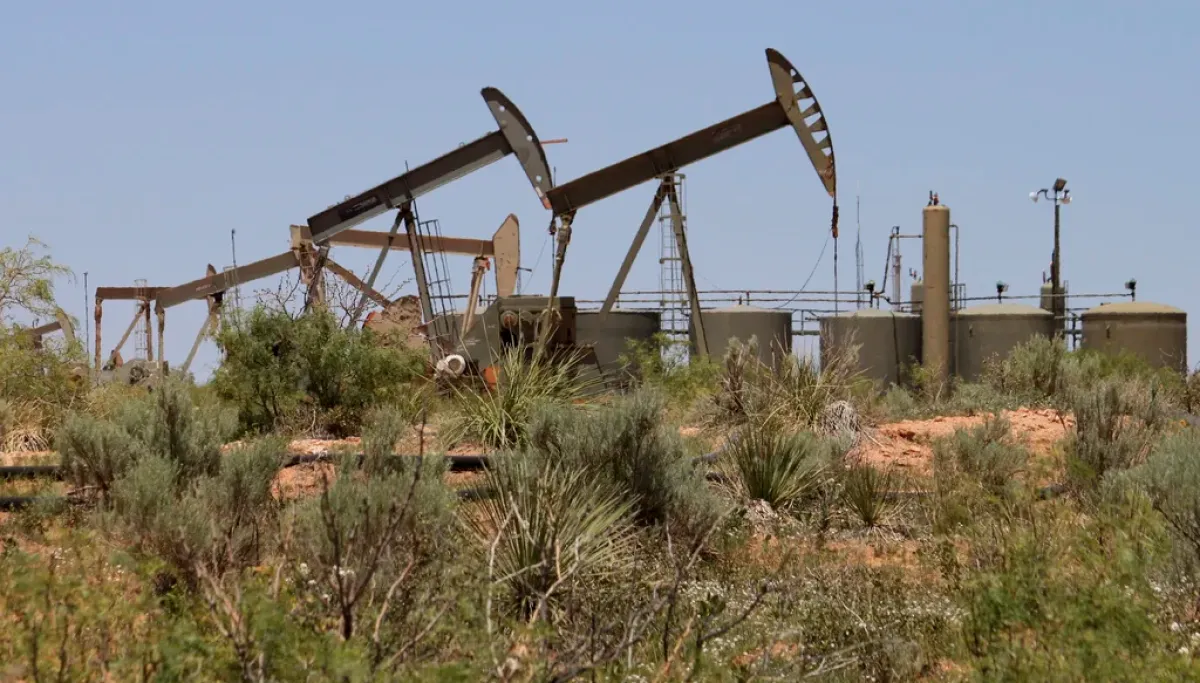
Permian Basin innovator LibertyStream is betting big that the “drill baby drill” era may have an unexpected side effect: a surge in lithium feedstock flowing through America’s existing oil infrastructure network.Every single day, Texas’ prolific Permian Basin oil production also handles more than 20 million barrels of produced water. And that mineral-rich wastewater brought to the surface during crude production contains dissolved lithium.As U.S. drilling activity expands, so does the volume of potential lithium feedstock moving through existing pipelines, treatment systems, and disposal infrastructure across the American oil patch.LibertyStream (TSXV:LIB, OTC:VLTLF) sees this as America's answer to a domestic lithium supply shortage that has nothing to do with mining and everything to do with processing.The company is developing a system designed to extract and refine lithium directly from produced oilfield water moving through existing U.S. energy infrastructure.Unlike many direct lithium extraction companies still operating at lab or pilot scale, LibertyStream says its Gen 6 platform is already producing lithium carbonate in the field at a commercial deployment site in Texas.The system was installed earlier this year at a Select Water Solutions facility in Howard County, where the company says production is now underway for technical- and battery-grade applications.America’s Got A Lithium ProblemThe lithium shortage story is no longer just an EV story. Artificial intelligence is fast becoming the main usurper of battery demand as hyperscalers race to build out power-hungry data centers across the country.That boom is driving explosive growth in Battery Energy Storage Systems, or BESS — massive lithium battery installations designed to stabilize electricity supply for AI infrastructure, renewable power systems, and grid balancing. These systems store electricity during off-peak periods and release it during spikes in demand, outages, or periods of heavy computing load.For AI operators, reliable power is becoming mission-critical. Training large language models consumes enormous amounts of electricity, exposing data centers to grid instability and volatile power pricing. As a result, hyperscalers including Amazon, Google, Microsoft, and Meta are rapidly expanding their energy storage footprint alongside new data center construction.And unlike the EV market, where adoption cycles can fluctuate with consumer demand and government incentives, AI infrastructure spending is becoming an arms race.Lithium demand from battery energy storage systems surged 51% last year. That’s nearly double the growth rate of EV-related lithium demand.Yet, American domestic lithium supply and refining capacity remain severely underdeveloped relative to projected demand growth. China still dominates the global lithium processing chain and controls roughly 85% of global battery cell production capacity.Benchmark Minerals Intelligence expects lithium to become one of the biggest bottlenecks in the global battery supply chain over the coming decade as demand growth from EVs, AI-linked energy storage systems, and broader electrification continues to outpace new supply development.Benchmark estimates that hundreds of new lithium projects and mines may ultimately be required globally to satisfy future battery demand. Industry forecast calculations provided by LibertyStream estimate that the U.S. could face a domestic lithium supply shortfall exceeding 600,000 tonnes annually by 2034, even after accounting for planned North American projects.Today, Lithium prices remain well below their 2022 peak, but today is likely to be short-lived. The market is beginning to recover from last year’s washout as AI-driven energy storage demand and broader battery consumption surge.The very clear lithium demand future is one reason produced-water extraction models like LibertySteam’s are starting to attract attention. Traditional lithium projects often require massive upfront capital, years of permitting, mine development, evaporation infrastructure, and refining capacity before reaching commercial production.LibertyStream (TSXV:LIB, OTC:VLTLF) is pursuing a radically different model: pulling lithium straight out of the massive wastewater streams already flowing through the Permian Basin’s oil infrastructure network.LibertyStream appears to be betting that America’s next major lithium supply source is already flowing through Permian pipelines every single day.The Permian Basin PromiseUnlike a lot of lithium companies still stuck in pilot projects and technical studies, LibertyStream is already operating in the field, in Texas.Earlier this year, the company installed its Gen 6 direct lithium extraction platform at a Select Water Solutions facility in Howard County, Texas, where lithium carbonate production is now underway for both technical-grade and battery-grade applications.That’s a major step for a sector where many companies are still years away from proving commercial viability outside controlled testing environments.According to LibertyStream, the Gen 6 platform is the result of more than 21 months of field operations, over 400,000 barrels of processed brine, and more than 2,500 operating tests across multiple generations of equipment. The company says the current system is designed as an integrated extraction-and-refining platform operating directly inside existing oilfield infrastructure.The model itself is what makes the story so interesting.LibertyStream is plugging directly into the massive water-handling infrastructure already operating across the Permian Basin. Oil companies are already producing the water. Pipelines already move it, treatment facilities already process it, and disposal infrastructure already exists.LibertyStream’s strategy is to insert lithium extraction and refining directly into that flow.That is where the partnership with Select Water comes into play. Select is one of the largest water infrastructure operators in the American oil patch, and under the planned commercial structure, Select handles the sourcing, transportation, management, and pretreatment of produced water using infrastructure already operating at scale across the basin.The company then performs the extraction and refining.That means potentially lower capital costs, shorter timelines, reduced permitting risk, and a faster path toward commercial scaling. By comparison, conventional lithium projects often require years of mine development and billions in infrastructure spending.LibertyStream’s first planned commercial facility is designed for up to 1,000 tonnes per year of lithium carbonate production and is currently targeted for commissioning by December 2026 as part of a broader three-stage deployment strategy in Texas.And management believes the opportunity extends far wider.According to company estimates, existing produced-water volumes across the Permian and Bakken basins could theoretically support as much as 250,000 tonnes annually of lithium carbonate production based on current water flows and estimated lithium concentrations.That potential scale is also why Liberty is moving deeper into the domestic battery supply chain. The company recently signed an MOU with Packet Digital tied to lithium carbonate supply for battery material production and future U.S. battery manufacturing initiatives.Packet Digital itself previously secured up to $50 million through the Pentagon’s APFIT program to support U.S.-made battery cell production for unmanned aerial systems.The bigger picture here is that LibertyStream isn’t trying to compete with traditional lithium mining projects head-on. It’s betting that existing American oil infrastructure may already provide one of the fastest and potentially lowest-cost pathways toward scaling domestic lithium production. That race for domestic supply is gaining urgency across the industrial economy…Ford Motor Company (NYSE: F) has committed billions toward American EV battery production and publicly acknowledged the strategic risk of relying on foreign lithium refining capacity, a pressure shared by every U.S. automaker and tech manufacturer betting on an electrified future.And America’s existing oilfield water infrastructure could be the fastest path to large-scale domestic lithium production, just as AI promises a major surge in demand for energy storage. Nvidia (NASDAQ: NVDA), whose chips underpin the vast majority of AI training workloads globally, has repeatedly emphasized that power infrastructure and energy storage are among the most significant constraints on continued data center expansion — a dynamic that feeds directly into long-term lithium demand.The Permian Basin already handles more than 20 million barrels of produced water every day — the salt-heavy wastewater brought to the surface during oil production that contains dissolved minerals, including lithium. Select Water Solutions (NYSE: WTTR), LibertyStream’s key infrastructure partner in Texas, already operates at massive scale across the basin, giving the company a critical commercial advantage over extraction players who lack an established water-handling network to plug into.That Permian wastewater gold mine could end up being more valuable than its barrels of oil.By. Michael Kern
America’s Answer to China’s Lithium Stranglehold Is Hiding in the Permian Basin | OilPrice.com
Texas oilfields may become America’s next major lithium source as AI-driven battery demand surges and Permian wastewater emerges as a new domestic supply opportunity.
1,288 words~6 min read