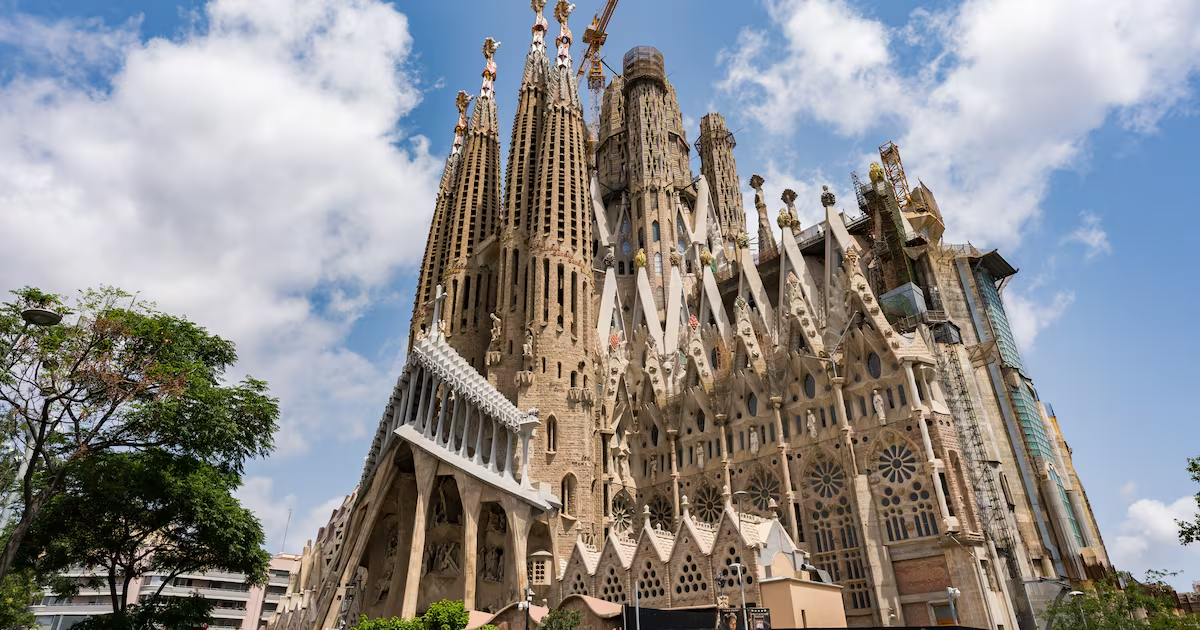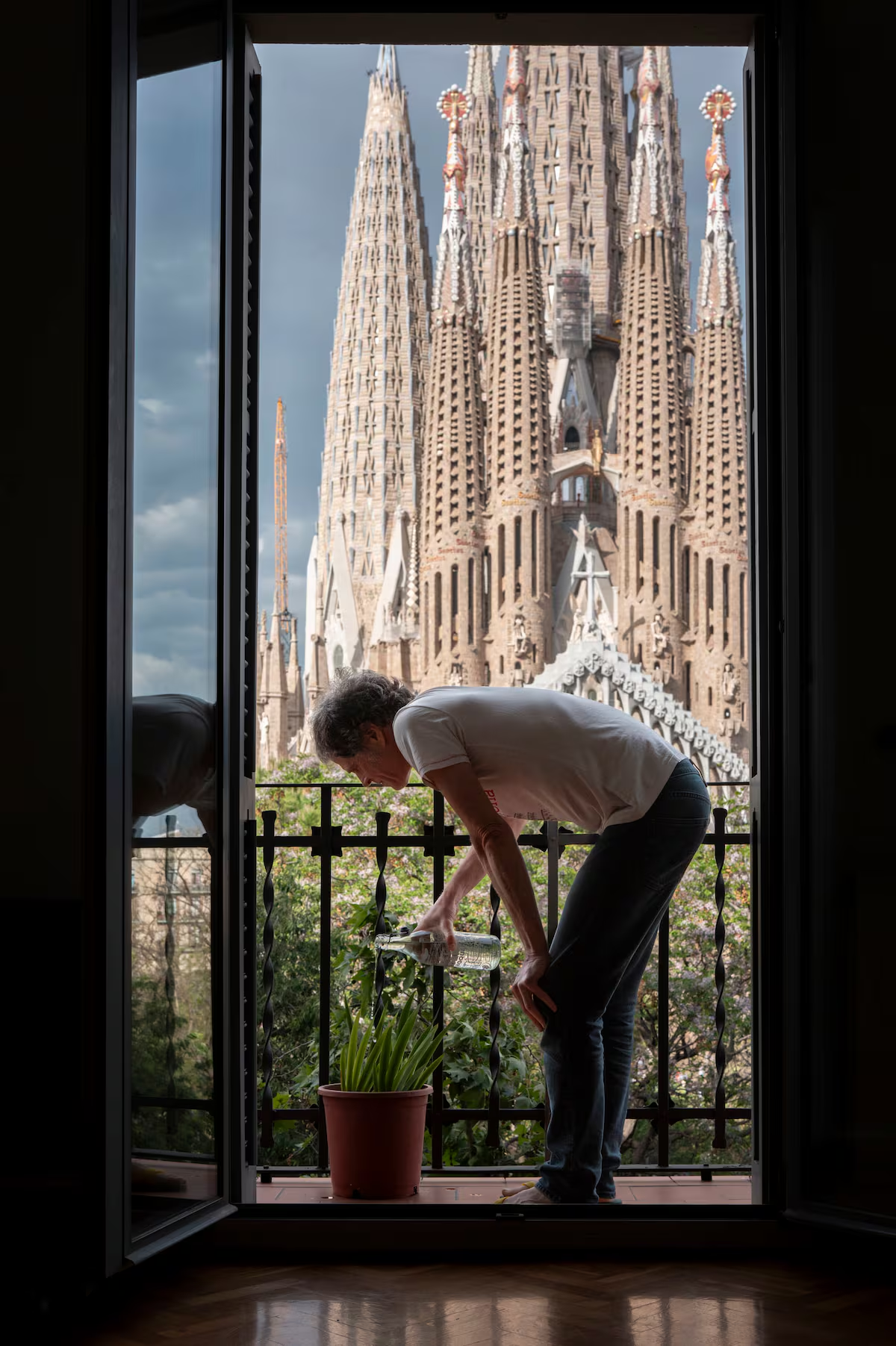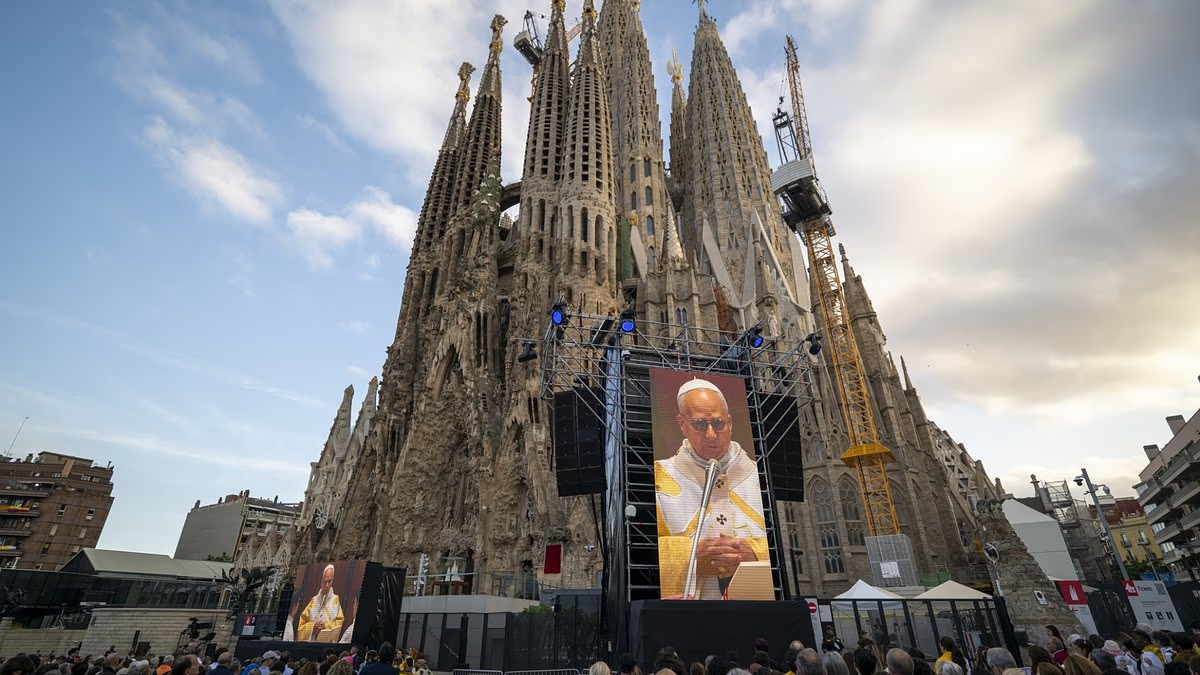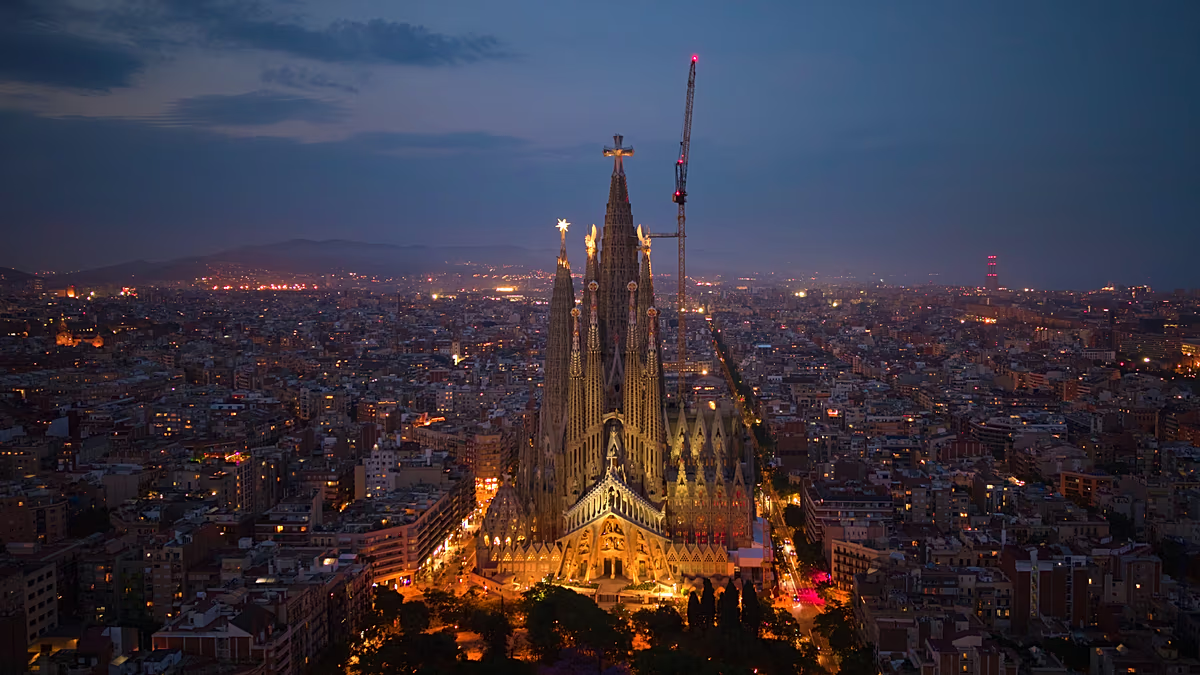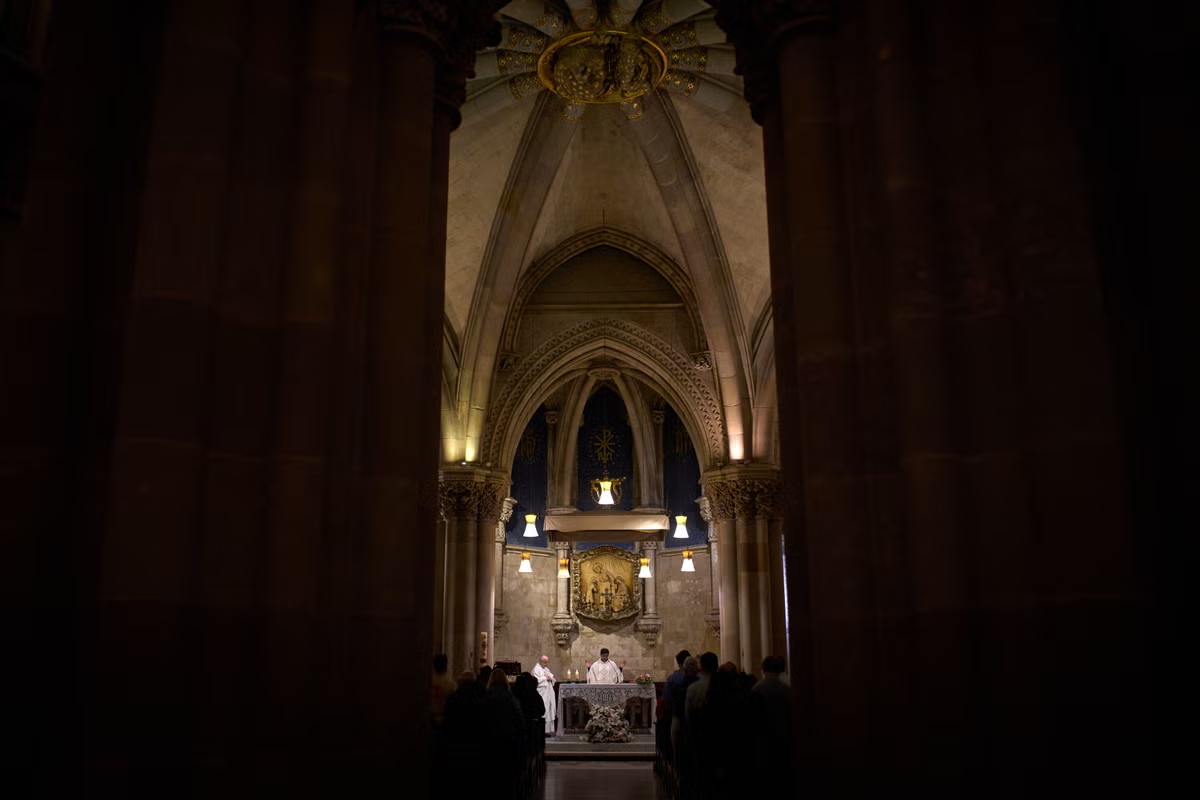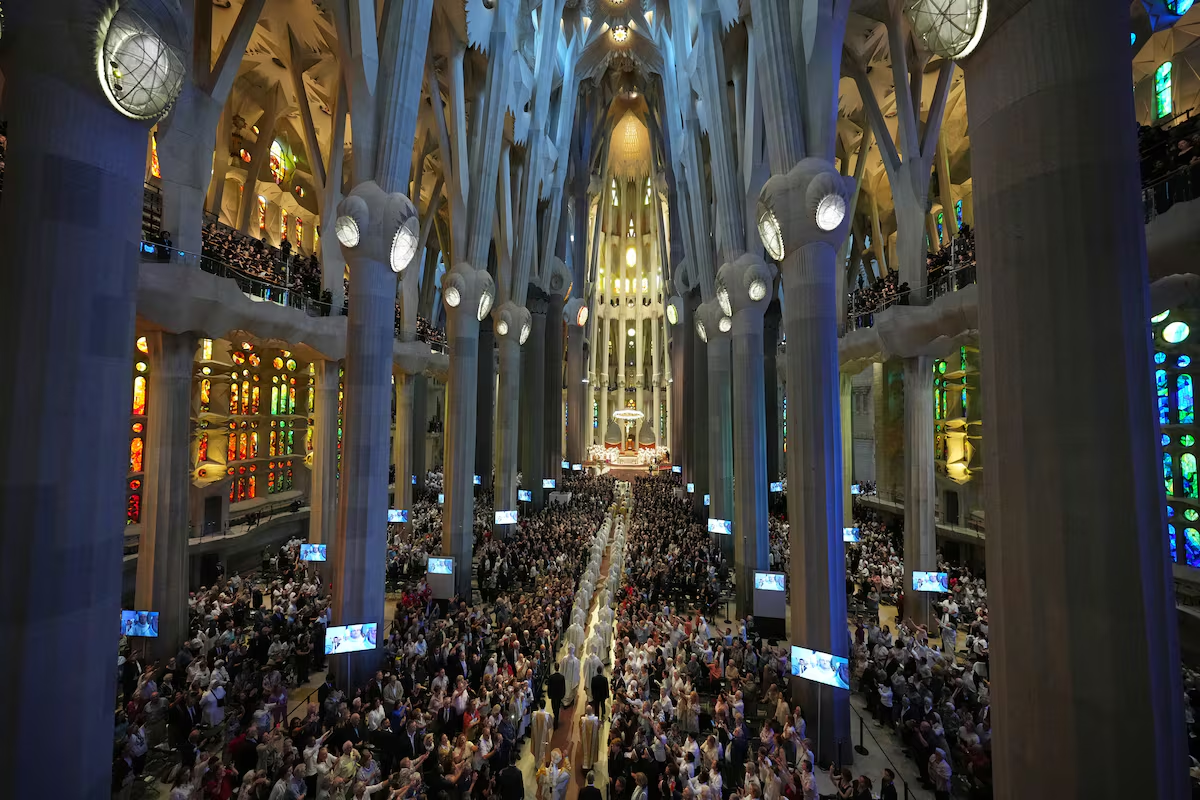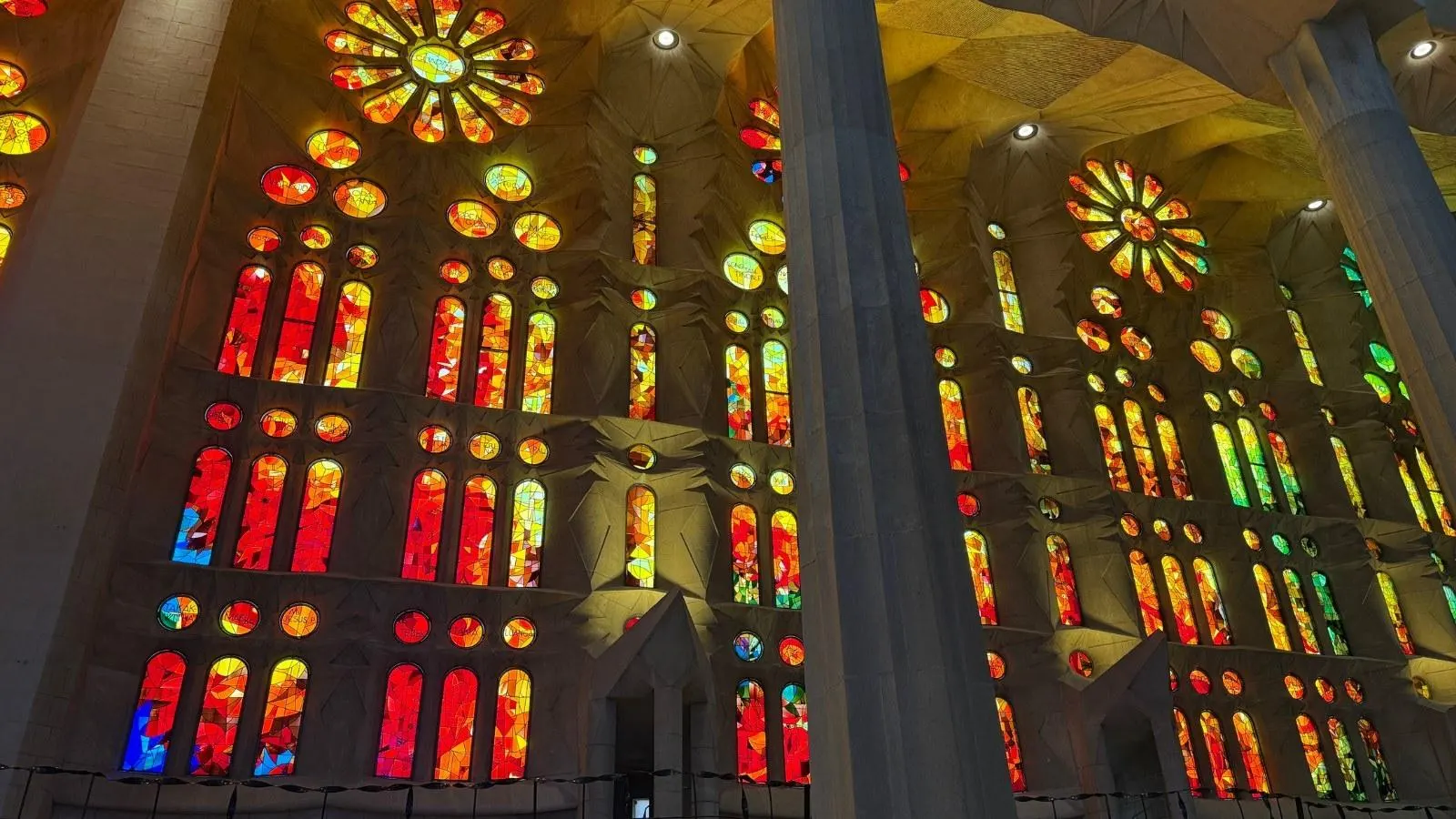
The interior of Barcelona’s Sagrada Familia is every bit as striking as its famous exterior, with soaring columns and colorful stained glass creating one of Europe’s most memorable visitor experiences.David NikelSagrada Familia has never been a casual sightseeing stop, but in today’s Barcelona, it requires more planning than ever. Tickets sell out weeks in advance during busy periods, leaving visitors who hoped to decide on arrival disappointed.That demand is hardly surprising. The basilica is Spain’s most recognizable work of architecture, Barcelona’s defining landmark and one of Europe’s most unusual religious buildings.It is also entering one of the most important periods in its long construction story.The challenge for visitors is not deciding whether Sagrada Familia is famous enough to visit. It is deciding whether the effort, advance booking and crowds are still justified. For most first-time visitors to Barcelona, the answer should be yes.Sagrada Familia Busier Than EverThe basilica welcomed almost 4.9 million visitors in 2025, according to its annual report, with Americans making up the largest share of international visitors.That popularity can make the experience feel intimidating before you even arrive. Yet for all the crowds, advance bookings and timed entry slots, Sagrada Familia remains one of the rare landmarks that still lives up to its reputation.Its towers rise above the Eixample district like something pulled from a dream, a forest, a sandcastle and a cathedral all at once. Designed by Antoni Gaudi, the basilica has been under construction since 1882, and that unfinished quality has long been part of its fascination.A Milestone ReachedThat story entered a new chapter in 2026. The central Tower of Jesus Christ reached its full height of almost 566 feet, making Sagrada Familia the tallest church in the world.The milestone came in the centenary year of Gaudi’s death, adding another layer of symbolism to a building already overflowing with it.Barcelona’s Sagrada Familia remains under construction more than 140 years after work began.David NikelExternal work on the central tower has reached a major milestone, though work on other parts of the basilica, including the Glory façade, is expected to continue for years.Visitors are not just stepping inside a historic church, but into a building still being completed by later generations of architects, craftspeople and engineers.The exterior alone can occupy a long visit. The Nativity façade, the oldest of the three great façades and the one most closely associated with Gaudi himself, is dense with organic detail. Figures, animals, plants and religious symbolism seem to grow out of the stone.On the opposite side, the Passion façade is stark, angular and unsettling by comparison, telling a very different part of the Christian story in a completely different visual language.That contrast is one of the reasons Sagrada Familia rewards more than a quick look. From one angle, it appears exuberant and almost playful. From another, severe and monumental. From a distance, it is a skyline icon. At street level, it becomes a puzzle of geometry and faith.Still, the real reason to book tickets is the interior.Many famous landmarks are more impressive outside than in. Sagrada Familia is the opposite. The interior changes the experience completely.Gaudi’s columns branch toward the ceiling like trees, creating the sensation of standing inside a stone forest.The light, filtered through stained glass, shifts the mood from one side of the basilica to the other. Warm colors glow on one side, cooler tones on the other, transforming the space throughout the day.It is a building designed to be felt as much as studied. Even visitors with little interest in architecture can understand the impact immediately. The scale is vast, but the details pull the eye in every direction. The result is not the hushed heaviness of many European cathedrals, but something brighter and much more vertical.Sagrada Familia requires advance online booking to secure admission.David NikelThat is why the crowds do not ruin it. They change the experience, of course. This is not a hidden gem, and anyone expecting silence or solitude will be disappointed. But the interior is large enough, and unusual enough, to absorb the movement of visitors better than many overrun attractions.Sagrada Familia Needs PriorityThe key is to treat Sagrada Familia as an anchor for your Barcelona plans, not a flexible add-on.Tickets should be booked through the official website as far in advance as possible. The basilica itself advises buying ahead to ensure entry, and official tickets avoid third-party commissions or processing fees.Timed entry means visitors should arrive with a little margin, but there is no need to build an entire day around the visit.The nearest metro stop, Sagrada Familia, makes the basilica easy to reach, but the surrounding streets are part of the experience. Stepping back helps. From close up, the facades can feel almost overwhelming. From the edges of nearby blocks and parks, the towers begin to make more visual sense.Whether to add tower access depends on your priorities. The towers offer elevated views and a closer look at the building’s upper details, but they are not essential to appreciating the basilica. For most first-time visitors, the standard basilica ticket will provide the core experience.A guided visit can be worthwhile for those who want to understand the symbolism behind Gaudí’s design, but Sagrada Família also works on a more instinctive level. You do not need to decode every sculptural detail to be moved by the space.Fully Booked? Still GoAnd if tickets are unavailable, the visit is not necessarily wasted. Sagrada Familia is one of those rare buildings where walking the perimeter still feels worthwhile. The Nativity and Passion facades can be appreciated from outside, and the scale of the project is best understood by circling it slowly.In a city where popular sights increasingly require planning, Sagrada Familia may be the clearest example of the new Barcelona travel rule: book first, improvise later.That extra effort is worth it. Some landmarks become famous because they are easy to market. Sagrada Familia is famous because, finished or not, there is still nothing else quite like it.MORE FROM FORBESForbesBarcelona Is Busier Than Ever. Do This Before You GoBy David NikelForbesSitges Is A Stylish Beach Escape Just Outside BarcelonaBy David NikelForbesYou Get 3 Chances To Visit Europe’s Viral Modern Art MuseumBy David Nikel
Why Barcelona’s Sagrada Familia Is Still Worth Visiting
Barcelona’s Sagrada Familia is busier than ever, with tickets often selling out in advance. Here’s why Gaudi’s basilica still deserves a place on your itinerary.
1,026 words~5 min read