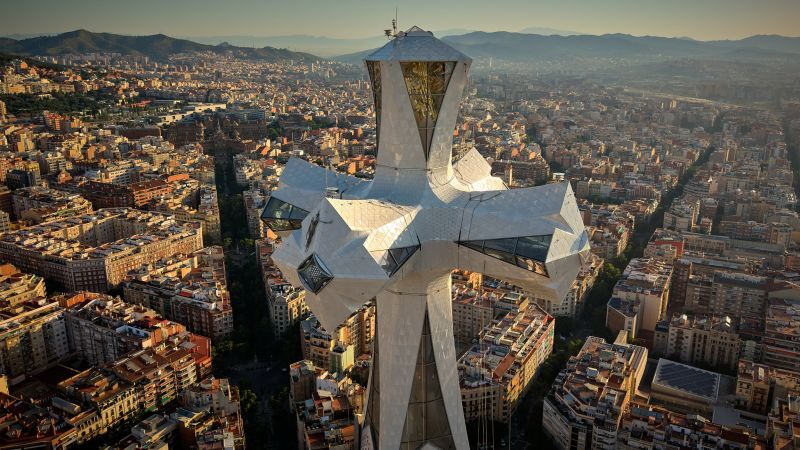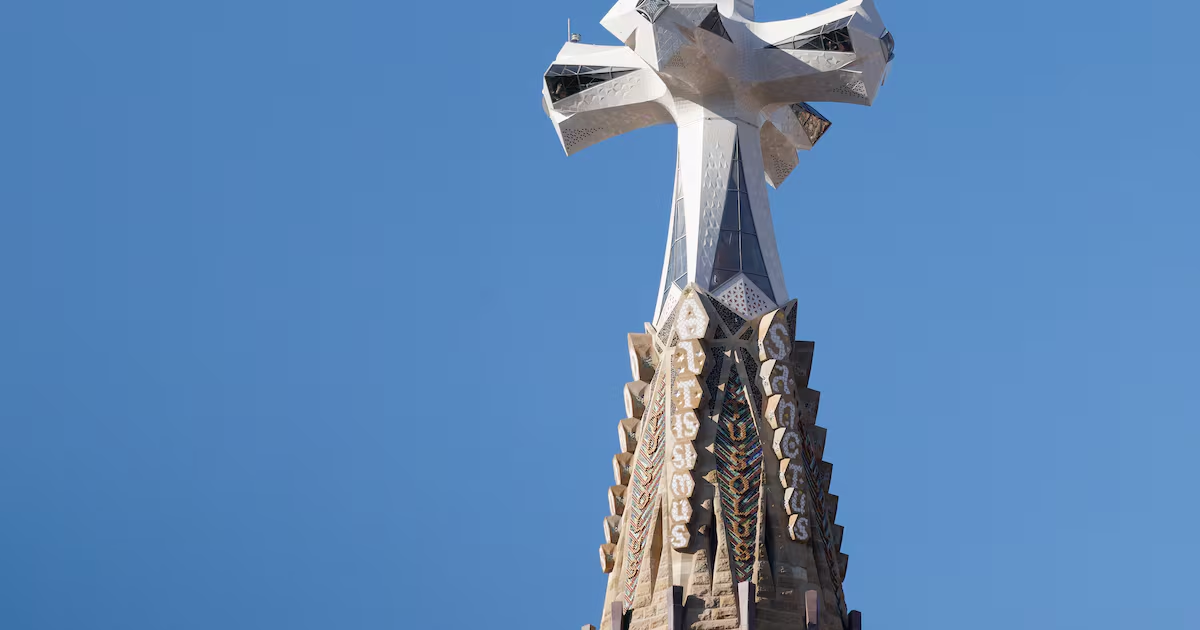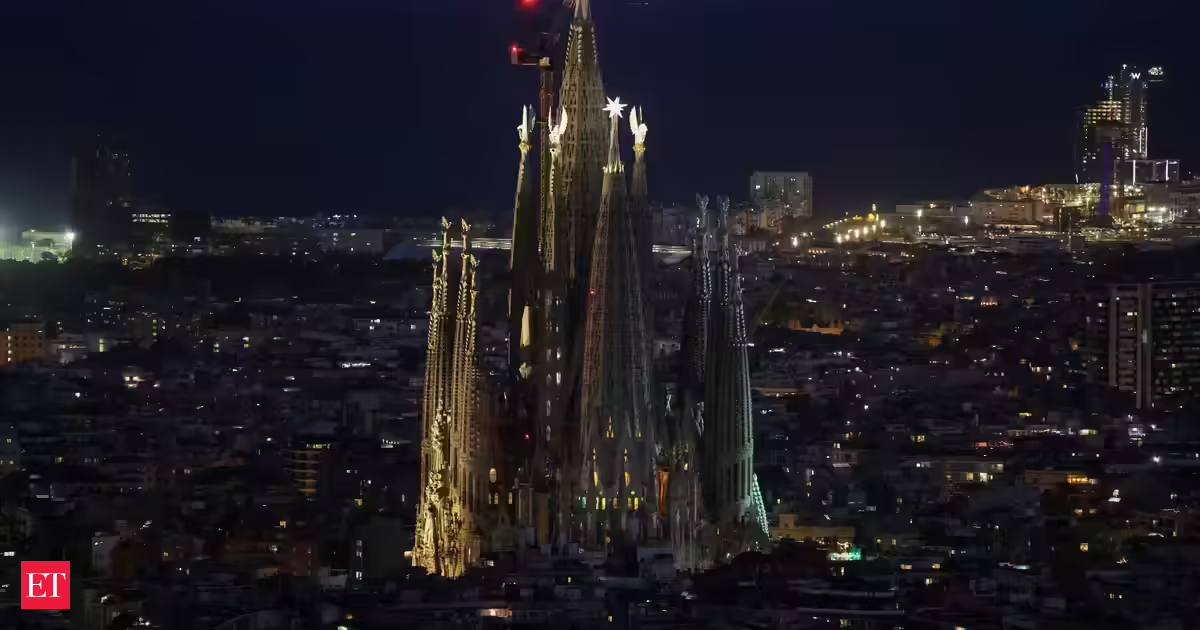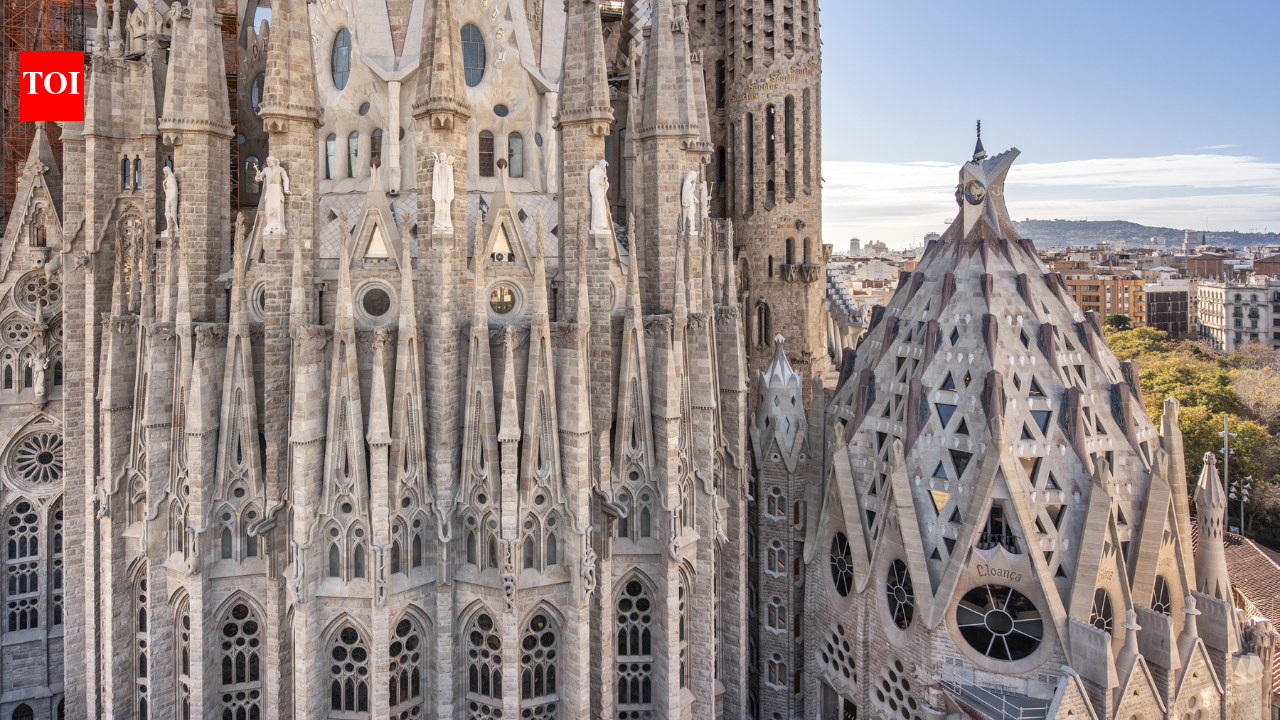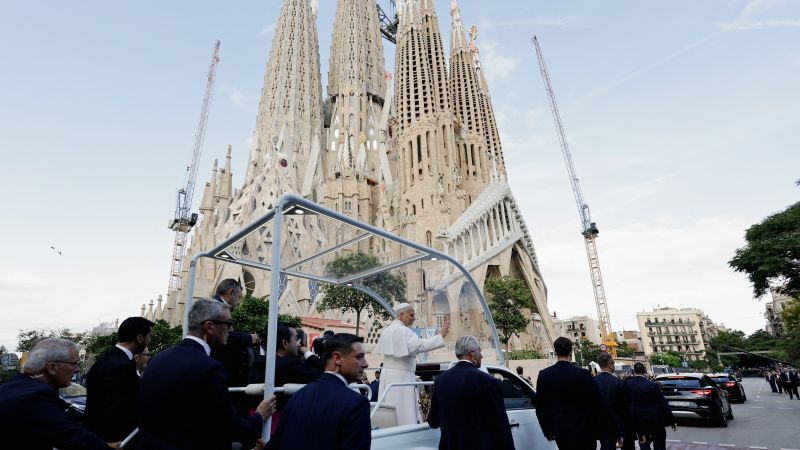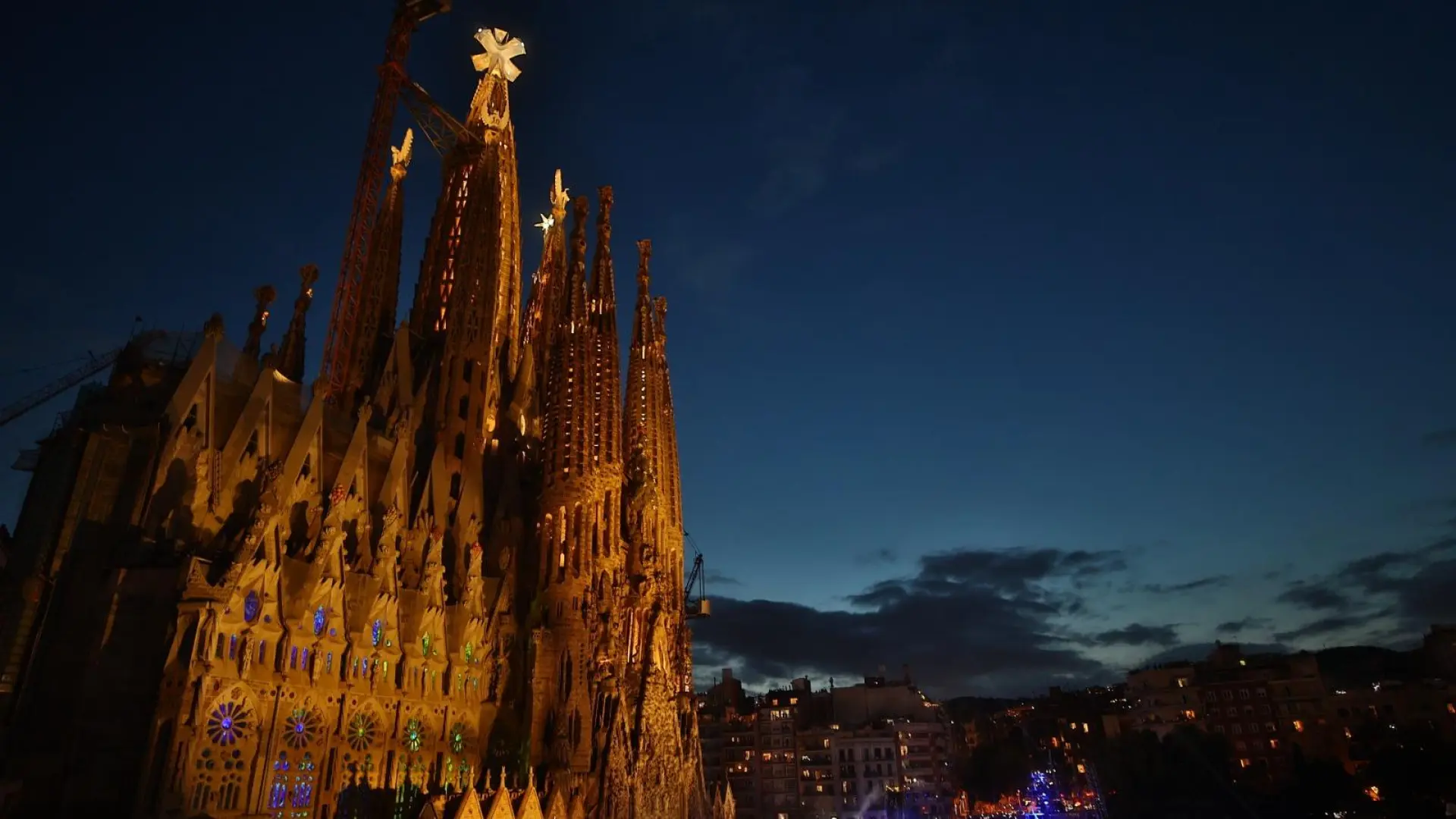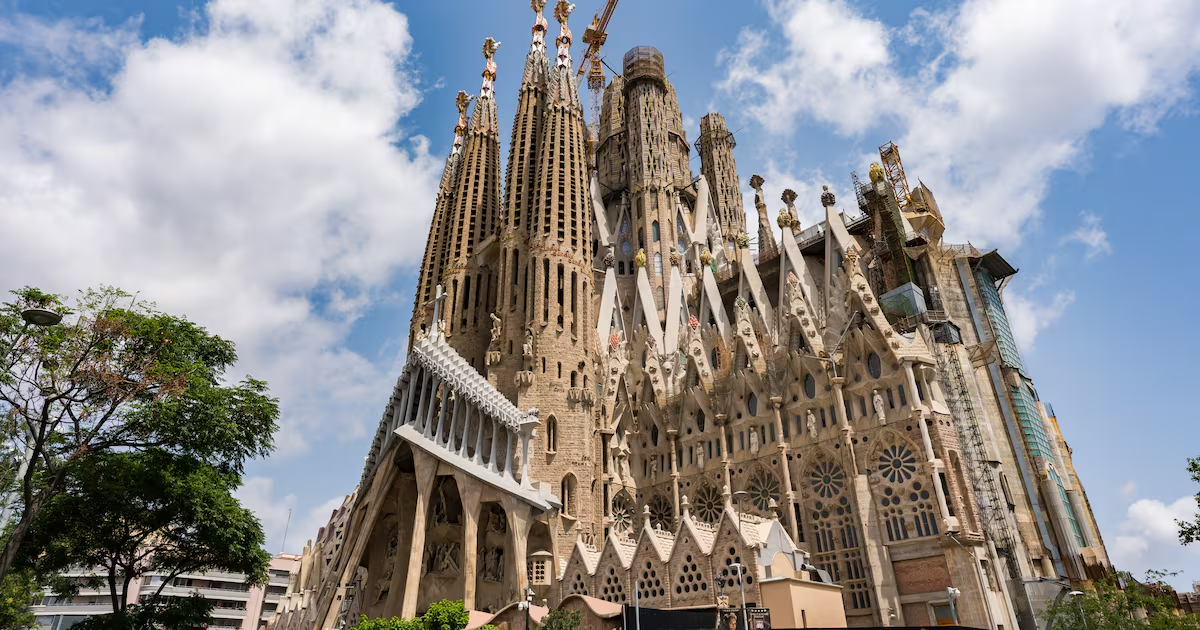
For much of its history, the Sagrada Família basilica has drawn crowds and inspired awe. The vast, outlandish, vision of architect Antoni Gaudí is seen as his crowning – albeit unfinished – achievement and is a must-see for any visitor to Barcelona.In February it grabbed the world’s attention once again when its 172.5m-high Tower of Jesus Christ was installed, making the Sagrada Família the tallest church in the world. After the tower was completed, with the placement of a three-dimensional cross clad in glass and white enamelled ceramic on its top, the project’s head architect, Jordi Faulí, described the moment as “much more than the culmination of a phase of construction: it is the result of years of work and studying the legacy Antoni Gaudí left us.”It is also the source of enormous pride for the people of his home region in northeastern Spain. “The Sagrada Família is proof of the tenacity and perseverance of the [Catalan] people over more than 100 years,” said Catalonia’s regional president, Salvador Illa.The completion of the basilica’s main structure coincides with the 100th anniversary of Gaudí’s death, which is being marked with a host of events throughout the year. And in June, Pope Leo is due to bless the basilica’s new tower, an appropriate gesture for the building’s creator, whose piety and genius led to him being known as “God’s architect”.Gaudí was a mass of contradictions. A sociable dandy in his hometown of Reus when growing up in the mid-1800s, his image later in life was that of an ascetic, tramp-like figure who observed an austere vegetarian diet and whose daily routine consisted of morning Mass, work and confession. Despite the deep religious convictions aligning him with the Catholic orthodoxy of conservative Spain, Gaudí also harboured Catalan nationalist politics and in the 1920s he was arrested for haranguing police during a regional celebration. In his lifetime his architecture, too, drew conflicting interpretations, between those who saw him – correctly – as a modernist prophet and others who dismissed him as an eccentric dinosaur.In his biography of the Catalan, Gijs van Hensbergen describes the unusual way in which Gaudí’s varied influences and beliefs shaped his work: “[T]he further he travelled away from the idealism of his youth, and the stricter a Catholic he became and the more antiliberal, pessimistic and obsessed with suffering – the more glorious his architecture grew.”Even Gaudí’s death bore out the paradoxes that had filled his life. After being struck by a tram as he crossed a road in central Barcelona one afternoon in June 1926, hospital staff did not recognise the bedraggled, bearded man they were treating as the city’s most renowned architect who was building the vast basilica a few blocks away. He died of his injuries three days later.Few cities bear the influence of one architect as brazenly as Barcelona. Gaudí’s stylistic fingerprints are rarely out of sight: they are on the multicoloured tiles and Oriental inspiration of the Casa Vicens; the skull-like balconies, fish-scale roof tiles and curved roofline of the Casa Battló; and the labyrinths, fairy-tale mushrooms and gasping dragons of the Park Güell.Yet, amid the plethora of Gaudí creations in the Catalan capital, the Sagrada Família dominates the skyline, its size, majesty and sheer oddness making it impossible to ignore.Park Guell in Barcelona, Spain. Photograph: Getty Images Standing out: the Sagrada Família basilica dominating the Barcelona skyline. Photograph: Roi Shomer/iStock Work on the basilica began in 1882 and a decade later, Gaudí believed a Mass could be held to mark the temple’s completion by the end of the century. But progress was interrupted by a lack of funds, the death of some key figures involved in the building’s patronage and Gaudí’s own changing plans and obsessive attention to detail. When he died, there was not a complete set of plans for the completion of the project and in 1936, during the Spanish civil war, anarchists broke into the basilica and burned many of his plans and models. Work on the Sagrada Família ever since has been a matter of interpreting the surviving documents and models, which in some cases have not been complete. The building’s Passion Facade, for example, which portrays the death and resurrection of Christ, was begun in 1954, using sketches the architect left behind, and only completed in 2018.The Passion Facade encapsulated the challenges of how to complete Gaudí’s vision. The sculptor Josep Maria Subirachs was commissioned, in the mid 1980s, to carve the figures at the entrance and, like Gaudí, he spent a time living in the basilica dedicated to his task. However, many felt his austere, angular sculptures in travertine and Floresta sandstone jarred stylistically with the rest of the temple. He told one interviewer: “I have never wanted to imitate Gaudí. I admire him too much to brush against him.” Subirachs faced fierce criticism from those who alleged he was failing to respect the legacy of Gaudí and one peer described his work as “sculptural filth”. The irony of this was that, 25 years earlier, Subirachs himself had put his own name, alongside those of artists and architects such as Joan Miró and Le Corbusier, to a manifesto protesting at how the basilica was being completed.The Subirachs controversy has subsided, although his work on the facade can still provide an aesthetic jolt to the visitor to the basilica. However, the building’s detractors have always been there.[ An encounter near Barcelona’s Sagrada Família taught me a lesson about other touristsOpens in new window ]George Orwell, after seeing the basilica during the civil war, said it was “one of the most hideous buildings in the world” and regretted the fact that anarchists had not blown it up. And more recently, in 2012, The Architectural Review dubbed the basilica “Gaudí’s sacred monster”, stating that it had become “a kind of circus attraction in which it is now impossible to detect the hand of its original creator”.The Tower of Jesus Christ. Photograph: Joan Valls/Urbanandsport/NurPhoto via Getty Images The Sagrada Família basilica is Spain's most popular tourist site. Photograph: Pau Barrena/AFP via Getty Jordi Bonet, who was head architect of the Sagrada Família’s completion for three decades, had a simple rejoinder to that allegation.“Almost every cathedral has been the work of many people and over many centuries,” he said. “Even when he was in charge, there were 40 different sculptors working for Gaudí, and of course he inspired them, intervened and commented on their work – but it remained the work of several different sculptors.”The idea of the temple being a patchwork team effort rather than the seamless vision of a single man does not prevent people flocking to see it. Last year nearly five million visitors went through its doors, making it Spain’s most popular tourist attraction.Watching them is Domenico Pianese, an artist from Naples who has been in Barcelona for 10 years, selling his pictures outside the Sagrada Família, which he still contemplates in wonder.“People in the artistic world dream impossible things. Their ideas are not always possible,” he says. The Sagrada Família “was not possible until Gaudí came along”.“I still don’t understand it,” Pianese adds. “Every day I find something new in it.”And with the installation of the Tower of Jesus Christ there is now a genuinely new addition to the basilica. Next to it stands a yellow crane, a few metres higher than the basilica itself and a reminder that it remains a work in progress. Many of those who visit the Sagrada Família struggle to fit its vast spires into frame as they take selfies in front of it. Other visitors simply stand, with their necks craned back, and contemplate.Tourists visit the Sagrada Família basilica in Barcelona. Photograph: Angel Garcia/Bloomberg via Getty Perhaps the most striking element of the basilica is its apparent lack of familiar geometry, reflecting Gaudí’s assertion that “the straight line belongs to men, the curved line to God”.All who see the Sagrada Família in person are awed by it. But there are also those who are shocked by what they see as the building’s garishness, how it can almost resemble a Disney Castle as much as a place of worship. “It’s huge. I was not expecting this size,” says Felipe, a Brazilian tourist who is staring at the building. Despite his admiration, he finds the new tower slightly out of step with the rest of the basilica.“It’s a bit different, the architecture seems a bit different,” he says. “It’s still beautiful but there is a difference.”There has been further controversy due to the impact the construction of the temple’s planned staircase-entrance will have on local residents. But, with the temple’s main structure complete, the entire project is now scheduled to be finished by the middle of the next decade. When that happens, a century-and-a-half of building and interpreting one man’s vision will have concluded.However, not everyone believes that should happen.“We should never try to finish the Sagrada Família,” wrote Gaudí biographer Van Hensbergen, “otherwise we undo the web of power that is elaborately woven into this mysterious religious spell.”
The year of ‘God’s architect’: divisive Sagrada Família finally nears completion on the centenary of Gaudí’s death
Few cities bear the influence of one architect as brazenly as Barcelona, where Gaudí’s stylistic fingerprints are rarely out of sight
1,504 words~7 min read