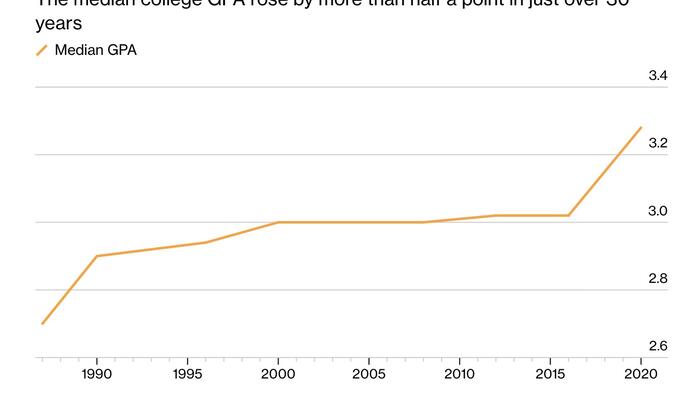
It is my long-held belief that striving to have a near-equal number of A’s and F’s in a college class is a grossly misdirected goal. This always seemed to me to be better applied to a sorting guideline for assembly-line manufacturing. It strikes me that the more A’s earned in a well-designed class using quality grading rubrics, the better. If viable, relevant, up-to-date learning outcomes are well assessed, then higher grades on average are commendable.
Yet, in recent weeks, we have learned that a couple of our higher education institutions, the venerable Harvard and Yale Universities, are considering policies designed to reduce the percentage of A’s that may be earned in a given class. Writing in The New York Times, Mark Arsenault reports, “One Solution for Too Many A’s? Harvard Considers Giving A+ Grades.” That seems a bit disingenuous—merely changing the title of the grade by adding a plus sign in order to reduce the disreputable number of A’s posted in a class.
The Times article goes on to quote the dean of undergraduate education: “‘A number of you tightened up your grading this fall, and your efforts have made a meaningful difference,’ the dean, Amanda Claybaugh, wrote in an email to the faculty Monday afternoon. Grades of A fell to 53.4 percent of grades awarded in the fall semester, from 60.2 percent in the prior academic year, Dr. Claybaugh reported. ‘I know this change wasn’t easy,’ she added, noting that some faculty members had said they were receiving less favorable course evaluations from students.”