In a move aimed at reversing grade inflation, Harvard University's Faculty of Arts and Sciences this week adopted a rule capping A grades at 20% of all letter grades in any given course, with professors permitted to award as many as four A's beyond that threshold.
According to The New York Times, the tally was 458 in favor and 201 opposed. A class of 100 students, under the new formula, would yield a maximum of 24 A's for the professor to assign. Only undergraduate grades are subject to the restriction, and anything at or below A-minus remains uncapped.
Amanda Claybaugh, the dean of undergraduate education at Harvard, described the vote as significant. "This is a consequential vote," Claybaugh told The Times. "It will, I believe, strengthen the academic culture of Harvard; it will also, I hope, encourage other institutions to confront similar questions with the same level of rigor and courage."
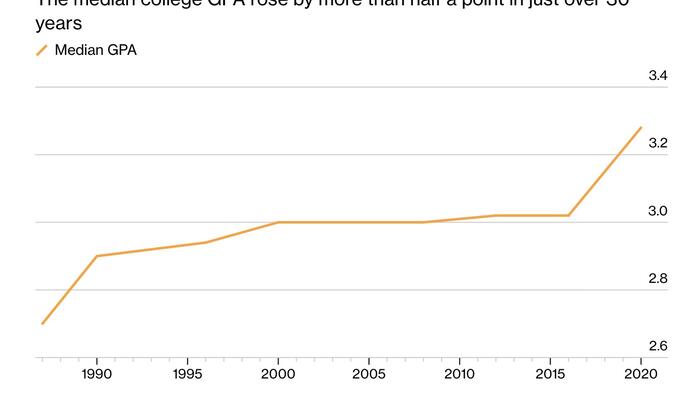
The new rule is a response to years of rising grades at the university. By the 2024-25 school year, A's accounted for roughly two-thirds of all undergraduate letter grades, according to The Times — a steep climb from 2012-13, when just 35% of grades reached that level.
The issue extends well beyond Cambridge: researchers and educators have long warned that when A's become routine, the grades themselves lose meaning for the employers, admissions offices, and students who rely on them to assess academic performance, The Times reported.