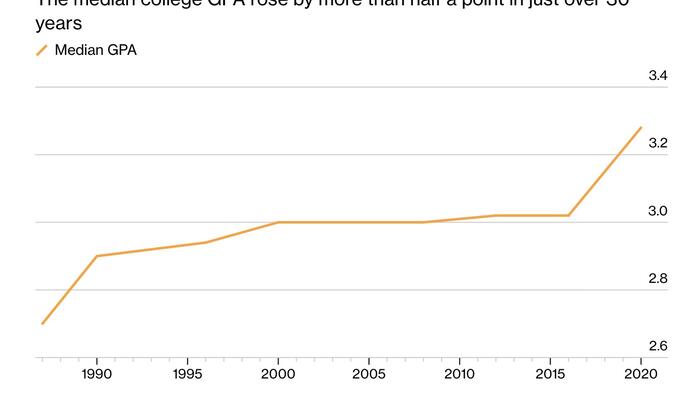
Harvard’s Faculty of Arts and Sciences voted to cap “A” grades in undergraduate courses at roughly 20 percent of enrollment beginning in fall 2027. Nearly 70 percent of voting faculty backed the measure. It’s one of the most aggressive reversals of grade inflation in modern American higher education.The coverage has, predictably, focused on signaling. When two-thirds of letter grades are straight “A’s” and roughly 85 percent fall in the “A” range, the credential collapses under its own weight. Harvard’s report, written by Dean of Undergraduate Education Amanda Claybaugh, called the system “failing” and described grade inflation as a “race to the bottom.”The signaling argument is correct as far as it goes. But it misses the more important consequence of capping “A’s,” the one that should matter most to anyone concerned about the intellectual culture of American higher education.
Grade inflation does not only corrupt transcripts. It corrupts the choices students make about what to learn and how to learn it. And it corrupts the choices faculty make about what to demand.
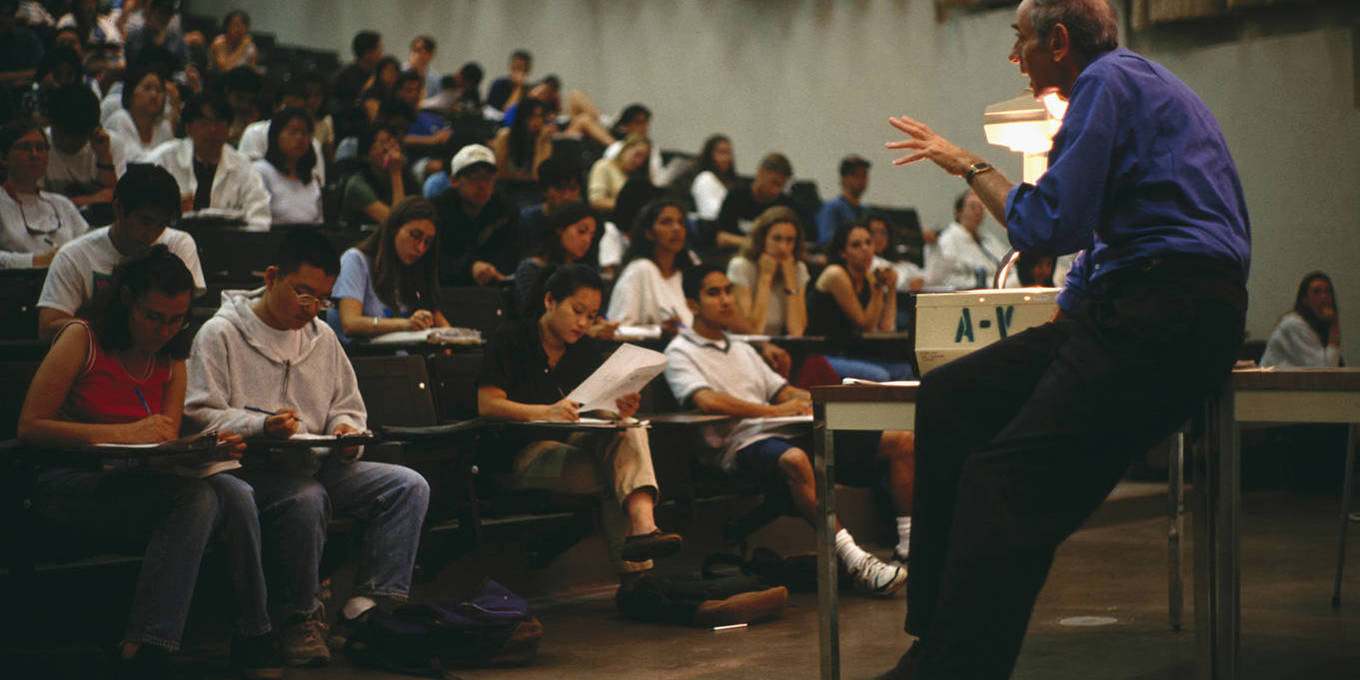
Years ago at Brown, one of us watched a colleague who had just won the university’s seminar teaching prize use her acceptance speech to celebrate giving every student in her class an “A”. The room applauded. That is the institutional culture Harvard’s cap is reacting against, a culture in which refusing to grade has become pedagogical virtue rather than abdication. By extension, it is a submersion of the more basic ideal of merit.