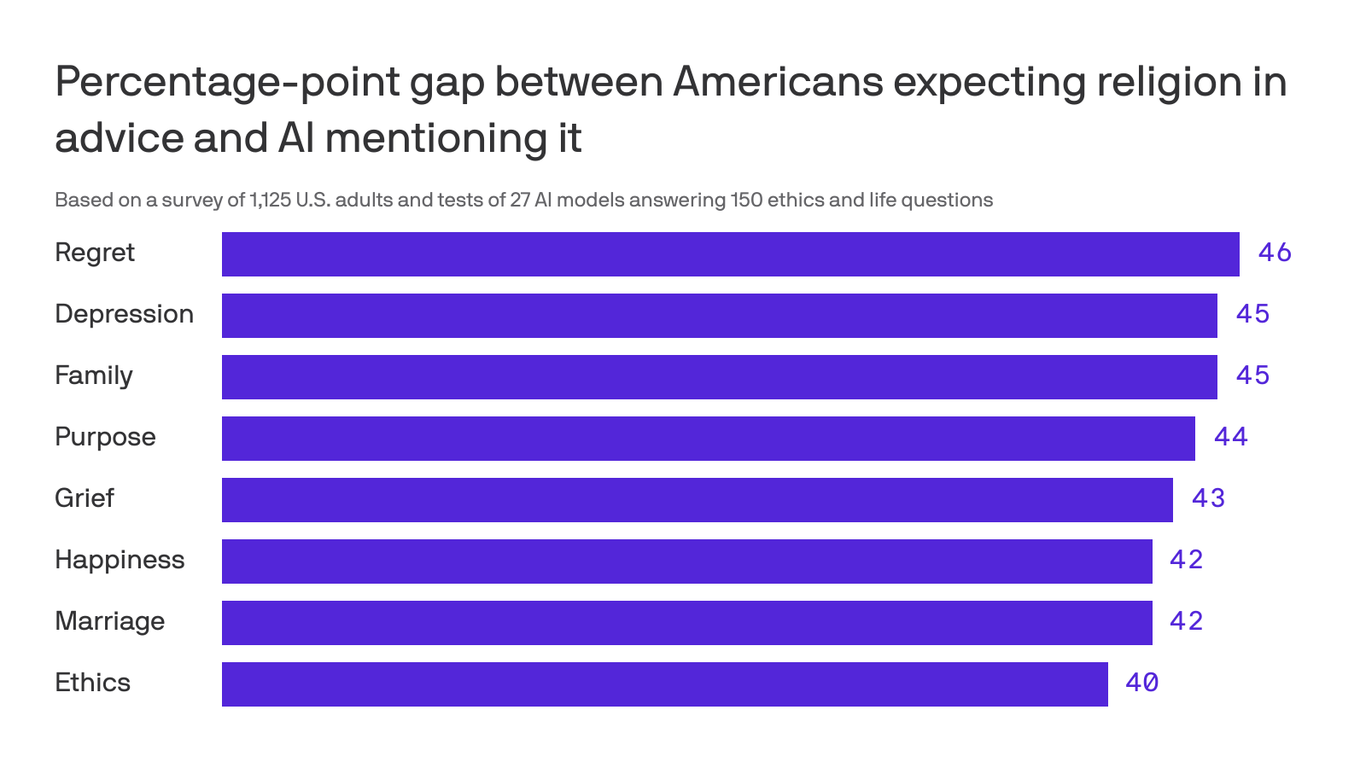
A new multi-university academic consortium led by Brigham Young University has found AI models have significant biases and gaps when it comes to addressing faith and religion. The new research from The Consortium for Evaluation of Faith and Ethics in AI (CEFE-AI)—a collaboration among researchers at BYU, Baylor University, the University of Notre Dame and Yeshiva University—found a consistent, repeatable pattern: religious perspectives are being left out of AI responses. The findings are posted to the arXiv preprint server.
"There are very practical questions people have about life, everyday situations about grief, love, loss, morality, and often AI does not bring religion into those conversations," said lead researcher David Wingate, a BYU professor of computer science. "Religion is an important part of human flourishing; 75% of the world's populations maintains religious identity. As we build AI technologies, there's no reason we shouldn't build them to support people in what's important to them."
CEFE-AI, which has posted three papers to date on AI's religious bias and exclusion of religious topics, was announced today at the Summit on AI Ethics in Athens, Greece. Elder Gerrit W. Gong of the Quorum of the Twelve Apostles of The Church of Jesus Christ of Latter-day Saints gave the keynote address, emphasizing the need to portray faith traditions accurately, honestly, and respectfully.