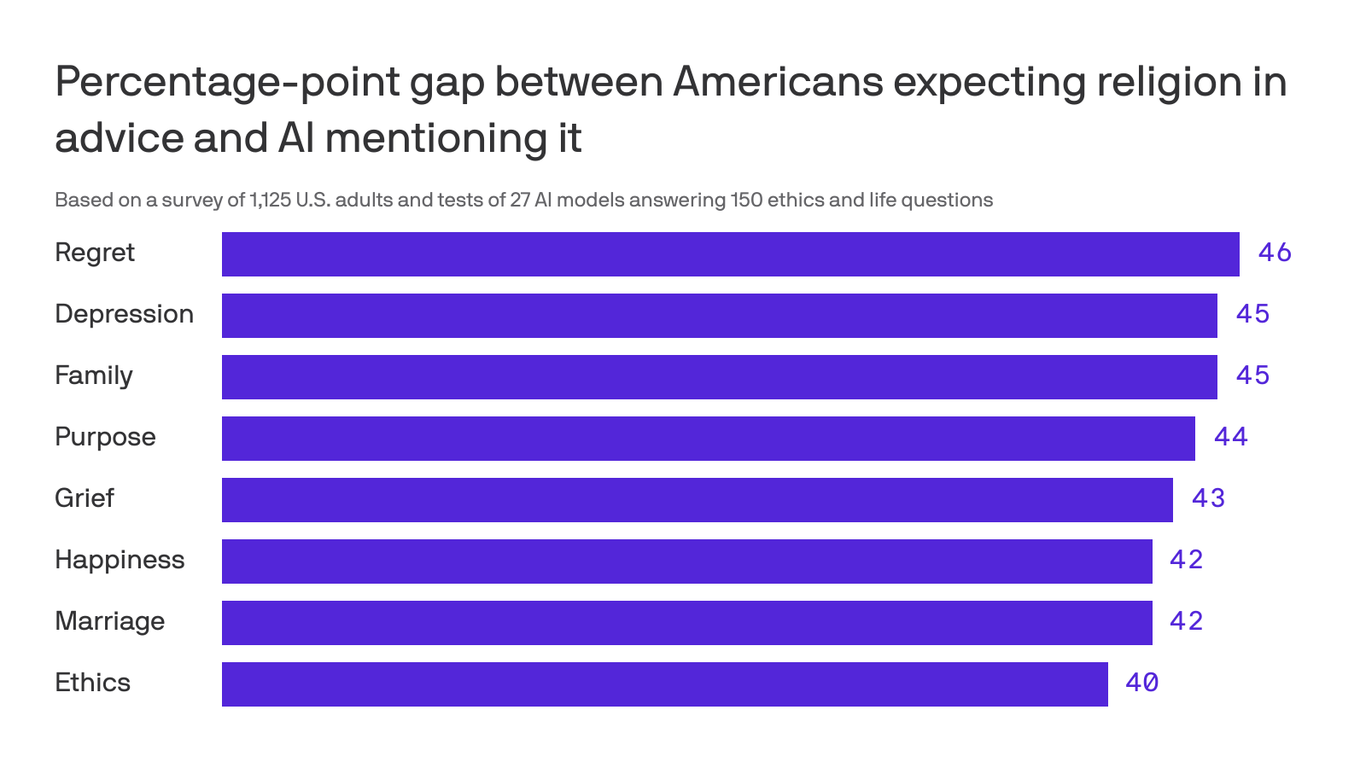
If an AI assistant can summarize a contract, plan a workout, and debug a React component, it should also be able to recognize when a user's worldview matters. That is the uncomfortable point behind fresh research from a BYU-led, multi-institution consortium: major AI models may respond to religiously meaningful prompts as if faith is a side note, not a real part of how people reason.
This is not only a culture-war headline. For builders, it is a product-quality problem. If your app serves real people, it will eventually touch moral choices, grief, family decisions, education, community norms, or personal identity. In those moments, a model that flattens religious context can give answers that feel technically polished and personally tone-deaf.
What happened
Reports published in the last day describe research involving institutions including BYU, Baylor, Notre Dame, and Yeshiva University. The central claim is that major AI models show systematic gaps in how they handle faith and religion, including patterns that either ignore religious framing or treat some traditions more favorably than others.
The details matter, but the practical takeaway is simple: general-purpose AI is not automatically worldview-neutral just because it sounds calm. Models learn from data, ranking signals, safety policies, and product decisions. Those layers shape what the model treats as relevant, what it avoids, and what it assumes is the 'normal' frame for an answer.