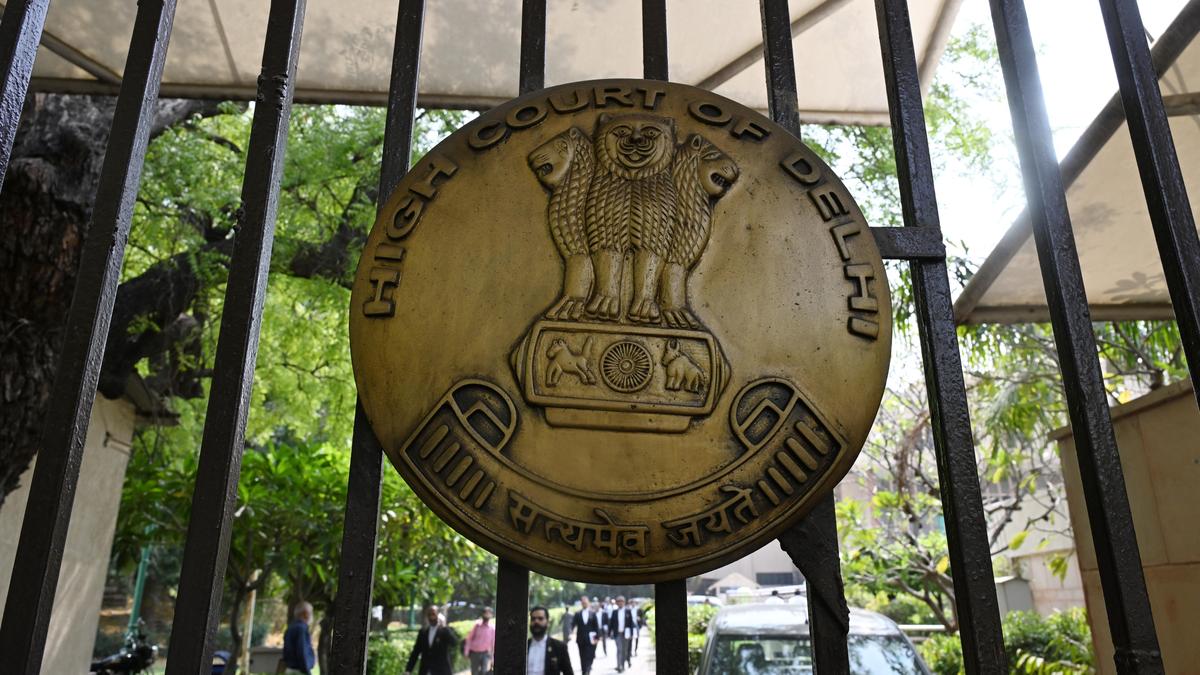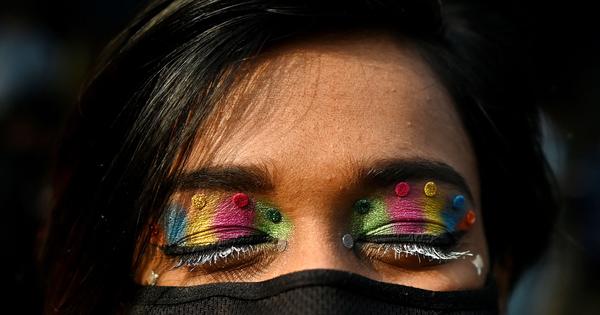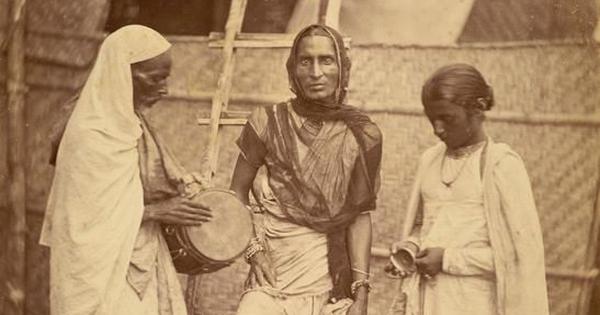
In 1884, an unusual case came up before the colonial Allahabad High Court. For months, the police had been tailing a person named Khairati on the suspicion that they were a “eunuch” after being tipped off that, on a visit to their ancestral village, they were found dancing and singing “dressed as a woman”. A scandalous trial ensued. The British Raj hauled Khairati before its surgeons and magistrates, turning their anatomy into evidence. “He is shown to have the characteristic mark of a habitual catamite – the distortion of the orifice of the anus into the shape of a trumpet…which distinctly points to unnatural intercourse within the last few months,” noted the judgement by the ironically (or aptly) named Justice Straight. The case was eventually dismissed because the paperwork was sloppy and the indictment forgot to name when or where or with whom this supposed crime occurred. But the judge took pains to commend the police for stomping on such “disgusting practices”.Queen Empress vs Khairati is considered to be when Section 377 first drew blood, in the sense that a body that wore the wrong garments and desired the wrong intimacies received stiff legal opprobrium. Over the next 150 years, the law blurred the lines between moral policing and justice, mapped identities that were most vulnerable to its bite, forcing us to confront the question of whether the provision was meant to criminalise the act of sodomy – or the people who appeared likely to commit this offence? Was there any difference?If Khairati etched one epoch in tortured colonial understandings of gender and sexuality, Bhoorah marked the other. A guru within the discipleship lineage of the Hijra community, Bhoorah lived with her two chelas, Dullah and Mathee, in Mainpuri town. Her other companion was her lover Ali Buksh, before she left him for another man. On August 17, 1852, Ali Buksh forced Bhoorah to return to him. Neighbours saw the couple arguing in the street before entering their house. Hours later, Bhoorah’s disciple Dullah ran out into the street, shouting that Ali Buksh had murdered Bhoorah. The Mainpuri Sessions Court, and subsequently the Nizamat Adalat – the highest provincial court at the time – tried Ali Buksh and Dullah. Ali Buksh was convicted of murder after the judges declared that he killed Bhoorah due to the “severance” of their “infamous connexion”. But something more sinister was afoot. As Jessica Hinchy noted in Governing Gender and Sexuality in Colonial India, the judges were alarmed at the presence of transgender people, variously describing them as “beggars” and “unnatural prostitutes”, seen as an “opprobrium” and a “reproach” to the British government. “The sickening details of this case involve the disgusting exposure of an abominable trade of unnatural prostitution regularly carried on by eunuchs dressed as women,” said Unwin, the sessions court judge.Over the next decade, the flood of anxiety unlocked by Bhoorah’s murder calcified into a policy for the regulation and ultimately extermination of the transgender community – Part two of the Criminal Tribes Act (CTA), which mandated police registers of “eunuchs”, expanded surveillance of these communities, banned “men” from wearing women’s clothing or performing in public, and asked authorities to remove children in transgender-populated households. CTA was repealed after independence, but as the new trans law has shown, the kernel of bias continues to thrive 174 years later.Go further back in time to 1835, and you find Thomas Babbington Macaulay, the then president of the Indian Law Commission, calling homosexuality “an odious class of offences”. “So revolting” was the subject, he wrote, that “the injury which would be done to the morals of the community by such discussion would far more than compensate for any benefits which might be derived from legislative measures framed with the greatest precision”. And yet, in 1861, he went on to codify a law in the Indian Penal Code which not only conflated bestiality with homosexuality, but also negated the very thing that forms the bedrock of sexual relationships between adults: consent. Section 377 made homosexual sex synonymous with rape and equated homosexuality with sexual perversity.Sodomy, a biblical abhorrence, was already to be associated with a certain type of “oriental vice” by the time Macaulay was tasked with developing the penal code. He merely wrote and codified laws as part of a racialised imperial project that gained supremacy through the engines of science (Charles Darwin’s theory of evolution), institutionalised religion (Christian missionary projects) and commerce (English East India Company).This is what Section 377 stated: “Whoever voluntarily has carnal intercourse against the order of nature with any man, woman or animal shall be punished with imprisonment for life, or with imprisonment of either description for a term which may extend to ten years, and shall be liable to fine. Explanation: Penetration is sufficient to constitute the carnal intercourse necessary to the offence described in this section.”Of course, this connection between communities and criminality, personhood and pollution is not alien to us. The ritual dehumanisation of some groups already formed the social bedrock of India far before Macaulay; neither homophobia nor colonialism birthed it. The geometry of caste turned water into a boundary between human and less-than-human, codified cruelty into law and condemned some bodies into supposed carriers of pollution. No wonder that this habitual denial of dignity ossified into sociolegal logic, rendering impossible even the imagination that those whose shadows you abhorred, whom you forced to scrape off refuse, could possess interiority, ambition, heartbreak and humanity. Bhimrao Ramji Ambedkar’s revolution – whether it be in smashing the barrier around access to a water tank in 1927 or laying down a new playbook for the annihilation of caste in 1936 – repeatedly underlined this simple truth: that prejudice cannot flourish on fallow soil. The complex interplay of social attitudes and cultural practices in which dehumanisation was de rigueur made sexuality and gender sites for the enactment of caste privilege long before colonialism added its own peculiar brand of racial prejudice and misogyny to the mix.Fast forward to a little over a century and a half later, in 1987, when two policewomen in Madhya Pradesh became famous overnight. Leela Namdeo and Urmila Srivastava met on the job and fell for each other. One winter afternoon in Sagar, accompanied by a few trusted friends, they entered a temple, exchanged vows and placed flower garlands around each other’s necks in a quiet gandharva ceremony. They even posed for a studio wedding portrait before returning to their posts.But the photo leaked and society reacted with fury. Branded a “bad influence”, they were dismissed and briefly jailed, but drew a curious reaction from some neighbours. In Love’s Rite: Same Sex Marriage in India and the West, author Ruth Vanita recounted a local woman asking, “After all, what is marriage? It is a wedding of two souls. Where in the scriptures is it said that it has to be between a man and a woman?” Such implicit acceptance co-existed with the varied, nuanced feminist positions that the autonomous women’s movement came to formulate over the ‘lesbian marriage’, including one that opposed all discussion on it.Excerpted with permission from Queer India Now, edited by Dhamini Ratnam and Dhrubo Jyoti, Westland Books.
This book of queer writing argues that a history of casteism and racism ossified homophobia in India
An excerpt from the Introduction to ‘Queer India Now’, edited by Dhamini Ratnam and Dhrubo Jyoti.
1,202 words~5 min read