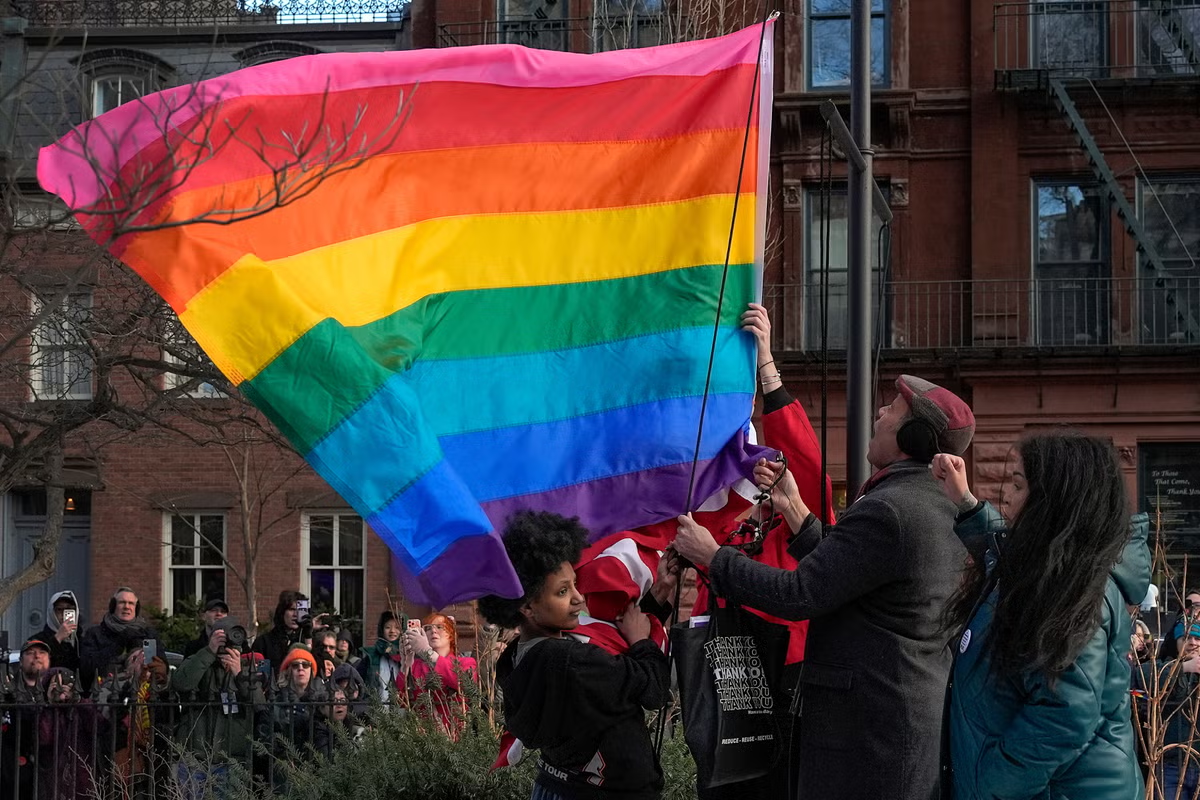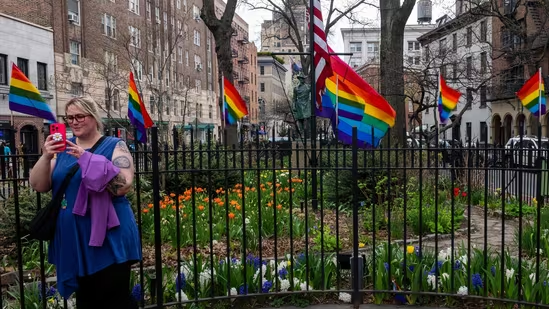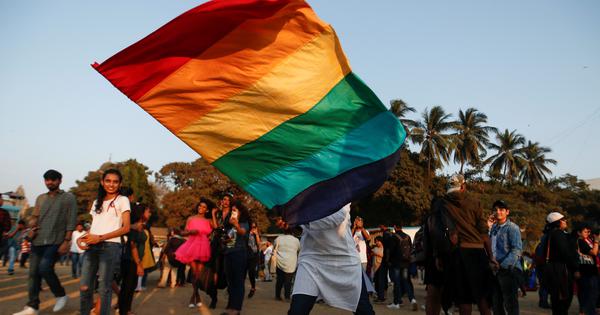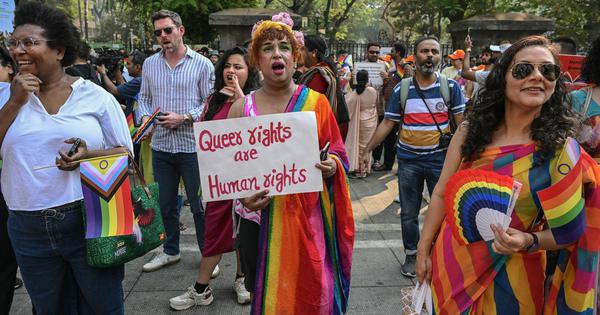
Every June, the world observes Pride Month, which traces its origins to the 1969 Stonewall riots in New York City. In response to a police raid at the Stonewall Inn at Greenwich Village in the U.S., the LGBTQI+ began protests and demonstrations. This marked a pivotal turning point for the modern LGBTQIA+ rights movement.In India, the LGBTQI+ rights movement has been dynamic, securing significant legal protections for the community. However, the latest Transgender Persons (Protection of Rights) Amendment Act, 2026 — which removes the statutory recognition of self-perceived gender identity, introduces medical-board certification and bureaucratic verification requirements, and mandates inclusion in a National Transgender Registry — has brought the gap between legal recognition and lived reality into sharp focus once again.One step forward, two steps backMedical gatekeeping is an infringement on dignity, autonomy, personal liberty, and privacy. So long as recognition remains conditional, equality remains incomplete. Advocate Jayna Kothari explains the relationship between law and the lived realities of transgender people in Transforming Rights: How Law Shapes Transgender Lives, Identity and Community in India (QD). The collection of essays examines India’s transformation in transgender rights, from the recognition of gender self-determination and the decriminalisation of same-sex relations to the recent legislative rollback of self-identification rights.Even as the courts have laid down a framework for equal protection under the law, the trans community continues to face exclusion and discrimination, and remains engaged in a struggle for basic rights to education, healthcare, livelihood, and shelter. Kothari questions the contradiction in the compilation of voices of scholars, activists, lawyers, policy researchers, and community members, who have experience in working with the wider LGBTQIA+ community. The chapters explore the constitutional trajectory of equality and protection in transgender rights cases, the implementation of reservations, questions of intimacy, the impact of increased surveillance and safety measures on trans lives, public attitudes, and structural exclusion. Drawing on legal, social, and community-based perspectives, the essays outline the progress made over the years, the continuing challenges, and the reforms still needed.Lived experiencesWhile the legal framework helps us understand the rights framework, it does not capture the lived realities of the community. It is in personal narratives, memoirs, and community storytelling that these experiences find expression. Existing outside traditional narratives is not easy for queer people, who are often compelled to create their own spaces. To write a memoir is to be deeply vulnerable with the reader.Michelin-starred chef Suvir Saran’s Tell My Mother I Like Boys (Penguin Random House) is a deeply personal and hard-hitting memoir. It is a frank account of the abuse he endured and how he found sanctuary in the kitchen.For Saran, cooking was never just about taste, but about memory and survival. The story oscillates between the opening of Devi, the first Indian restaurant in North America, and Saran’s reckoning with identity and the loneliness that followed his success.He writes that he suffered enough heartbreak to stop being afraid of his own truth, and could therefore write an emotionally naked memoir without resorting to self-pity. He describes himself as an “unsummoned third child kept almost by accident,” raised in Delhi in the 1970s, when plurality was an instinct rather than a slogan. Saran does not downplay the trauma of children who do not fit the mould; his accounts of teasing, shame, and internal panic are unflinching.The book also explores his life in Manhattan, marked by ambition, love, betrayal, infidelity, and loneliness. The honesty with which he lays bare his emotional interior strengthens the book. Saran is open about the relationships that shaped or broke him and talks about his mother who helped him heal when he returned to India. As Saran writes in the preface, “This book is not a chronicle. It is a monsoon. It pours, it pauses, it floods, it recedes, it returns.”Queerness across generationsSaran’s account opens up a broader question of how queer identity is also shaped within families and across generations. In Deviants (Fig Tree), Shantanu Bhattacharya writes a bold, multi-generational story of three gay men from the same family who, from the 1970s to the present day, fight against the tide for love and dignity. It is about Vivaan, a teenager, who discovers boundary-breaking love on his smartphone. His parents are aware of his gender identity, and Vivaan can count on their support.But Mambro, his uncle, born 30 years earlier, had it different when he fell in love with a male classmate at a time when the persecution of gay people was rife under a colonial-era law criminalising homosexuality.And Mambro’s uncle, Sukumar, a young man hopelessly in love with another young man, was forced by social taboos to keep their relationship a secret.Interweaving three distinct voices on queer life in India, the book provides insight into changing laws and attitudes towards homosexuality and offers a poignant account of how these shifts directly impact individuals.Apart from narratives of love and family, there are also books that explore queer identity in relation to institutions and workplaces. Queeristan: LGBTQ Inclusion in the Indian Workplace by Parmesh Shahani (Westland) is groundbreaking as a part memoir and part manifesto for HR professionals and executives on how to build safe, equitable, and profitable corporate environments in India. The author draws from his decade-long journey as a gay man in the corporate world in the post-Section 377 landscape to make a cogent case for LGBTQI+ inclusion and lay down guidelines for reshaping office culture in the country. The book traces the benefits reaped by industry giants such as Godrej, Tata Steel, IBM, Wipro, and the Lalit group of hotels, who have tapped into the power of diversity and revolutionised LGBTQI+-friendly workspaces.These books — memoir, fiction, and non-fiction trace the changing contours of queer life in India — its intimacies, its institutions, and the unfinished fight for equality. They reflect the ongoing struggle for acceptance in an unforgiving society, and help us understand how much has changed, and how much has remained the same.
Mapping queer lives through books: identity, resistance and equality in India
Explore diverse narratives of queer identity, resistance, and the quest for equality in contemporary India through impactful literature.
985 words~4 min read