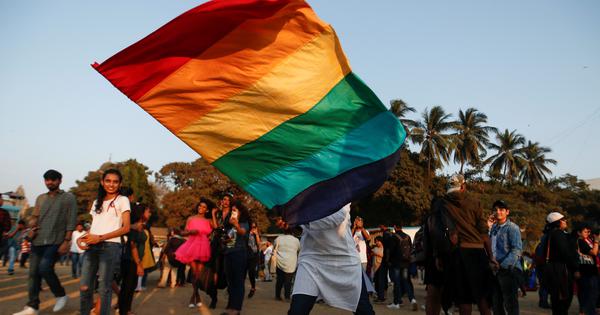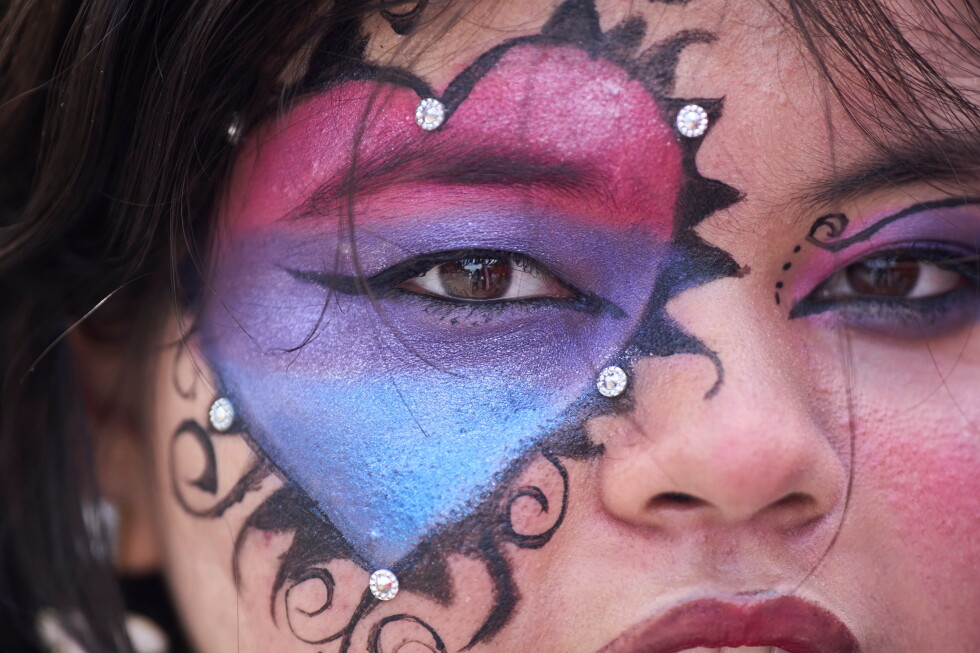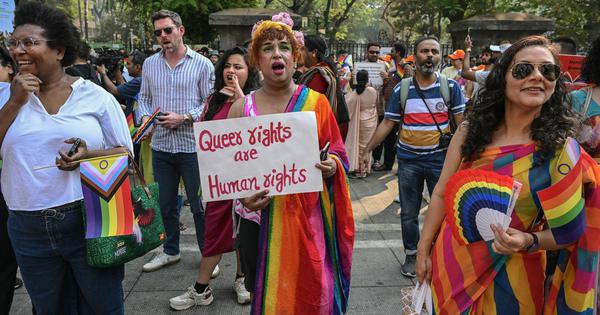
In the early years of our friendship, somewhere over steaming cups of tea and under the Delhi winter sun, Saleem Kidwai narrated to me some of the queer stories from the Ramayana, one of South Asia’s oldest poetic now religious texts. At that time, such a retelling would possibly shake the foundations of the Right-wing opposition to same-sex love.Pride Month (Illustration: Shutterstock)These stories are a reminder of the centuries of Indian history that have accepted same-sex desire and its representation free of technical denominations and prejudice. Most Indians are ignorant if not in outright denial of this rich and variant history that celebrates same-sex desire and love. Most Indians even today choose to believe that same-sex desire is an import, an aberration and at best tolerable. This belief gained enormous currency over the last two centuries fuelled by colonial prejudice, rampant racism and of course the forcing of Victorian values of the ruler on the South Asians they colonised. We for our part internalized this homophobia, wanting to be like the ‘civilised,’ denying our roots, our history, our collective experiences and stories.As a queer person, and writer one of whose main subjects is queer rights, lived experiences and history, it was hard in my early years to find sufficient and authoritative evidence of our existence and our roots. We were people on the margins, without a past or a basis, spoken of, if at all, in whispers, at best slurs. Our deeper questions of who we were and why were we here, who came before us and what made us the way we are remained unanswered. Were we inheritors of any history at all? Or were we without precedent, an import from the West?Globally, queer people face erasure, and they face forgetting. These are, when examined closely, deeply linked phenomena. The notion of erasure – the deleting, removal or destruction of material – is something that is done to queer folks, and often they do it to themselves. In both cases, this is deliberate, intentional and damaging. Thus, erasure and also forgetting form an important aspect of making and unmaking our worlds. I think this is why many of us who have observed recent history need to recall everything – our own experiences and those of us as a collective – with as much clarity as possible. Because the key to the present – both its achievements and challenges – lies somewhere in the past of which we often know little and forget too easily.In the age of hyper information, where we manufacture, produce and consume content at an alarming rate, we seem to be at liberty to deny our realities as also to rewrite our history. It’s a dangerous trend in which a nuanced issue, especially for marginalised communities, can be reduced to a social media tweet or post, leading to misinterpretation. This is why our collective histories and our struggles, especially those recent, are important. Not just because they are instructive, but because otherwise we risk trivialising these stories, worse still, erasing them from memory. If not recorded, they will be fragments slowly eroding from collective memory – nuggets that exist without context.To examine an amalgamation of collective lived experiences – is to remember the emergence of queer resistance, the complexities of queer lives in a deeply homophobic culture, and the hope that compelled us not to give up. There is too much forgotten, lost and opinion-based. Our lived histories then are a journey to uncover the dark, dismal and sometimes uplifting story of queer lives. To remember these lives, is to shape a history and queer narratives that form the very basis of identity, dignity, and equity, even today.In many ways, our stories are a map to the evolution of queer India. To understand the history of queer India is also to understand centuries of erasure. Many that celebrate freedom, this Pride month, may easily forget the work of earlier activists who strove to write a queer movement for themselves and those that were to come after. Those that celebrate legal activism forget that a copy of Same Sex Love in India was given to the judges of the Constitution bench of the Supreme Court while it heard a clutch of petitions against Section 377, a colonial-era law that criminalised adult consensual same-sex relationships. It was a fragment of history – among other arguments – that supported the reading down of this draconian law.The search for our recent history is also an uncovering of many queer issues. There is, for starters, the question of nomenclature. The term homosexual or trans was often by itself problematic. This long history of representation and acceptance of same-sex desire, diminished with the colonisation and subsequent adoption of Victorian morality and attitudes by sections of the Indian population, led to an erasure of terminologies. Thus, same-sex desire came to be discouraged, stigmatised, and eventually criminalized under the British. As we scratch the surface, we discover a host of identities--husnaparast, chapti, khawaj saras, hijras, kothi panthi--all come out clamouring to be heard. The area remains fraught with dissonance. The tendency to evolve a neat, socially and culturally relevant model of gender identity and sexual behaviour leads to considerable disagreements within the community. But then what is a celebration without dissent?We see a recurrent emergence of scholarship, work and perspective that reminds us that same-sex unions in South Asia are neither western nor elitist but the continuation of a long subcontinental culture where same-sex love and unions were acceptable. Here, love, in all its forms, is divine.The telling of our history is also a story of silences. Who are these that do not speak? Those that never came out or were forced into marriages. Some are still alive but stuck somewhere in oppressive marriages because society told them they could not choose to love someone of the same sex or choose to be another gender. As one caller on the Humrahi helpline once said to me: “We had no idea that this choice was even possible. So, we made peace with the world around us and did what we could to fall into place.” For these men and women, the time was difficult. They realised living their truth would come at a considerable cost. Their families and communities would disown and ostracise them. For them, even the whisper of hope and freedom was elusive. They are somewhere there too in this story. Through our collective lived histories – our trauma, our struggles, and our hope – we will find a compass pointing towards a richer, more diverse understanding of love, acceptance, and the ceaseless pursuit of a more equitable world for the South Asian LGBTQIA++ community globally. So, this Pride, look to history, because there lies the reflection of who we were, what we became and why. (The views expressed are personal)This article is authored by Chapal Mehra, queer writer, activist and public health specialist, New York.
Of Pride, and our unwritten lived histories
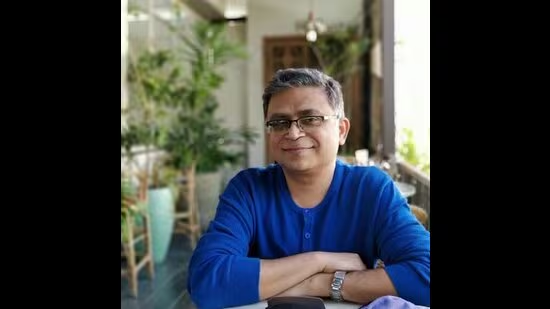
This article is authored by Chapal Mehra, queer writer, activist and public health specialist, New York.
1,153 words~5 min read